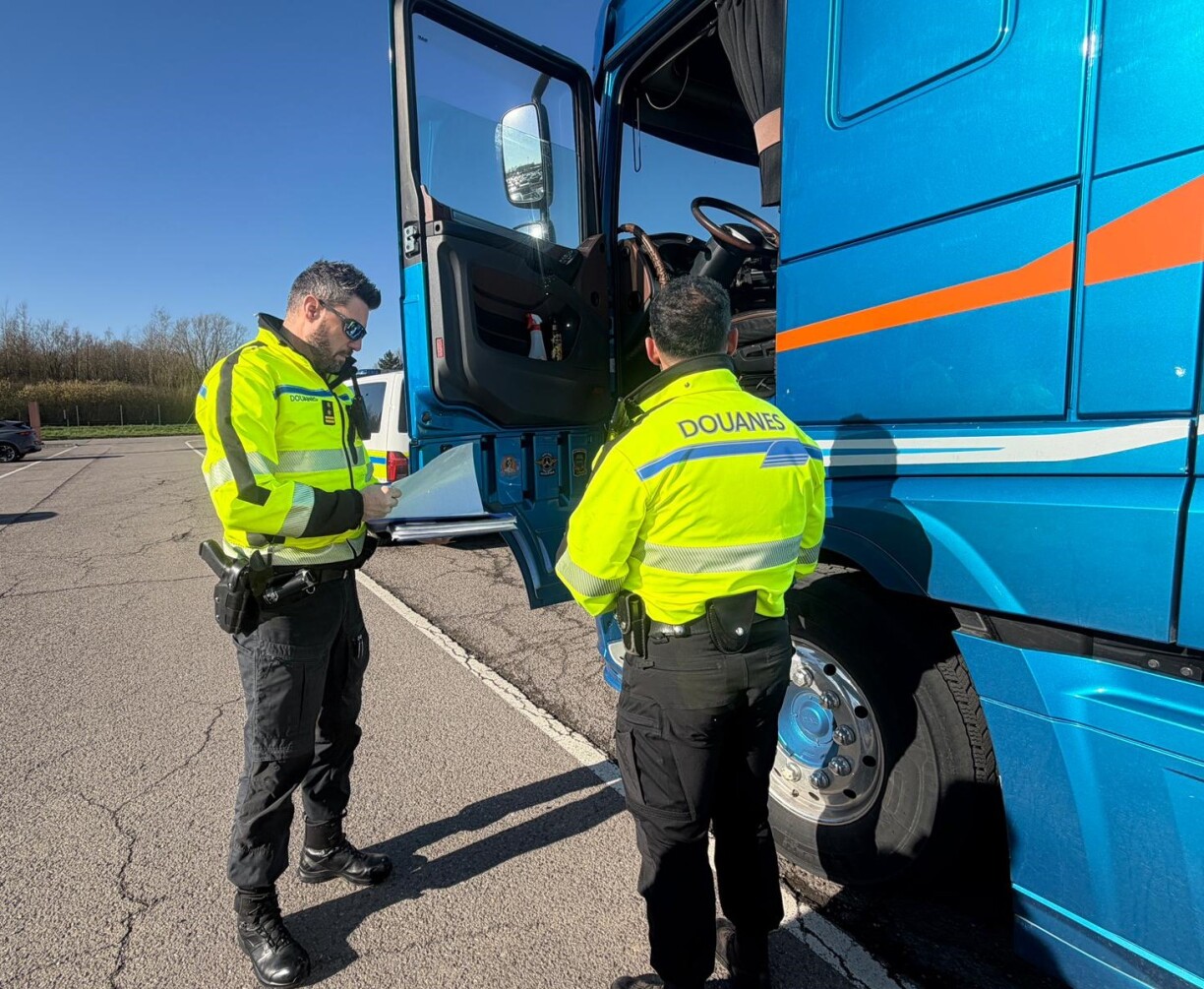
Around 10,000 lorries pass through Luxembourg every day. To ensure that they are travelling safely, that drivers are not too tired, and that loads are properly secured, customs officers carry out daily checks.
As an important transit route for European traffic, transport checks play a central role in road safety in Luxembourg. As Jeroen Schaus, principal inspector at the Customs and Excise Agency, explained, these checks mainly focus on lorries.
During a check, customs officers first examine the driver's documents, as well as those relating to the lorry and the goods being transported. These include the CMR consignment note, which provides information about the load and the route.
Officers then check driving and rest times. Using the tachograph – a device installed in commercial trucks and buses to automatically record vehicle speed, distance, and driver activity – they can download and analyse the vehicle's data. Customs officers can look back up to 56 days.
There are clear EU rules on driving and rest times for lorry drivers. A daily driving period may normally not exceed nine hours, although it can be extended to ten hours twice a week.
A driver may not drive more than 56 hours in one week, or more than 90 hours over two consecutive weeks. After 4.5 hours of driving, a break of at least 45 minutes is compulsory. Drivers must also observe a daily rest period of at least 11 hours, while the regular weekly rest period is normally 45 hours.
The tachograph is the small device that records and stores all of this information. In the past, it could be manipulated relatively easily. A strong magnet could interrupt the contact, making it appear on the computer as though the driver was taking a break. This no longer works with newer devices.
Each driver has their own card, which they insert into the tachograph. In order to drive for longer than permitted, company managers sometimes hand over their own card, allowing the driver to split the journey across two cards, which is prohibited.
Some drivers and companies find the obligation to take breaks frustrating. However, the rules are primarily intended to prevent accidents caused by fatigue.


In addition to driving times, customs officers also check whether goods are properly secured. Among other things, they look at whether the load is fastened with straps, how those straps are attached, and whether anti-slip mats have been used.
"Imagine a 40-tonne lorry losing its load. That could lead to many deaths on the road", Schaus warned. An incorrectly secured load can shift during transport, increasing the risk of the vehicle tipping over.
Sometimes officers can already see this from the outside, for example if the load is pressing against the side covering in one place.
From a distance, customs officers can often quickly tell whether goods have been loaded and secured correctly. During daily checks, however, other things can also draw their attention to drivers.
This may be the case, for example, if a driver is holding a mobile phone, according to Schaus. Experience also plays a role, he added.
Schaus said that officers often simply have a feel for it and pull someone over without any specific reason, only to discover much more afterwards.
Official figures also show how important these checks are. In 2025, customs issued fines totalling around €1.46 million as part of transport checks.
Many infringements related to the Eurovignette – the road charge for heavy goods vehicles – were regularly recorded, but also violations of driving and rest time rules, incorrectly secured loads, and overloaded vehicles.
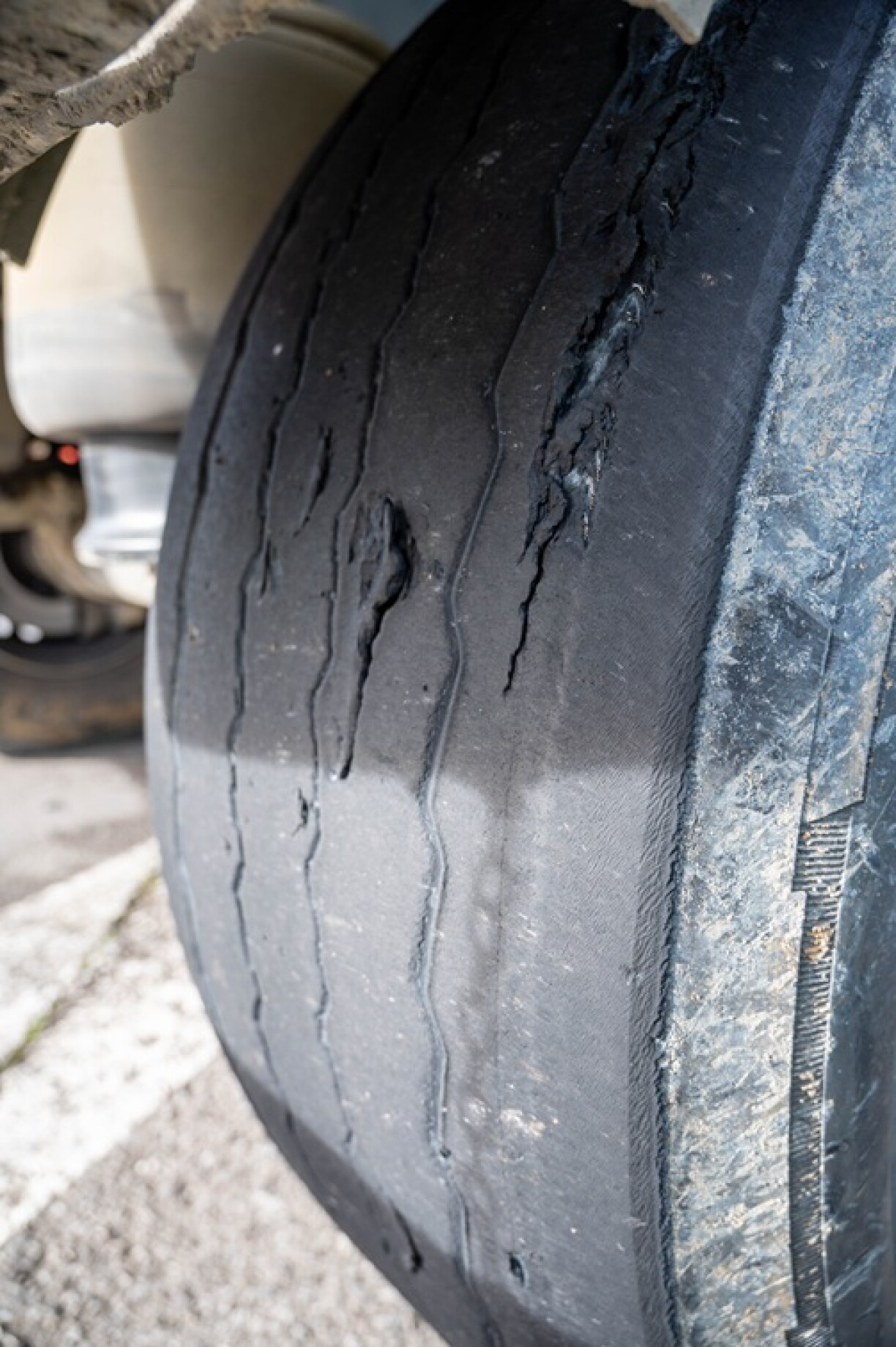
The condition of lorries also drew attention in some cases. Damaged tyres and other worn parts need to be checked more carefully by drivers.
Inspector Jeroen Schaus joined customs in 1991, before the 1993 Schengen Agreement. At the time, it was not yet entirely clear how the role of customs would develop in the future.
Over time, however, more and more tasks were added. For Schaus, it quickly became clear that he wanted to work with the transport brigade, as fieldwork and lorry checks particularly interested him.
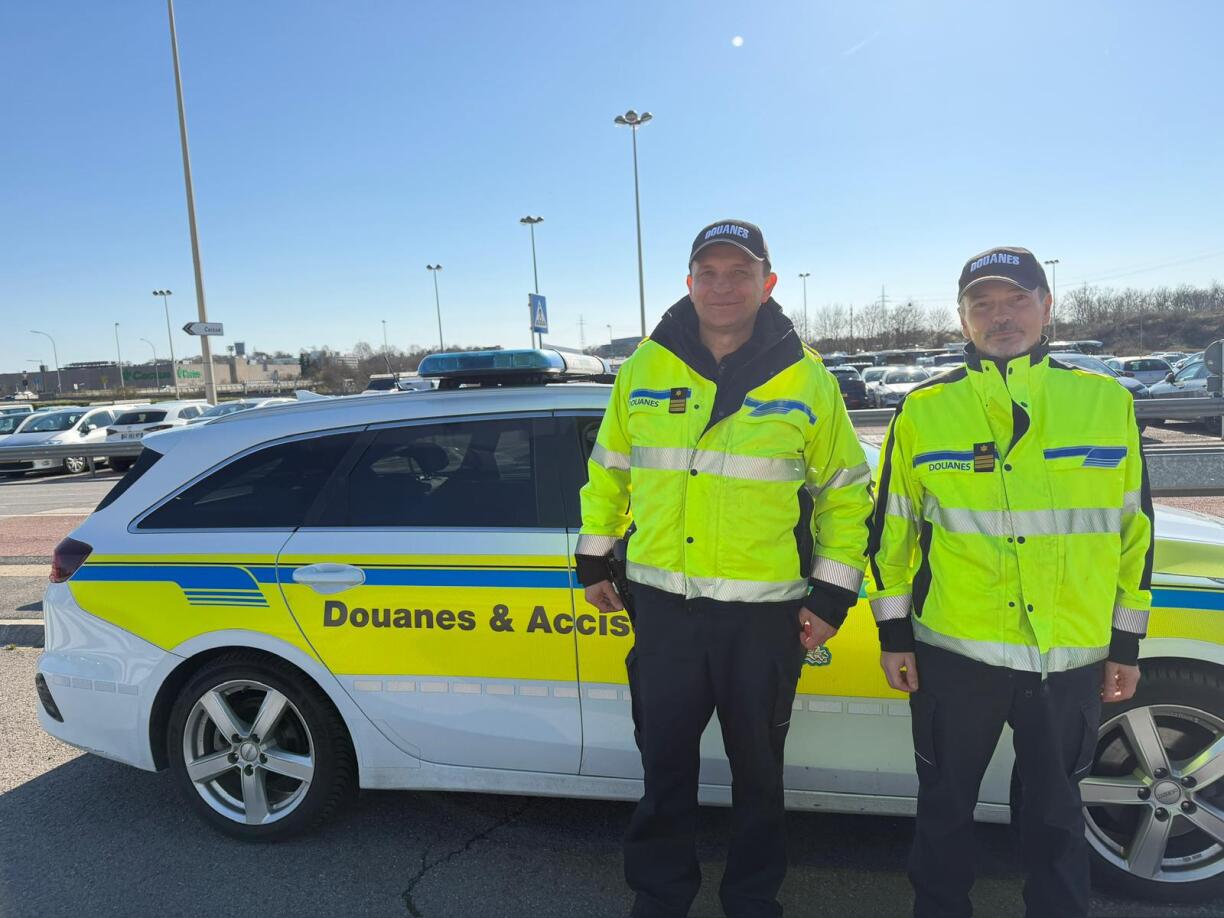
Alongside checks on the road network, Schaus sees another important task: informing the public. In his view, many people still do not know the rules on cross-border traffic in detail, particularly when it comes to cigarettes, alcohol, or transporting petrol.
In Luxembourg, for example, a maximum of 20 litres of petrol may be transported in an approved canister, as petrol is a dangerous and highly flammable substance.
Cigarettes are also particularly popular. In this case, a maximum of 800 cigarettes may be transported per person. According to the customs officer, it is therefore important for people to inform themselves properly in order to avoid problems during checks.
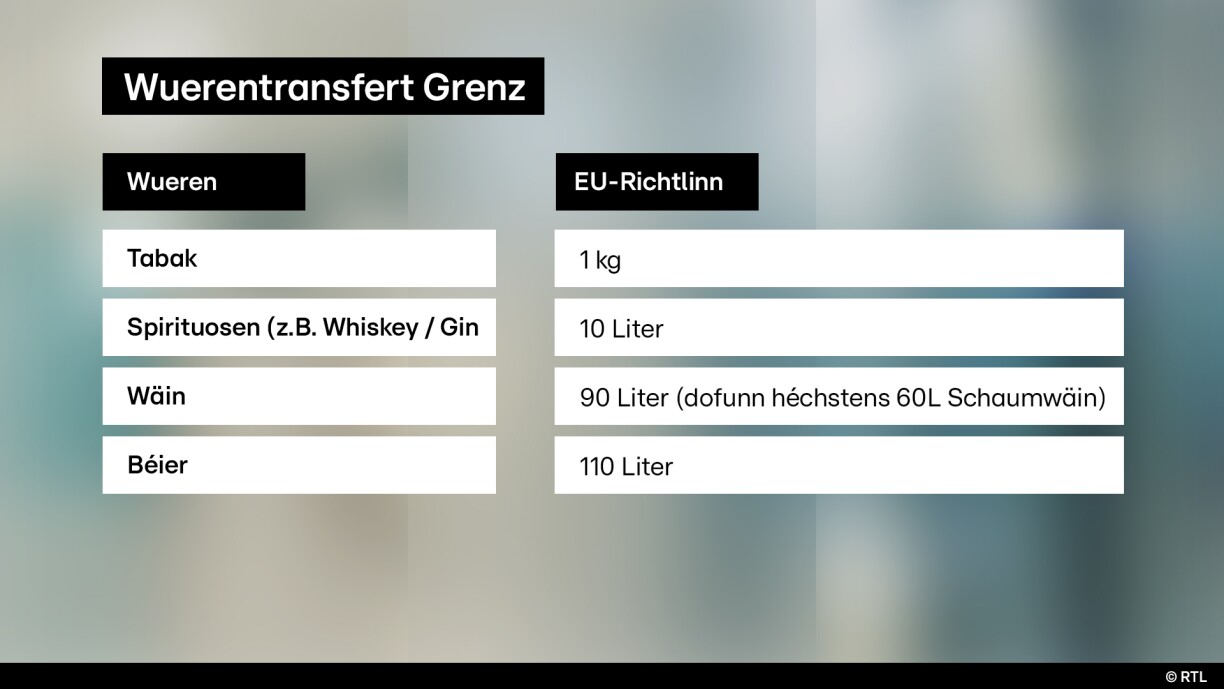
Below is an overview of the quantities of various products that may be transported across the Luxembourg border: