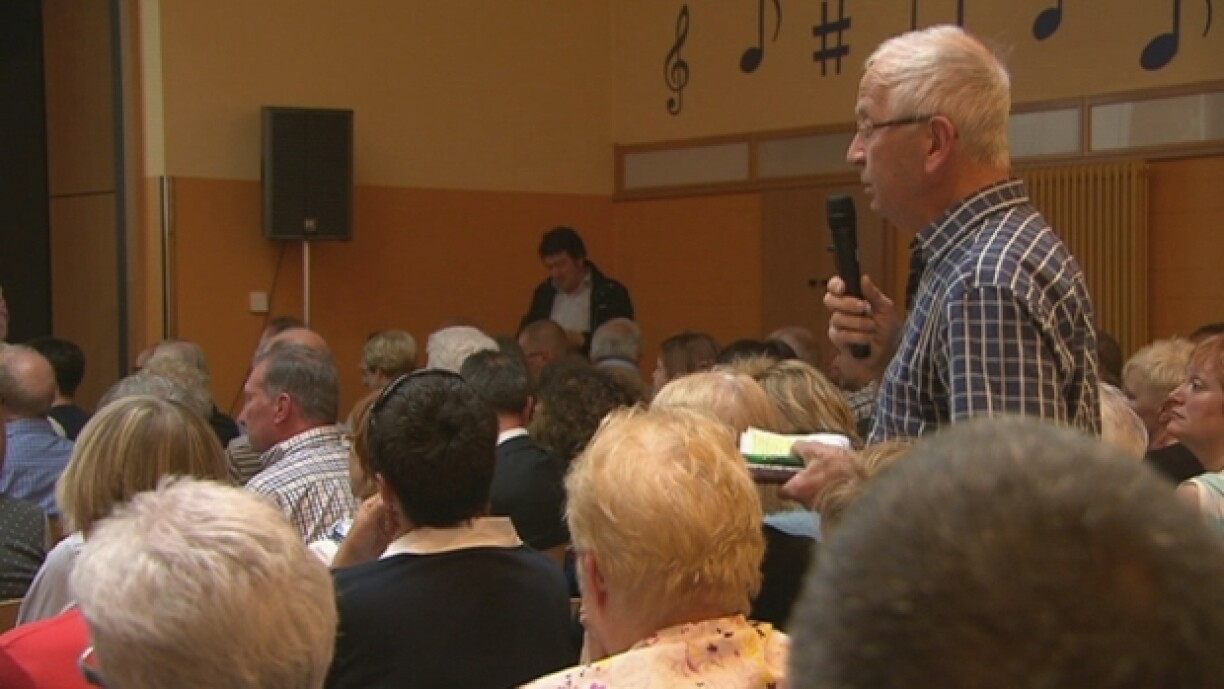
Luxembourg’s elected representatives also generally agreed that politics should become more transparent. MP François Benoy from the Green Party (déi Gréng) had requested a debate on this topic on Tuesday. The general consensus was that while citizen participation can increase trust in politics, decision-makers should be careful not to make false promises.
Citizen participation should lead to results. In this regard, MP Myriam Cecchetti from the Left Party (déi Lénk) would prefer, for example, that the exchange with the youth parliament take place more than once a year.
For MP Frank Colabianchi from the Democratic Party (DP), it is important that decisions are implemented quickly, as anything else could lead to frustration among the population.
Effective communication was also mentioned as a pillar of citizen participation, with MP Gilles Roth from the Christian Social People’s Party (CSV) advocating for a summary listing the main points of planned amendments that could be shared with the public.
It was pointed out that residents can only be invited, whether they actually participate or not is up to the individual. In this context, MPs also discussed the low participation rate of non-Luxembourgish nationals in the municipal elections.
MP Sven Clement from the Pirate Party noted that time is also a factor to consider, stressing that “in this sense, many people cannot ‘afford’ participation.”
Meanwhile, MP Fred Keup from the Alternative Democratic Reform Party (adr) argued that a citizens’ council may also exclude people. According to Keup, those most likely to participate in such a process are “those who are more inclined to call for changes.” Instead, the MP praised referendums as “a good way to participate anonymously and directly,” citing the referendum on right to vote for non-Luxembourgish nationals as an example.
Speaking on behalf of the government, Prime Minister Xavier Bettel stated that he generally welcomes citizen participation, but also stressed that the members of the Chamber of Deputies are elected representatives, which means that the responsibility to make decisions lies with them.





