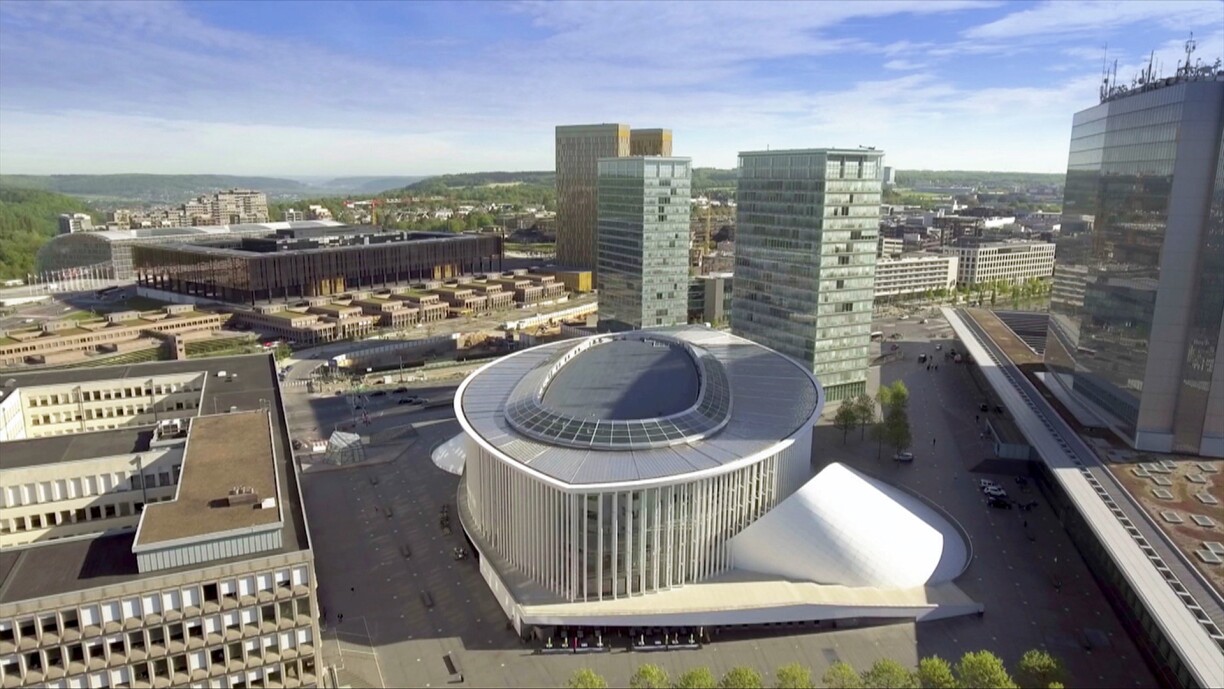
"We believe that there is an urgent need because STATEC figures from 1 January 2023 showed once again that Luxembourg's population continues growing, as is the increase in the number of jobs and cross-border commuters. And this despite an economic situation that has been weakened by Covid, the energy crisis, and the war in Ukraine," says Romain Diederich, a geographer specialising in territorial development.
For two years, Diederich contributed to the Idea Foundation's new study on the "territorial vision for Luxembourg in the long term", which was published on Monday.
In his view, there is "an urgency for the means, the capacity, and the speed necessary to build infrastructure and housing in the appropriate places, otherwise our room for manoeuvre will disappear. If Luxembourg does not react, the negative effects of development will become so great that they will call development into question.
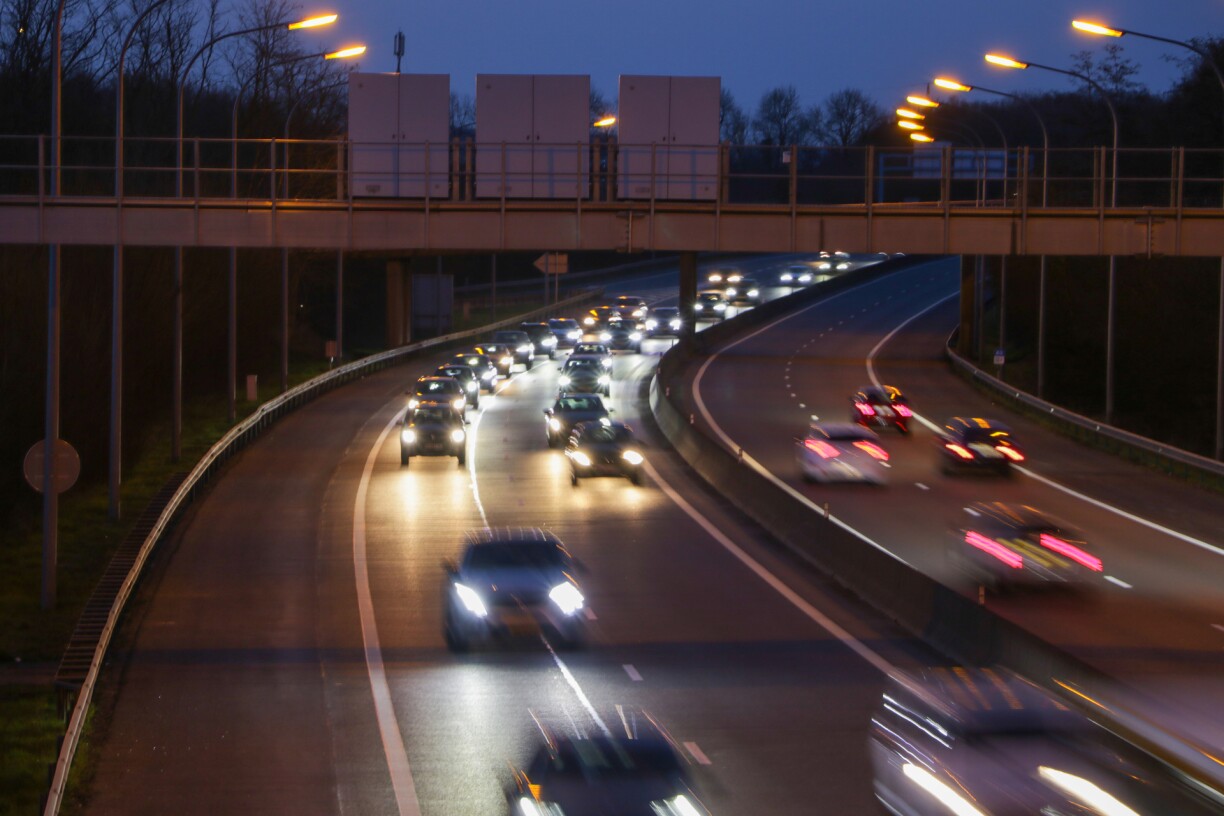
By "negative effects", Diederich refers to the price of land, the scarcity of housing, the saturation of roads, pollution, and the deteriorating attractiveness of the country. Territorial development has led to bottlenecks that affect both residents and commuters and that represent "a threat to the country's future economic, social, and ecological prosperity", writes the Idea Foundation.
The aforementioned 'room for manoeuvre' is not at all the same today as it was thirty years ago. Over the last three decades, Luxembourg has multiplied its GDP by 2.6, created almost 290,000 jobs (x2.5), seen the number of cross-border commuters increase by 170,000 (x6), and experienced a demographic surge of almost 250,000 people (+65%).
These stunning figures have thereby far exceeded all projections made since the 1980s and 1990s.
Nevertheless, the development of Luxembourg at the same pace and with the same high standard of living "remains possible" for the next 30 years, Idea believes.
But, "it will not be done in the same way. It will require much stronger action in terms of territorial planning, much greater investments into infrastructure, as well as cross-border cooperation," explains Vincent Hein, an economist at the think tank.
The key would be to think about the best way to develop the territory to make Luxembourg's socio-economic development sustainable in the long run, he further notes.
The Foundation's experts have drawn up a vision of Luxembourg for the next thirty years. This scenario, which follows up on the evolution of the last thirty years, forecasts 1.1 million inhabitants, 995,000 jobs, and 503,000 cross-border workers by 2050.
Which spaces need to be developed? This is the big question at a time when Luxembourg "has already become a cross-border metropolis" with "a number of jobs in the country that is already comparable to that of large cities abroad. This phenomenon has only accelerated and Luxembourg will develop further in this direction with three main hubs in the north, centre, and south", explains Diederich.
Luxembourg City is expected to substantially grow in size and extend as far as Mersch. The southern hub will be more polycentric and will have to develop its cross-border potential. Nordstad will meanwhile become a veritable urban hub in the "full sense of the word" by integrating Colmar-Berg.
The idea is to concentrate future development on these three hubs, to accelerate the development of other "priority municipalities" destined to become larger cities, such as Contern, Niederanven, Leudelange, Mamer, Mondercange, Sanem, Käerjeng, Erpeldange, and Bettendorf, and to avoid the development of rural areas as much as possible.
As the growth of population and cross-border jobs is expected to be enormous, these urban areas will have to "play in a different league and change dimension. This means higher densities, new types of urbanisation that are more vertical, building in the most appropriate places, but it can be done," estimates Diederich.
Idea's vision is therefore to widen certain areas, to build higher up, and "to invest in a lot of new infrastructure for Luxembourg by developing, for example, urban cable cars, trams on stilts, and adding railway lines so that we no longer have to go through Luxembourg's central station, which is going to reach saturation in our scenario", summarises Vincent Hein.
In terms of cross-border cooperation, "we must invest together with neighbouring regions to develop infrastructure and improve the quality of transportation and the quality of life", says Hein.
These are not completely new proposals, but if Luxembourg's growth were to remain on the same track as it has been in the last three decades, "they would be completely indispensable. Otherwise we will end up with territorial blockages. If Luxembourg loses its attractiveness because people no longer want to come here, transport conditions are terrible, or housing prices continue rising... we're heading for an unknown that we don't want to experience," warns Hein.
"We think it's risky or even unrealistic to say that we're going to slow down growth. It's risky because it cannot be controlled like that. The country is attractive. The result is that investors and people come to work here. To question this attractiveness seems a rather risky policy to us", argues Hein.
He further stated: "We might change the structure of the economy, put in place policies to improve development and make it more efficient with less available labour, but we are not sure that we would be able to engender a deceleration. We therefore tell ourselves that we have to prepare for the future so that it can continue, so that we can limit the negative effects of this growth, and so that it can be better channelled."
In the context of the super election year 2023, Idea's catalogue of proposals will be forwarded to the candidates and political parties with a clear message: "We cannot promise that the standard of living will remain as high as it is today without making additional efforts in the coming years", summarises Hein.
In his view, "the way in which the territory is managed cannot be done in the same way as it was in the past" without engendering these famous negative effects of growth that are already on everyone's minds.
"We need some political courage because there are places that will have to develop more than people expected and places that will have to stop developing. We will have to explain that it is for the common good," concludes Hein.





