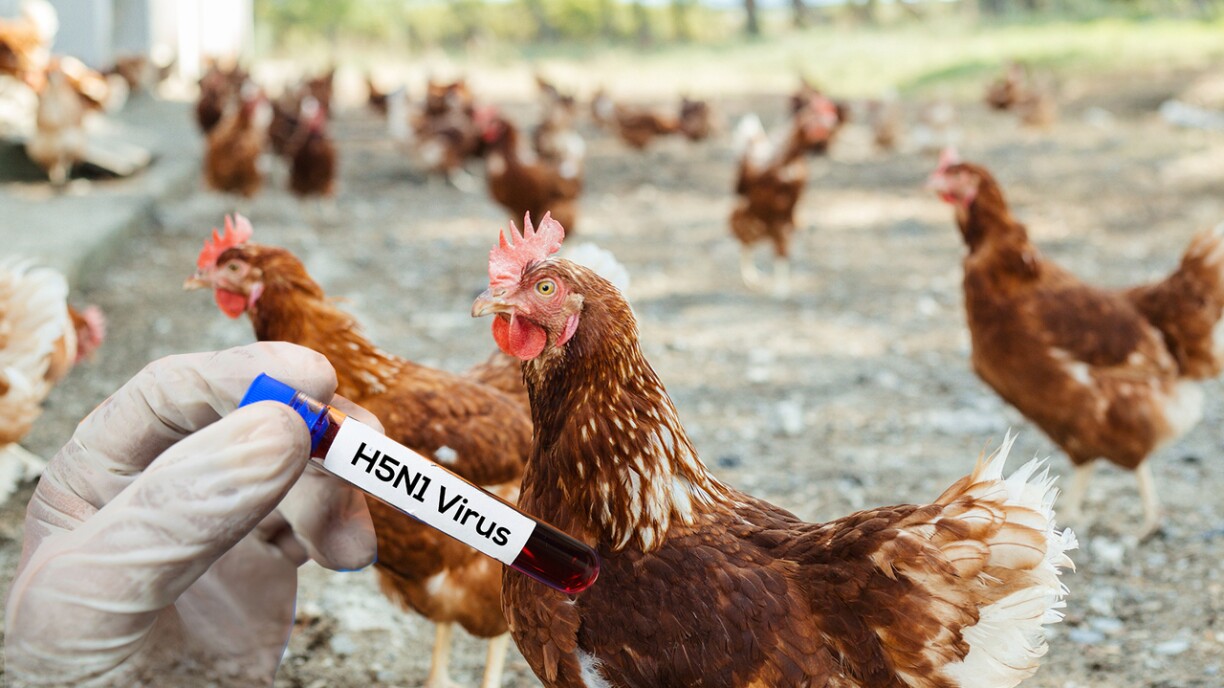
The virus was last detected in Lellingen in January. Virologist Prof Dr Claude Muller labels the situation for poultry farmers "dramatic". 7,000 outbreaks were registered last year, a third of which occurred on farms while the rest affected wild birds.
At present 37 countries in Europe and over 100 bird species are affected by the virus.
The virus usually only spreads from bird to bird, but in a concerning development, it was recently also detected in minks in Spain that had not been in contact with any birds.
Dr Muller explains that the virus has mutated, which has allowed it to adapt to mammals. Nevertheless, the virologist also said that more mutations must occur before the virus can affect humans.
Although animals can be vaccinated against the bird flu, the practice is not common in Europe. The vaccine does not prevent the virus from spreading, but it protects from severe illness.
A number of vaccines also exist for humans, but they are not yet in use, noted Prof Dr Muller. They have been designed as a precautionary measure and are ready to be used if it ever becomes necessary.
While there is no risk for humans at present, the situation still needs to be continuously monitored, according to Prof Dr Muller. Contact between birds from different farms, wild birds, and humans should be reduced, he further said.





