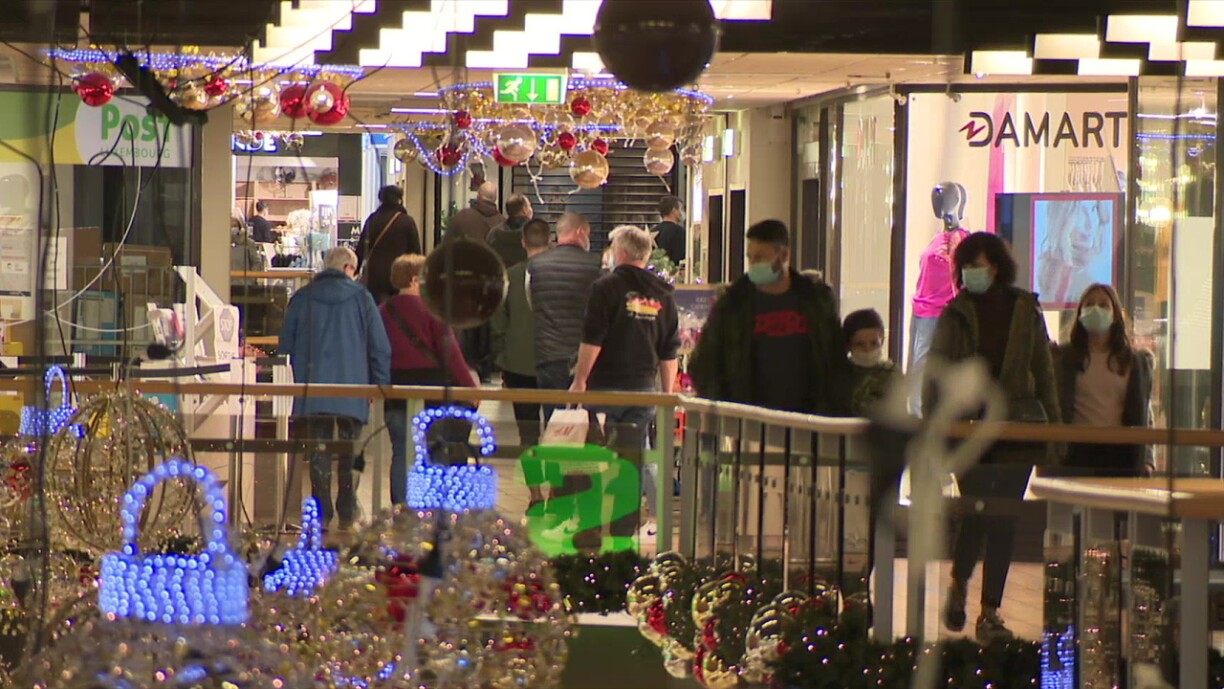
Consumer tendencies have clearly experienced a decline over the period of lockdown. Statec estimates that the final decrease for the year 2020 will range between 6 and 8%. Many people were forced to save money due to increased uncertainty. It now remains to be seen in what direction consumer confidence and trust are evolving, with both highly dependent on the further unfolding of the pandemic.
Some expenses have however remained relatively unchanged, which Statec divides into three categories. The first one includes running costs, such as housing, communication, and insurance. Spending on groceries has even increased since the beginning of the pandemic, which can be linked to the prolonged closures of bars and restaurants. Statec estimates that food spending has thereby increased by 3% compared to a year without Covid.
The second category is concerned with non-essential products, such as furniture, cars, or audio-visual goods. Most of the respective businesses were forced to close for periods of time, although slightly less than those in the Horesca sector. Consumer tendencies have thus experienced a shift. Statec is uncertain whether or not the losses can be made up over time.
The third and final category, which includes areas where physical contact is nearly unavoidable, was most significantly hit be the implications of the pandemic: Horesca, sport, culture, and travel. Until the health crisis has come to an end, households are unlikely to spend great amounts in these sectors. Similarly, the increase of home office hours has shown to affect the amount of petrol people need for their cars. Paired with the decrease in gas prices, the sector is unlikely to make up its losses, Statec concludes.
It remains to be seen how much money people were able to save over the course of pandemic, and how much they will be willing to spend afterwards. A best-case scenario envisions the year 2021 to experience a 1.5% increase compared to 2019, a worst-case scenario sees it remain below that tally.
Seeing that the vaccine has begun rolling out, the National Institute of Statistics and Economic Studies estimates that consumer tendencies should still improve over the course of the year, as well as in 2022. It also concludes that if restrictions were to be tightened again, people may have greater reservations about spending.





