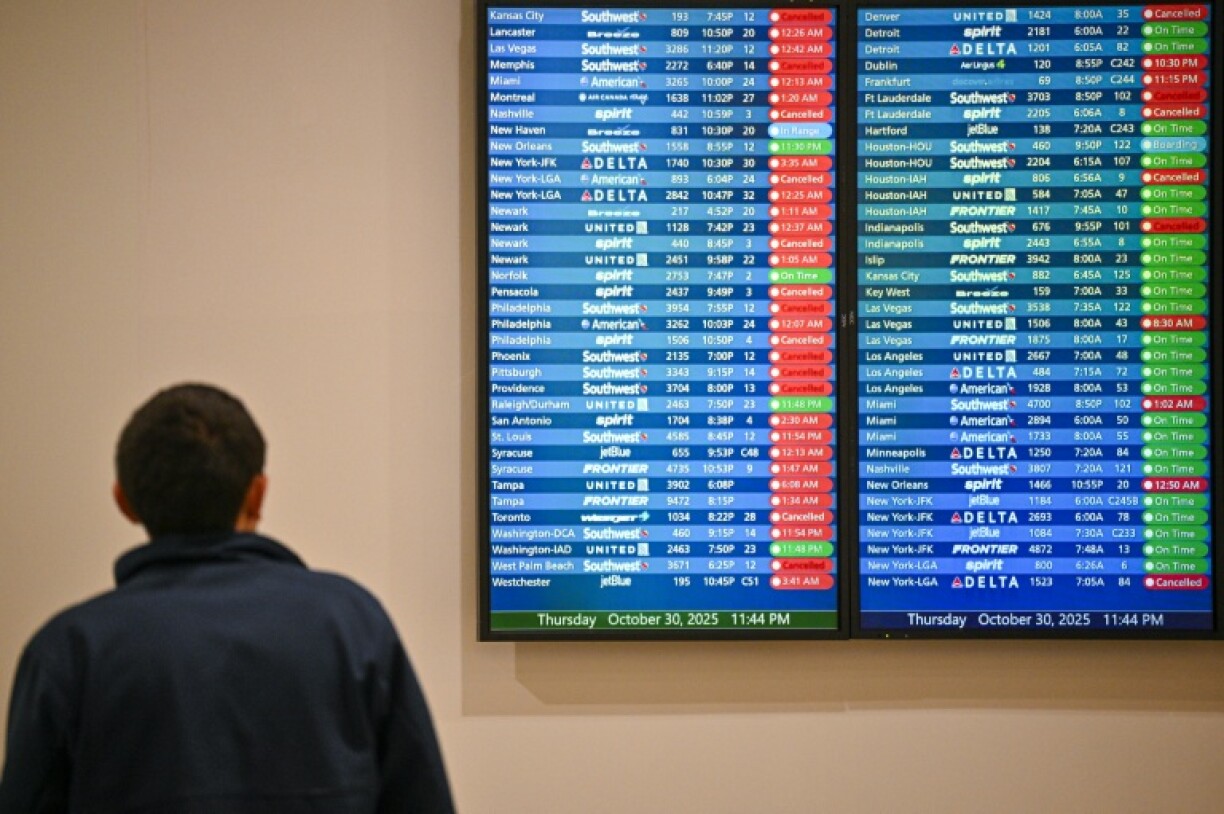
Around 3,000 passengers were affected on Sunday evening after heavy snowfall led to the closure of Luxembourg Airport’s runway for more than two hours.
While snow in itself is not unusual in winter, Lux Airport's Chief Operating Officer (COO) Lorenzo di Loreto explained that a slippery mix of snow and water meant safety could no longer be guaranteed. He said that weather-related disruptions are not exceptional during the winter months, and that he relevant services responded appropriately. Although passengers are understandably frustrated when their journey is disrupted, safety must always take priority, Di Loreto stressed.
For Luxembourg residents facing issues during cross-border travel, the European Consumer Centre (ECC) is the main point of contact. Alternatively, passengers can turn to the National Enforcement Body (NEB) or the Luxembourg Consumers' Union (ULC). If unsure which authority to contact, passengers may approach any of them, and the request will be forwarded to the appropriate body if necessary.
The first step, however, should always be to contact the airline directly, according to Julie Jasson, legal adviser at the ECC. It is important to keep all travel documents and receipts, she said.
Jasson explained that in the event of a cancellation, passengers are generally entitled either to a refund or to re-routing on an alternative flight, adding that in some cases, financial compensation may also be due. However, she clarified that compensation is not automatic and does not apply in cases of extraordinary circumstances (often referred to as force majeure), such as the severe weather conditions that caused Sunday's disruptions.
In terms of procedure, there is little difference between a delay and a cancellation, explained Sabrina Lahène, an expert at the NEB. Lahène said that the authority requests evidence from the airline, which then has two months to respond. She explained further that the case is then reviewed to determine whether compensation is owed, depending on whether extraordinary circumstances were involved.
If an alternative journey is offered, it may involve another mode of transport and could take place either the same day or at a later date. However, passengers should be aware that certain losses may not be covered. As Jasson pointed out:
"If, for example, you arrive one day later at your intended destination and lose the hotel night you had booked, that will not be covered by compensation when the flight disruption was caused by extraordinary circumstances. In a situation like the one we saw with the weather, that loss remains with the passenger."
There is no fixed legal list defining "extraordinary circumstances", or force majeure. As Jasson explained, it is not clearly set out in legislation but rather determined through case law. She said that courts assess, on a case-by-case basis, whether an event qualifies. Generally speaking, extraordinary circumstances must be external to the airline and either unforeseeable or unavoidable, Jasson concluded.
Checked baggage is officially considered lost after 21 days. If luggage does not arrive, passengers should report it immediately at the airport and obtain written confirmation before leaving. All documentation should be retained.
Jasson highlighted that if baggage fails to reach a holiday destination, essential replacement items may be reimbursed, provided the purchases are reasonable. Again, keeping receipts is crucial. For baggage-related issues, the ECC is the appropriate contact point.





