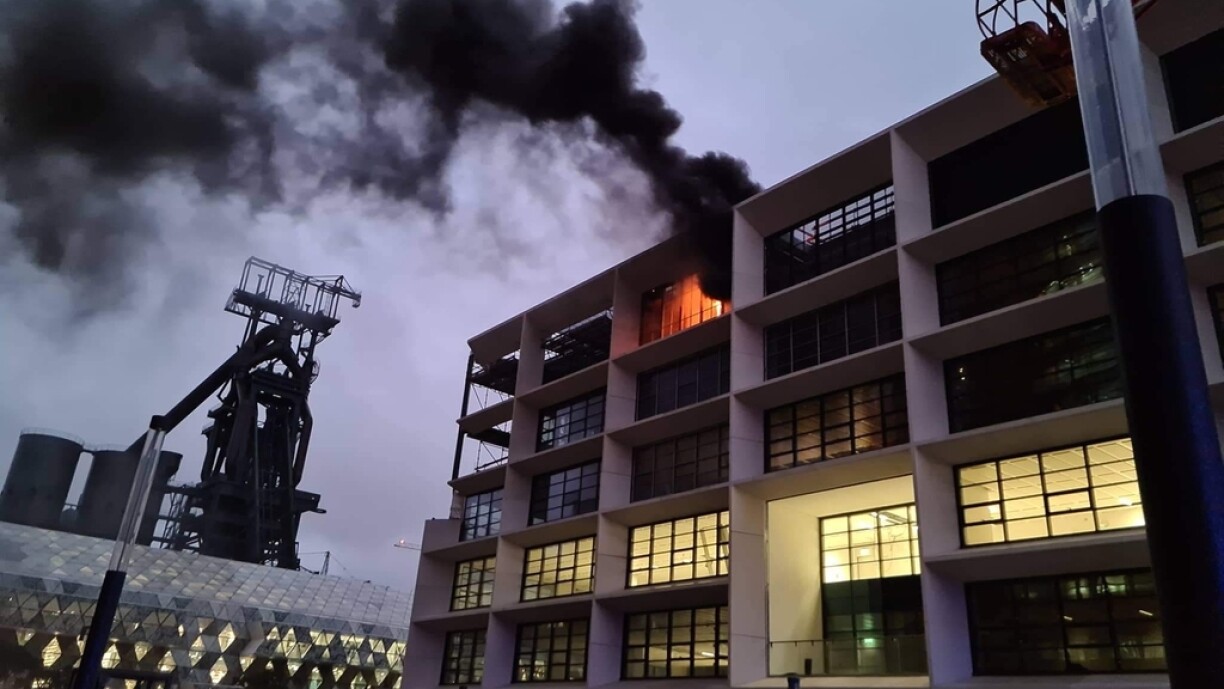
According to the Grand Ducal Fire and Rescue Corps (CGDIS), this is, however, not a sign that the situation is changing.
There are several factors that will influence the evolution of a fire, including its speed, spread, and the overall risk of the situation.
The sooner a fire is discovered and reported to the emergency services, the sooner the fire department can respond. The CGDIS stresses that a smoke detector can save lives in an emergency, especially if the residents of a burning house are sleeping.
Read also: Smoke detectors mandatory from 1 JanuaryIf you detect a fire in your home, you must immediately evacuate the premises, close the doors, and call 112. If the flames are already coming through the roof or the windows, the firefighters' options for dealing with the situation will be limited.
Electrical wiring and appliances continue to be the leading causes of house fires, accounting for roughly one-third of all fires. This is followed by human error and overheating. One in ten fires was caused by arson, while in 20% of cases, the cause was unclear or different.
These data come from a German study conducted by the Institut für Schadenverhütung und Schadenforschung ("Institute for Damage Prevention and Research"). There are currently no statistics on fires in Luxembourg.
Building materials do, in fact, play an important part in the spread or outbreak of a fire. Wooden stairs, for example, can contribute to a fire spreading more quickly. Another important factor: closed doors will slow the spread of the fire.
Installing fire extinguishers near sensitive areas is also recommended (kitchen, wooden furniture, etc.).
Newly constructed buildings are safer since they were built in accordance with strict preventative measures designed to prevent the rapid spread of flames. As a result, fires in older homes are indeed often more dangerous.
Firefighters receive specialised training to prepare them for the possibility of explosions during fires. When a house burns, heated fire gases, products of pyrolysis, can accumulate in a room. These gases are not completely consumed and can therefore violently explode when exposed to a sudden influx of oxygen by opening a door or window. This explosion can then cause the flames to spread rapidly.
Firefighters in Luxembourg learn to recognise this phenomenon and train to fight it using containers.





