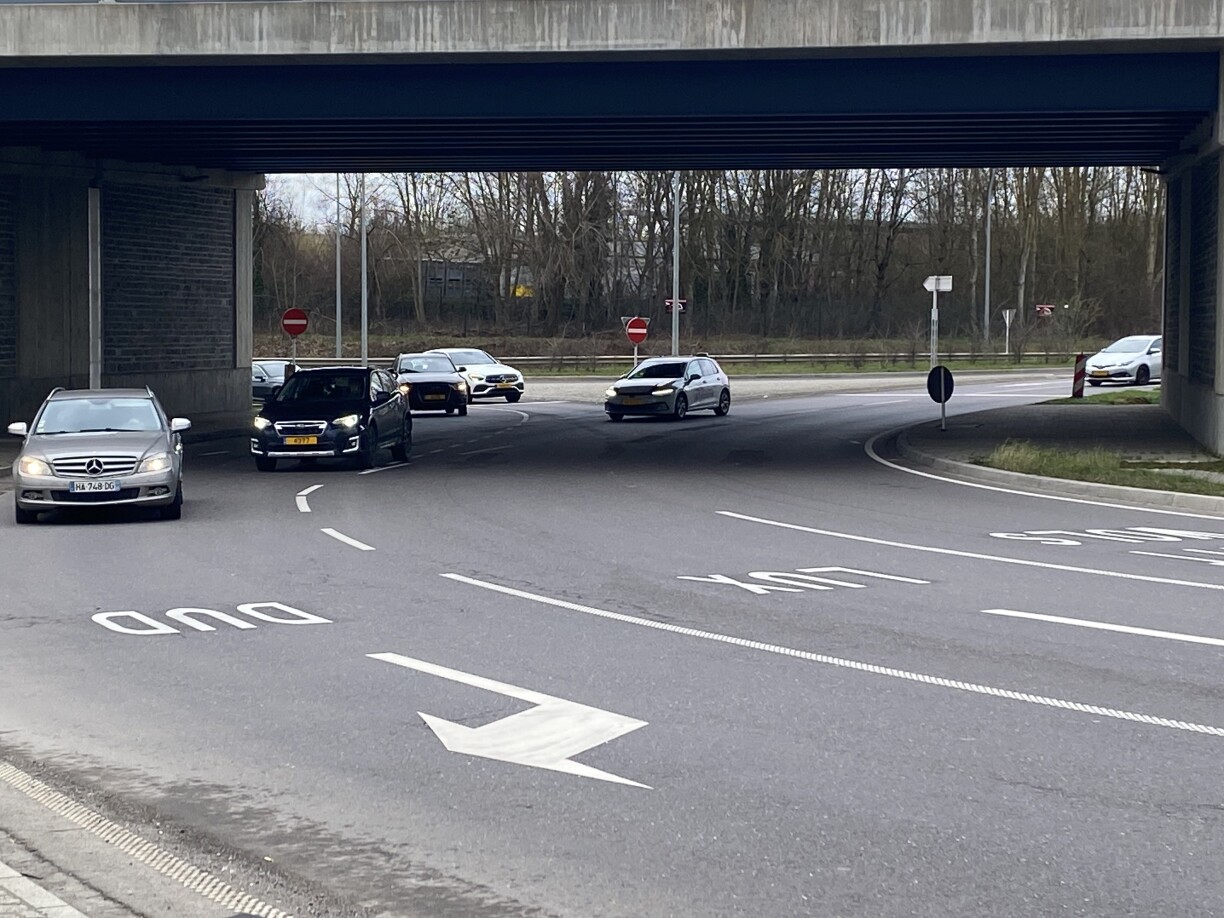
With a diameter of 135 metres, the Dudelange/Burange roundabout is the second largest in the country, after the Irrgäertchen roundabout, which measures 140 metres across. Construction of the junction near the National Health Laboratory (LNS) took place between May 2016 and April 2021, at a total cost of €51 million. It was officially inaugurated on 28 April 2021.
On a typical weekday morning, nearly 3,000 vehicles attempt to pass through the roundabout, with more than 3,000 during the evening rush hour. Since it opened, thousands of vehicles have travelled through the junction every day, making it one of the busiest in the country.
Although the lanes within the roundabout were recently adjusted and improved to reflect current traffic patterns, congestion remains an issue. Traffic lights are now expected to help optimise the flow of vehicles. During the original construction works, provisions were already made to allow for the later installation of traffic lights at the entrances and exits.
Installation work, carried out by the National Roads Administration, will begin on Monday 2 March and is expected to last around three weeks.
Ralph Di Marco, spokesperson for the National Roads Administration, explained that when the roundabout first opened, the priority had been to complete the project as quickly as possible to avoid prolonging disruption for motorists. He added that the authorities had also wanted to observe how traffic functioned without traffic lights. While the system had worked relatively well, he said the time had now come to introduce traffic lights to further improve circulation.
Once operational, the junction will function in a similar way to the Irrgäertchen roundabout, with traffic lights regulating entry and exit points. Drivers will select their lanes before entering, allowing traffic flows within the roundabout to be better managed and optimised, Di Marco said.
Di Marco concluded that they expect to have a clearer picture of the impact of the new system by late March or early April.





