
For Anouk*, the story began on a normal Friday afternoon, when she received a message from an unknown account on Instagram. The tone of the message was simple and clear: the sender wanted to enter into a sugar daddy/ sugar baby relationship with her, offering money in return for conversation.


Anouk chose not to reply immediately, instead spending days mulling over whether it was even worth responding to the message. Although it's well-known that scammers are likely to use social media to target their victims, the sugar daddy phenomenon is real and has gained significant traction online. "Why not just try," Anouk thought, with the motto "no risk, no fun" in mind. In such difficult economic times, a little extra money for free would not go amiss.
Initially, Anouk and the so-called sugar daddy exchanged only a handful of messages via Instagram before moving the conversation to the messenger app Viber. Once Anouk shared her contact details, the scammer exclusively made contact via the new app.
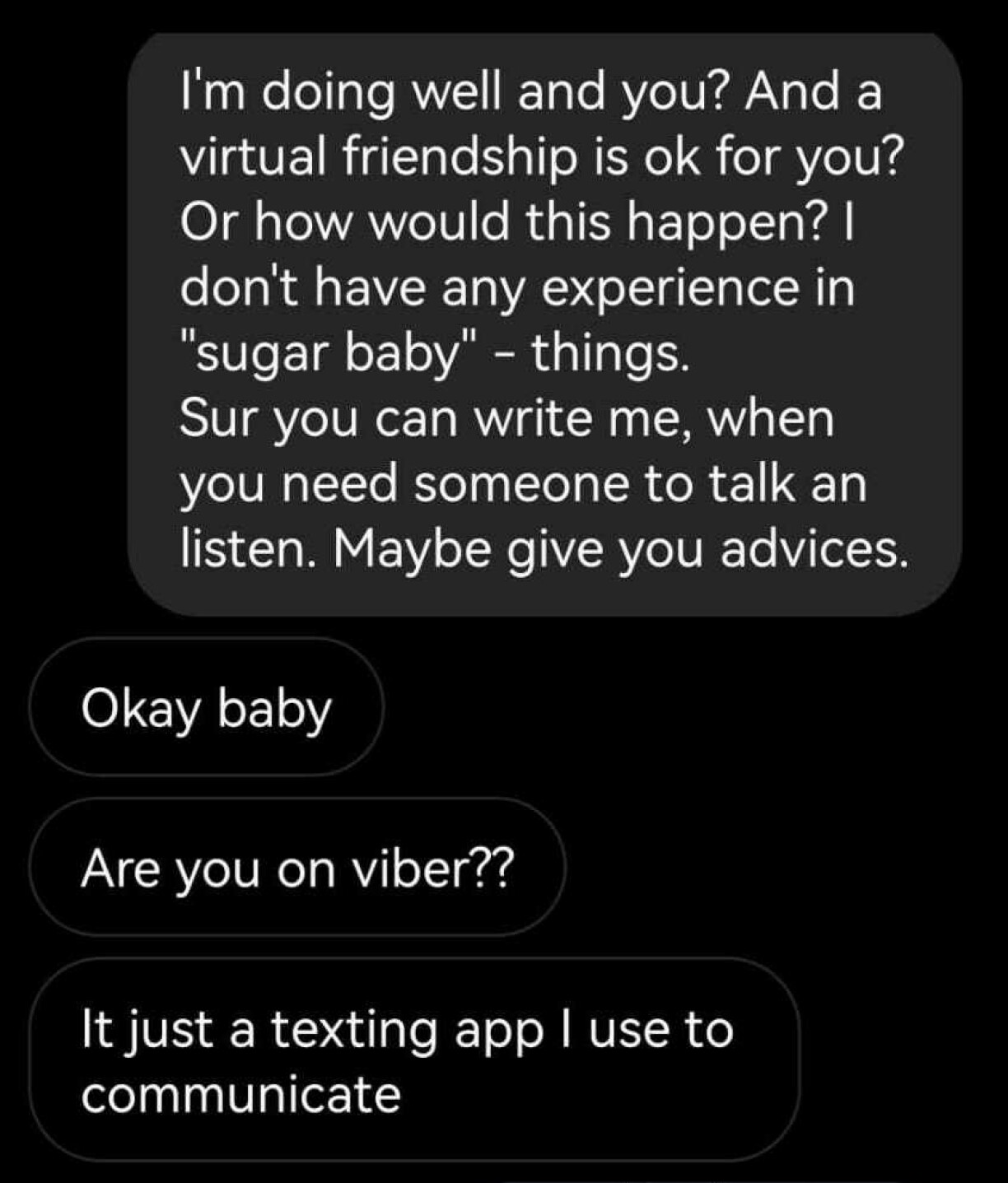
At the start, the messages took the form of small talk, with little discussion about money. The idea behind the messages was for both parties to get to know each other, or so Anouk thought; while instead, the scammer used the messages to collect data on their potential victim.
The alleged sugar daddy claimed to be called "Henri B.", an American living in Finland, and presented himself as the owner of a metal construction company. "Henri" said he had been single for 5 years following the end of a 15-year marriage due to infidelity on his wife's part. He explained to Anouk that he wanted to financially support girls and women, hoping to be rewarded for his charitable deeds in heaven.

Soon, the conversation turned to sugar daddies, with Henri asking Anouk if she had experience with being a sugar baby. When Anouk replied she had not, Henri explained the system, emphasising that it was important to him that Anouk did not enter into an agreement with any other sugar daddies, and asked her to always be truthful with him. The latter message was repeated throughout the discussion.


Henri then informed Anouk that he had an arrangement with two other sugar babies, and slowly but surely began to direct the conversation towards the topic of finances, asking for details of Anouk's salary, and whether she was able to make ends meet. Once Anouk supplied details of the minimum qualified wage and confirmed her outgoings, the scammer abandoned all normal topics of conversation and focused only on money. "It was like he no longer wanted to know about me, just the money," Anouk explained. "He didn't react to normal questions or statements, only those relating to financial matters."
At this stage, Anouk's early doubts about the discussion came back into play, with the conversation now confirming her initial apprehension. The scammer asked for her PayPal details, and once she supplied them, sent her a video reaction to "prove" his financial standing.
The video depicted a balance of around $500,000 on Henri's PayPal account, which Anouk felt was designed to help her feel more secure, and show her that Henri was being honest about his financial situation.
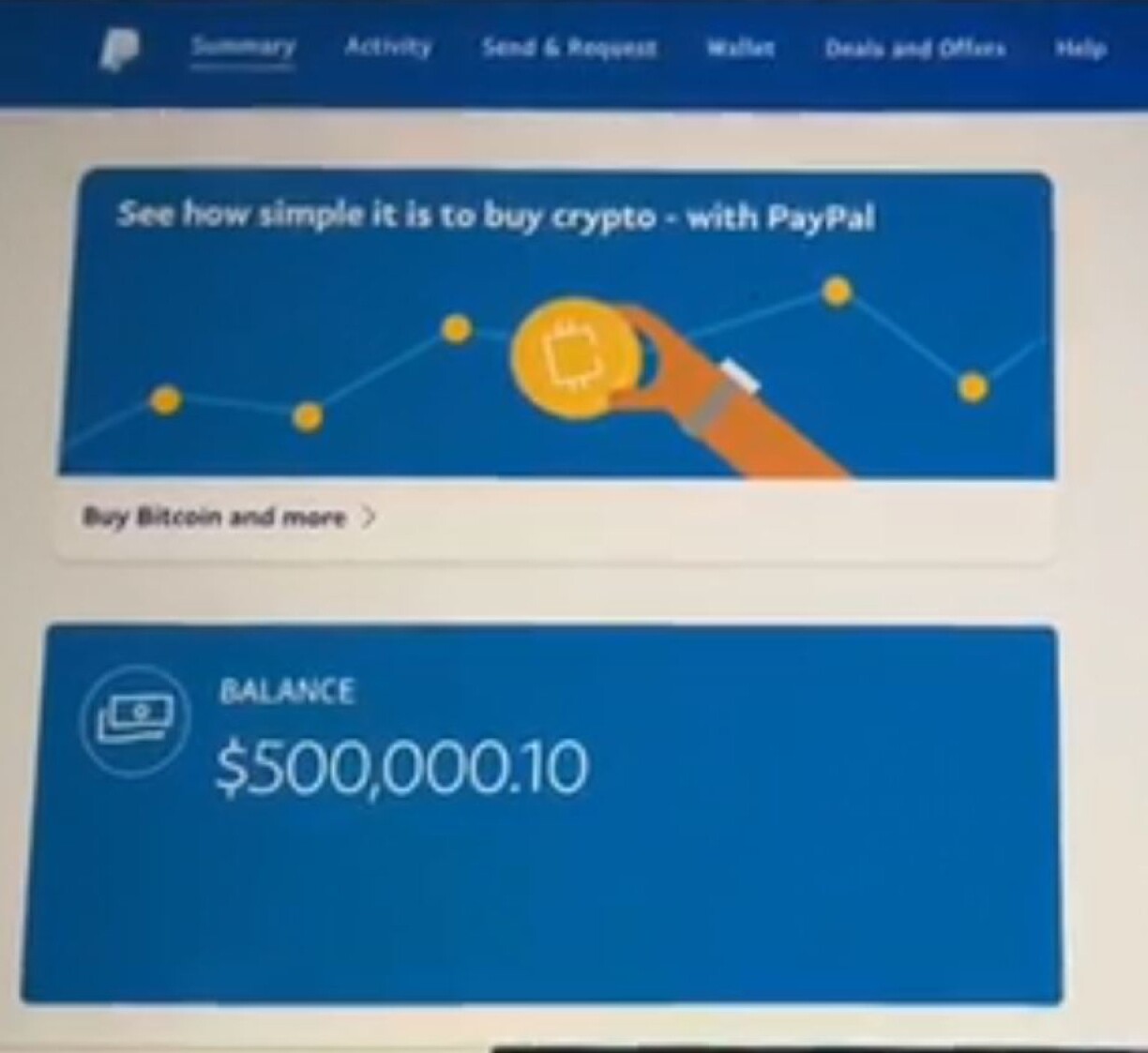
However, it soon became apparent that there were issues with the transfer. Henri promised to send Anouk $7,000 per week, with a small sum of pocket money, if she played by his rules. A second screenshot of the PayPal account purported to show a completed transfer of the $7,000 sum. But there were complications.
"Henri said in order to cover the charges, he would send me a Bitcoin. But first he wanted me to send him a Bitcoin, which sparked the whole process," Anouk explained. She was dubious, as she had not encountered such a process when using PayPal in the past. When she looked up information on scams online, she found warnings about scammers requesting "authentication", usually in the form of Bitcoin, Amazon gift cards, or other vouchers to help the victim feel "secure".


At this point, Anouk was wholly certain she was the target of a scam. Now, she felt the game had a new goal: to waste as much of the scammer's time as possible.
Rather than following the scammer's instructions regarding the transfer of funds, Anouk told the scammer she was having trouble accessing the link to buy Bitcoin. At the same time, she also tried to redirect the conversation to other topics, although the person at the other end of the messages refused to be distracted from the question of money.
"He became impatient, sent me more links and stopped believing me. He accused me of not clicking on the links, and demanded screenshots to prove I had opened them." In response, Anouk pretended she was confused and overwhelmed by the Bitcoin situation. "I apologised to him for not getting it right, and told him I probably hadn't earned the right to the money, and I confessed my love to him," she recounted with a grin.


"I even went so far as to tell him my phone wasn't working, and said I would ask a work colleague to help me if Henri could provide a written guarantee." The scammer replied with another link. This was the last message exchanged before Anouk blocked the scammer and reported the account to Instagram.
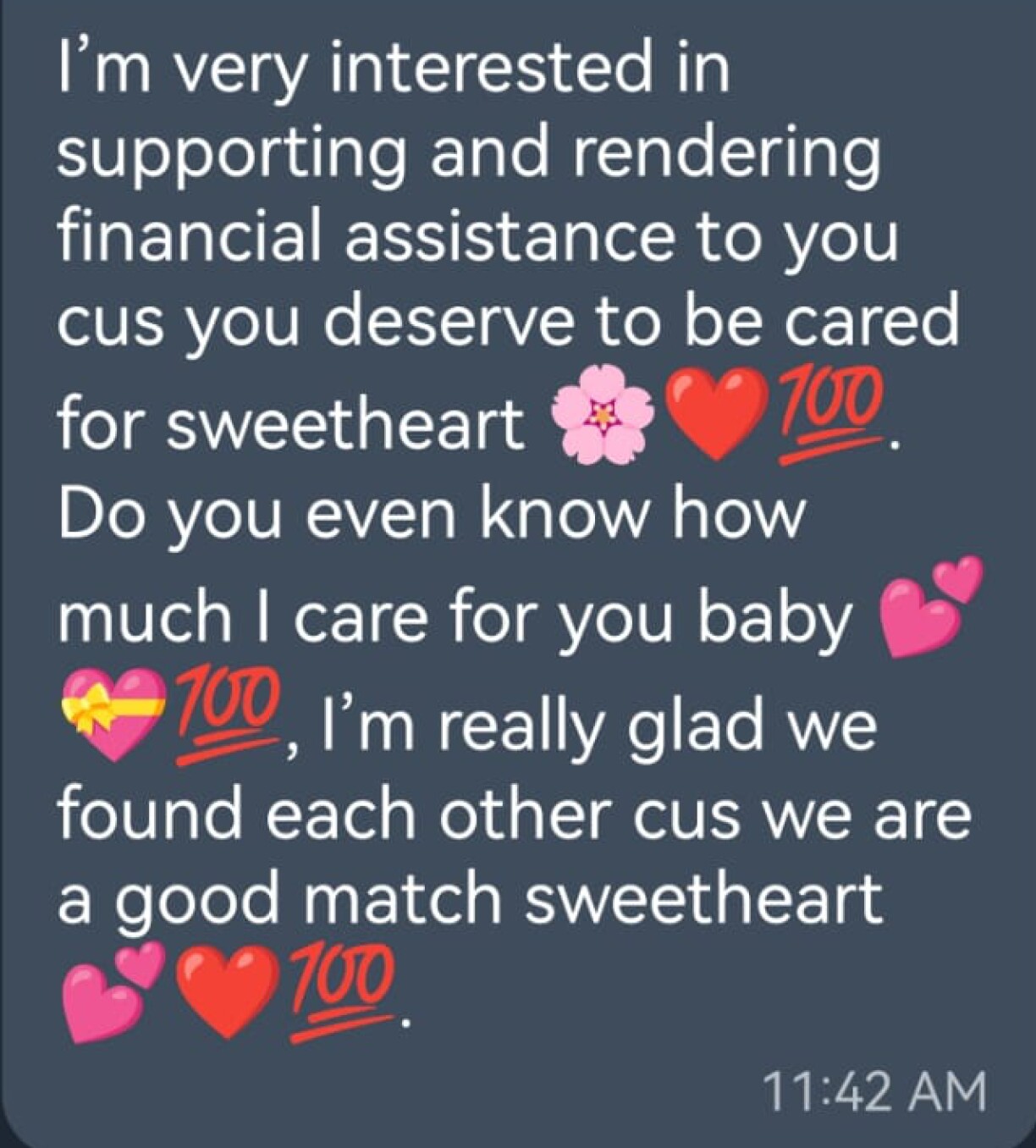
The whole exchange took around three days. Anouk believed the person on the other end wanted to conclude the transaction quicker, but she did not always want to reply. The scammer tried to apply pressure, sending lots of question marks when Anouk did not answer straight away, and also used a lot of emojis for their texts, which did not correlate with the impression of a 45-year-old businessman, Anouk concluded.
What made you realise this was false, or a scam?
"I was sceptical from the start but thought I'd just give it a go. It was clear that I could stop contact immediately and block the account. I was careful not to give out too many personal details and at all times felt like I could control and assess the situation.
My boyfriend and I also conducted internet research on "Henri B". We couldn't find much - there was an entrepreneur in Canada with a similar name, but he was the wrong age. A Google image search of the profile picture yielded no results.
We asked ourselves how it could be possible, in this day and age, to find nothing online about the director of a business. Especially in America where everyone uses Yelp and LinkedIn."
What did you find striking during the discussion?
"He often used the same words and phrases, like honesty and trust. He tried to be very interpersonal, answering very positively, and giving me compliments. I noticed he was trying to manipulate me using targeted language."
Did you secretly wish it was real?
"Of course. There's always a tiny glimmer of hope that there are actually benefactors out there who would do this. Who wouldn't want €7,000 per week. My boyfriend and I calculated how long I'd have to maintain the relationship with the sugar daddy in order to completely pay off our loans. We also had a running gag that I'd pay for a first class trip to the USA for my sister, my partner and I."
What advice would you give to people in a similar situation?
"I would say it's best not to engage with these messages. If you're curious like me, or if you like to see the good in people and want to believe it's real, I would say be careful about how much personal data you give away. The people on the other side of these scams know how to manipulate. So do not enter into a discussion blindly, but question everything and do your own research. I would also advise against clicking any dubious links, because money can be transferred quite normally instead."

*Name has been changed in order to preserve anonymity.





