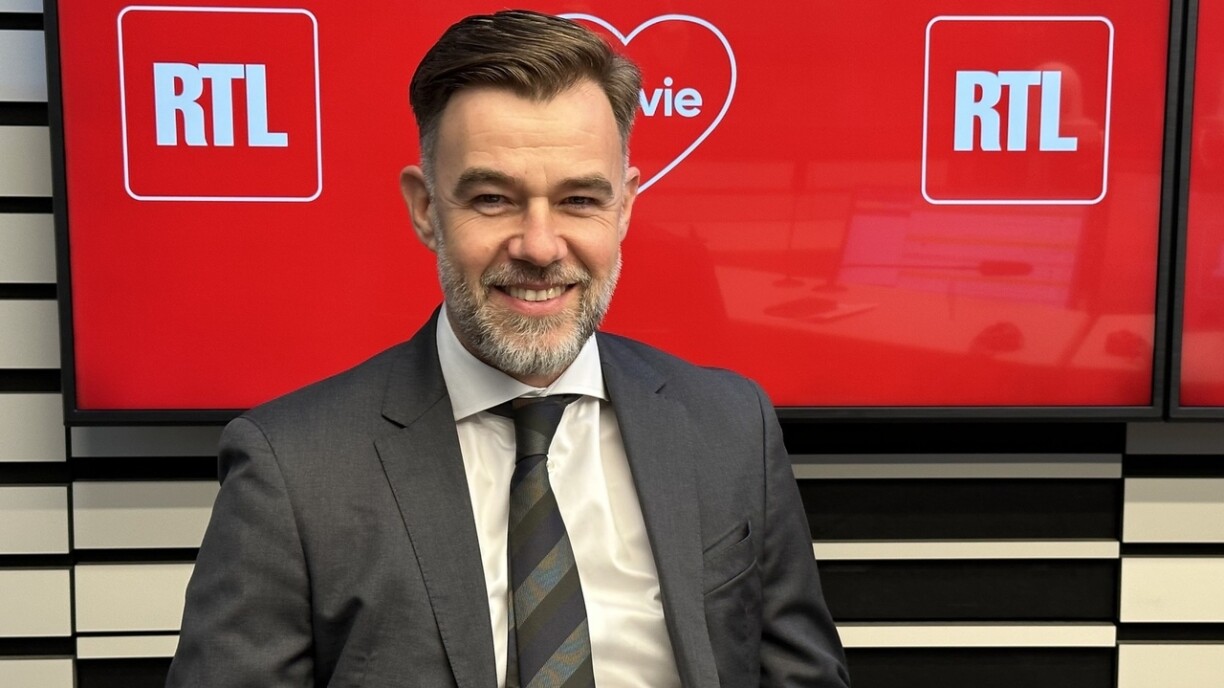
A sectorial tripartite will meet on Wednesday as a result of layoffs at Husky Technologies, Dupont Tejin Films, and John Zink. However, according to Franz Fayot "there is no reason to see this as a crisis in the industrial sector."
The Minister of the Economy appeared as a guest on RTL Radio on Tuesday morning and pointed out that employment in the sector had remained stable over the past few years, "at approximately 30,000 people," and that the industrial sector still accounts for 2.3% of all companies in the Grand Duchy.
"Many companies are also still expanding and creating new jobs," Fayot added.
The industrial sector is in "a transitional phase" with many challenges, such as high energy prices and the shortage of skilled workers.Throughout Europe, the industrial sector is "reinventing itself and becoming more environmentally friendly." The government will support the companies in this endeavour.
In general, the minister from the Luxembourg Socialist Workers' Party (LSAP) is optimistic as there is an increasing demand for personnel in the industrial sector, meaning that workers who lose their jobs can quickly find employment elsewhere.
With the exception of Liberty Steel, the Minister of the Economy is not aware of any other company that is in trouble at the moment. Luxembourg has "good instruments" for dealing with problems in the industrial sector and the social dialogue "works well."
During the sectorial tripartite on Wednesday, the government will push for a job retention plan as well as other potential measures, such as early retirement, re-training, partial unemployment, and employee sub-leasing.
How can businesses be drawn to Luxembourg, or rather, how can they be kept in the country? The government "must support the companies in their renewal, i.e. in their decarbonisation." However, in order to attract new businesses, Luxembourg must "find its own niche."
The scarcity of building land is a significant barrier for new businesses looking to establish themselves in the country. Given the country's size, there isn't much space available for the industrial sector, therefore it's important to use it wisely and to attract only companies that fit in with the government's goals for the future: i.e. sustainable businesses.
Fayot was unable to provide specific details on the amount of building land available for the industrial sector. When asked if it was only 15 hectares, as is often claimed in industrial circles, the minister said, "I think it's more than that."
The Minister added that "we need to differentiate between national, regional, and communal activity zones." In addition, there are a number of infrastructure projects, especially the technological park Dudelange or the Crassier site in Ehlerange, although they will take time to complete, Fayot said.
René Winkin, the director of the Federation of Luxembourg Industrialists (FEDIL), specified to our colleagues from RTL Radio that FEDIL was talking about state-owned land that is currently available.
"Many of these zones, whether communal or still under construction, are of course not included. I think you would end up with 15 to 20 (hectares) where businesses could settle right now. And not like in the case of Google, for example, where they spent years rezoning or purchasing land."





