
Here are five things you should know at the end of this week:


At the start of June, Luxembourg's Minister of Social Security signed a new EU agreement regarding cross-border remote working.
Background - Since the coronavirus pandemic, working from home has become an integral part of everyday work life for people in Luxembourg and elsewhere. EU member states have therefore collaborated on a new agreement for cross-border workers to address the demands of this new work landscape.
In early June, Minister for Social Security Claude Haagen signed the new agreement, which targets concerns surrounding social security, thus ensuring the Grand Duchy's participation for the next five years.
According to a Ministry statement, this new agreement will generally enable individuals to "work a greater number of days from home without changing their affiliation".
France joins the list - France has now joined the list of participating countries. The resulting framework agreement with Luxembourg took effect on 1 July 2023, immediately following the conclusion of the transitional period linked to the pandemic.
34 days for German cross-border workers - Later this week, Luxembourg's Minister of Finance Yuriko Backes signed a new agreement with her German counterpart Christian Lindner to extend the annual number of teleworking days for German cross-border workers to 34.
Minister Backes noted that the number now corresponds with the agreements struck with both Belgium and France, "so the same conditions now apply to all cross-border workers".
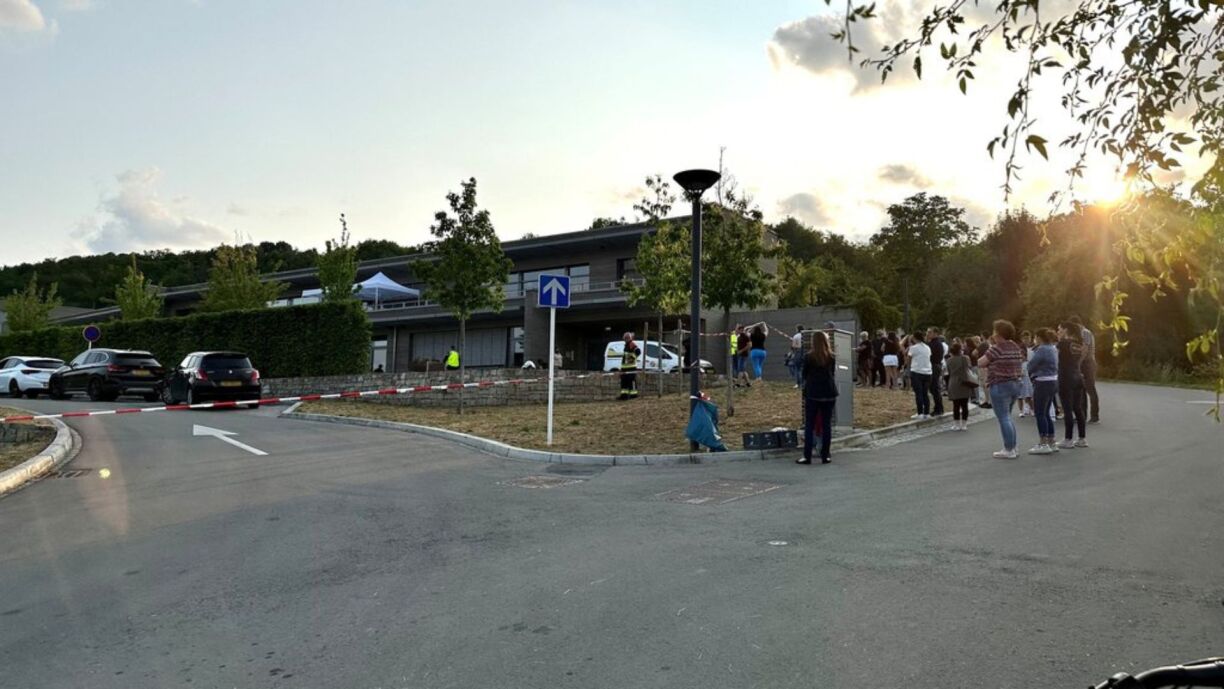
Around 70 people, mostly children, were placed in isolation for several hours in Rosport on Monday evening after bags containing a suspicious substance were found on a bus.
On Thursday afternoon, the Lycée Michel Rodange went into a lockdown after police and emergency services were again dispatched to investigate a suspicious substance.
It is not clear at this stage whether there is any connection between both cases.
Rosport incident - It is unclear what exactly was in the bags or how they ended up on the bus. Around half a dozen children were thought to have come in contact with the substance, which was later described as a powder.
Emergency services placed the children in isolation for several hours until more was known about the substance, but around 8.30pm the first were allowed to go home, followed by the rest a few hours later.
Dr Anne Vergison from the Health Directorate explained on Tuesday: "Additional analyses still might have to be carried out to ascertain the exact nature of the substance. But, we have initial analyses that allow us to be sure that there are no risks for the children and adults who were present."
Michel Rodange incident - Pupils of the Lycée Michel Rodange (LMRL), situated at the Campus 'Geesseknäppchen' in southern Luxembourg City, were told not to leave premises until further notice following the discovery of a suspicious substance in the building on Thursday.
Teams of police and emergency services were dispatched to the school following the alert. Pupils were eventually permitted to leave the premises at 2.45pm, some 45 minutes after the final bell.
A teacher explained an "unknown substance" had been located in a boys' bathroom. Four adults are said to have been temporarily placed in preventative isolation.
Following analyses, the suspicious substance was confirmed to be chalk.
Investigation launched - Although investigations have been launched in both cases, it is unclear at this point in time whether there is any connection between the incident in Rosport and the one at Michel Rodange secondary school.
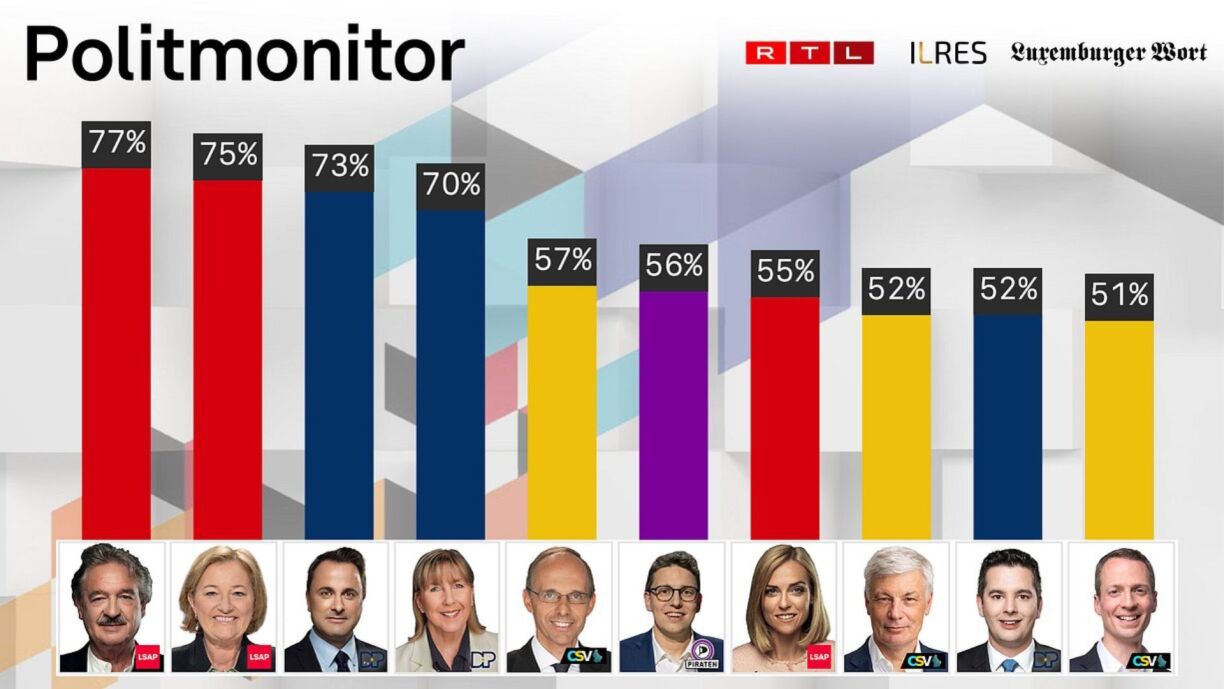
The Politmonitor poll conducted by Ilres for RTL and Luxemburger Wort shows that after ten years of a three-party coalition between the DP, LSAP and The Greens, most Luxembourgish voters seem to envision a new coalition for the upcoming legislative period.
The second part of the survey shows how voters rank the country's top politicians - with Foreign Affairs Minister Jean Asselborn retaking first place from Health Minister Paulette Lenert.
With three months to go before the general elections, Luxembourgers thus provided a tentative insight into who they might vote in come 8 October.
Part one - In response to the question "Which parties should be in the next government?", voters' wishes seem to indicate the emergence of a potential LSAP-CSV-DP trio. The first two were cited in 48% of cases, with the DP at 46%.
Popularity amongst these three parties is on the rise, while that of the Greens fell sharply between April and July (from 29% to 22%).
Despite a desire for change, 68% of voters have a positive view of the outgoing government, while 29% share a negative opinion. More generally, voters think the current government has done a good job in the areas of access to healthcare, mobility, protection of purchasing power and safety. They are less satisfied with action on climate change, education and the fight against poverty and tax fairness.
Xavier Bettel's backing seems as solid as ever: 32% of voters would like to see him extend his term as Prime Minister.
Part two - The LSAP's Jean Asselborn retakes first place from Minister Lenert, who topped the last Politmonitor survey after gaining popularity during the coronavirus pandemic. The Foreign Minister picked up 77 points overall.
This time round, Lenert dropped points, but still came in second, with incumbent Prime Minister Xavier Bettel sitting in third place once again.
Most notably, there is not one single Green Party member among the top ten most popular politicians, reflecting the lack of popularity observed in Wednesday's publication, where just 4% of voters said they would choose justice minister Sam Tanson as Prime Minister in October.
Luxembourg City Mayor Lydie Polfer (DP) sits in fourth place after winning her reelection bid during the recent municipal elections.
In terms of opposition, Luc Frieden takes fifth place, owing his recent surge in popularity to his status as the CSV's official lead candidate for October's elections.
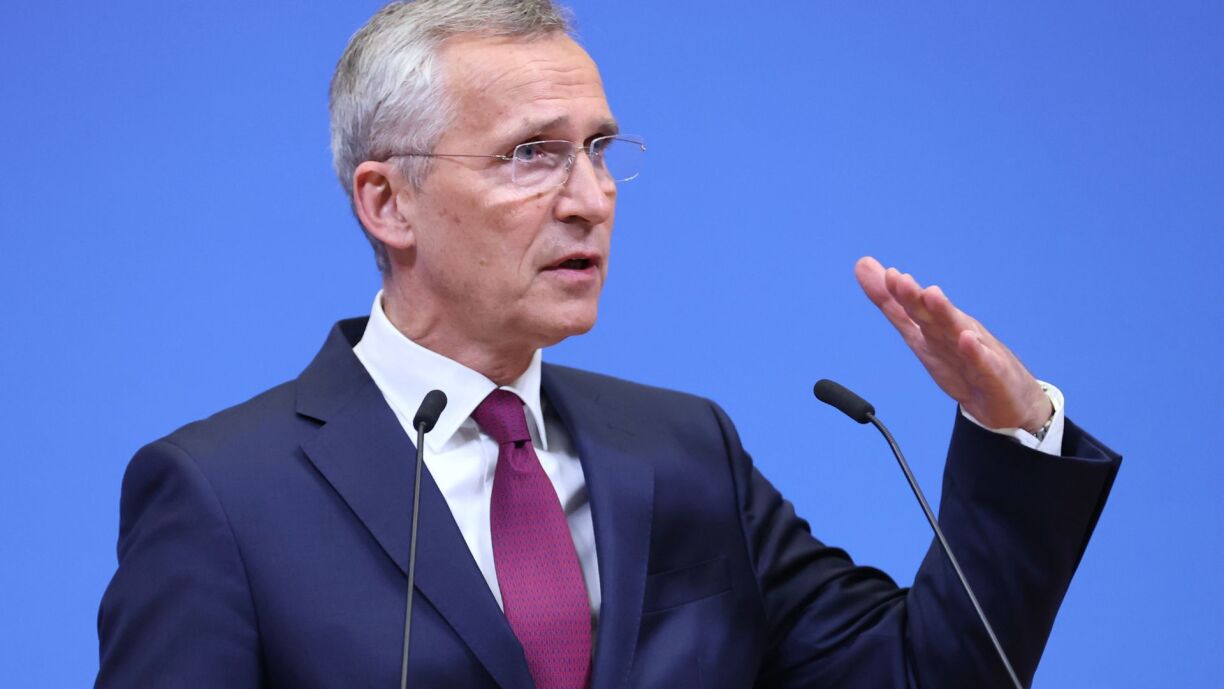
NATO's members on Tuesday extended the tenure of alliance chief Jens Stoltenberg for one year, after struggling to find a replacement in the shadow of Russia's war in Ukraine.
The announcement comes one week ahead of a summit of NATO leaders in Lithuania that will be dominated by the Western military alliance's response to the war and Ukraine's push for membership.
NATO countries made the call to extend the tenure of the former Norwegian prime minister - at the helm of the alliance since 2014 - after failing to agree an obvious replacement.
Decade in power - NATO secretary general Jens Stoltenberg had already lined up a job as head of the central bank in his native Norway when Russia's invasion of Ukraine pushed allies last year to ask him to stay on.
The latest one-year extension announced on Tuesday will see Stoltenberg, 64, complete 10 years in charge at NATO and take him to a 75th anniversary summit in Washington in July 2024.
His decade at the helm began just months after Russia seized Crimea from Ukraine.
No viable alternative - Others seen as potential candidates, including Danish Prime Minister Mette Frederiksen and British Defence Minister Ben Wallace, had recently dropped out of contention.
Frederiksen appeared to tick the requirements of some European allies as a possible first female leader and by being from the EU. Britain's Wallace put himself forward, but numerous NATO allies wanted a former head of state or government in charge, and France insisted on someone from an EU country.
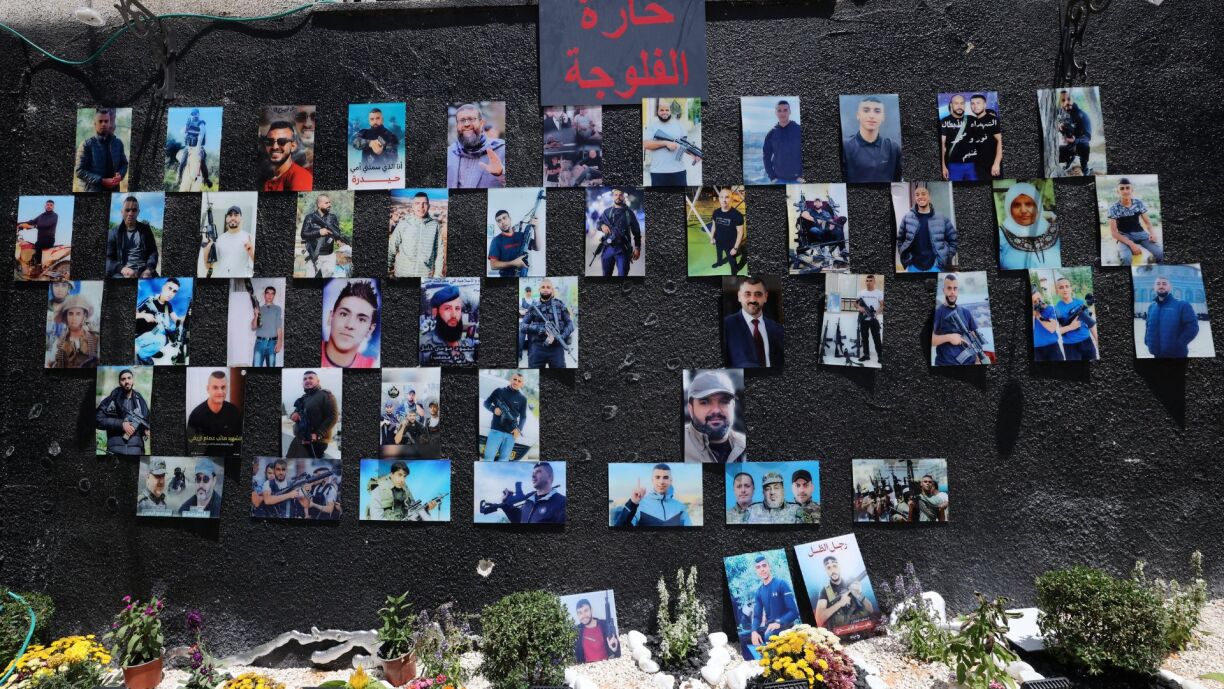
Israeli forces killed eight Palestinians in a large-scale operation Monday in the occupied West Bank in what the army labelled an "extensive counter-terrorism effort" involving drone strikes and hundreds of troops.
Eight people were killed and 50 wounded, ten seriously, the Palestinian health ministry said - exceeding the toll of seven dead in an Israeli army raid in Jenin two weeks ago, which saw the rare use of helicopter missile fire.
Israel's army on Wednesday declared the end of the large-scale military operation in the occupied West Bank that killed twelve Palestinians and one Israeli soldier over the previous two days.
Contested region - Israel has occupied the West Bank since the Six-Day War of 1967. Excluding annexed east Jerusalem, the territory is now home to around 490,000 Israelis who live in settlements considered illegal under international law.
The Palestinians, who seek their own independent state, want Israel to withdraw from all land it occupied in 1967 and to dismantle all Jewish settlements. However, Netanyahu has pledged to "strengthen settlements" and has expressed no interest in reviving peace talks, which have been moribund since 2014.'Counterterrorism effort' -
Monday's operation featured "brigade-level" troop numbers, said Israeli army spokesman Richard Hecht, while Foreign Minister Eli Cohen told reporters that "we are striking the terrorism hub with great strength".The raid, involving hundreds of forces, drone strikes and armoured bulldozers, targeted the northern West Bank city of Jenin, a centre for multiple armed Palestinian groups.
Ending announced - Israel's army on Wednesday declared the end of the large-scale military operation in the occupied West Bank that, in the end, killed twelve Palestinians and one Israeli soldier over the previous two days.
Thousands of Palestinian mourners have since joined a Jenin funeral procession for those killed, where militants fired gunshots into the air and the crowd chanted "With our souls and blood, we will sacrifice for you, martyr!"
As the army pulled out of Jenin, much of the city's crowded refugee camp was left charred and in rubble from the incursion which displaced at least 3,000 residents.
Business & Tech - https://today.rtl.lu/news/business-and-tech/a/2082618.htmlMore than 30 million people have downloaded Threads, Meta's rival to Twitter, within the first few hours of its launch, the company's CEO Mark Zuckerberg said Thursday.
Science & Environment - COP28 host UAE pledged to triple renewable energy production as part of a raft of environmental initiatives announced on Monday, months before it hosts the UN climate talks.
Entertainment - In celebration of the company's upcoming centennial - officially marked on October 16 - Disney recently allowed a glimpse into its vaults while hosting a media visit to its film studio lot in Burbank, near Los Angeles.
False alarm - A bomb squad was alerted to Stade Camille Polfer in Bonnevoie on Thursday morning, but the presumed bomb found at a construction site turned out to just be scrap metal.
Exodus - The Alternative Democratic Reform Party (adr) experiences further internal turbulence as four additional members exit with the party following MP Roy Reding's recent resignation.https://today.rtl.lu/news/world/a/2066108.html
It's official - On Thursday, MPs unanimously approved the construction of a velodrome in Mondorf-les-Bains, the home town of two Luxembourgish cycling icons, the Schleck brothers.

Your Weekly Recap is published every Friday at noon. Read earlier versions.





