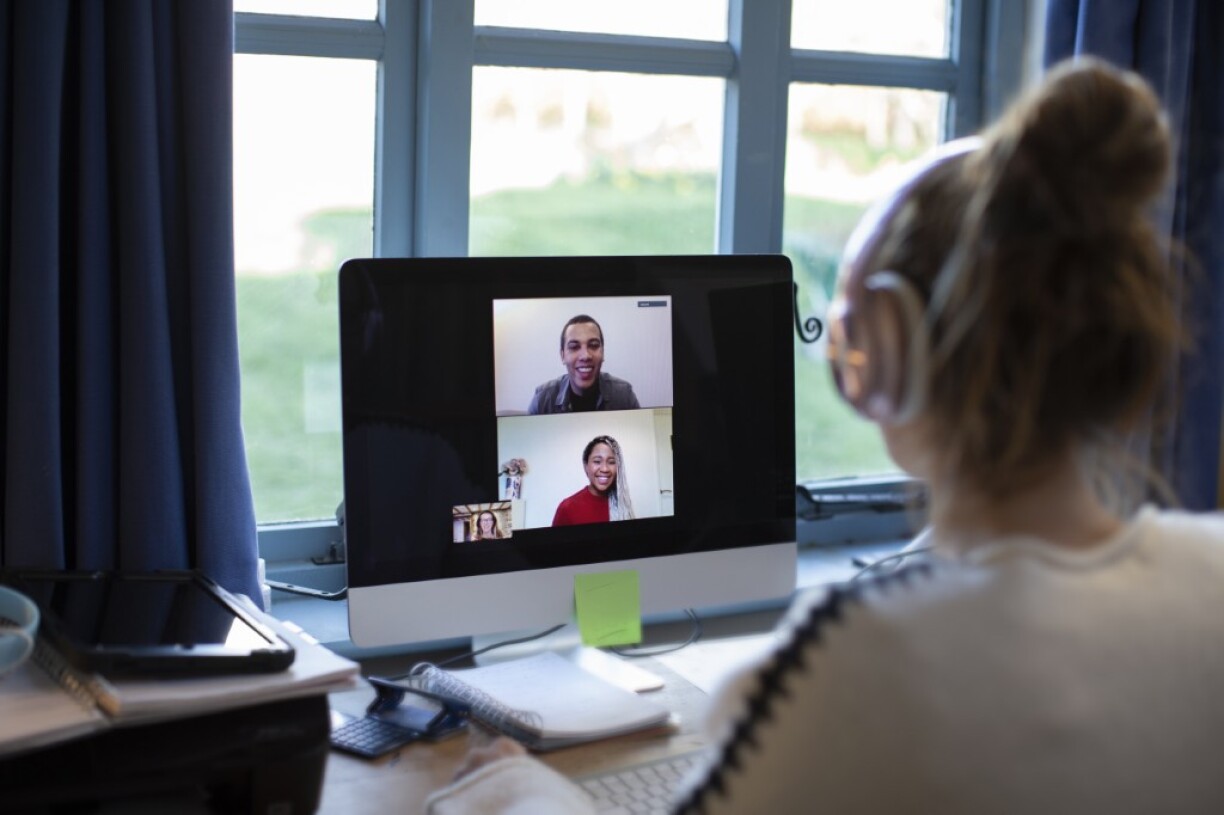
At the start of June, Luxembourg's Minister of Social Security signed a new framework agreement regarding cross-border remote working. France has now joined the growing list of countries participating in this accord.
Remote working, which gained widespread popularity during the Covid-19 pandemic, has become an integral part of the modern work landscape. To adapt to this new reality, European Union Member States have drawn up a new framework agreement pertaining to social security.
According to the Ministry of Social Security, this new agreement will generally enable individuals to "work a greater number of days from home without changing their affiliation."
The development is highly advantageous for cross-border workers, as it grants them the option to work remotely from their country of residence while still abiding by the social security laws of the Member State in which their employer is based.
Nonetheless, two conditions must be met for the arrangement to apply:
This framework agreement took effect on 1 July 2023, immediately following the conclusion of the transitional period linked to the pandemic. Initially, the agreement will be valid for a five-year period.
Among Luxembourg's neighbouring nations, Germany has already signed the framework agreement, and Belgium is expected to do so shortly. Belgium also serves as the depositary state for agreement signatures.
As for France, Isabelle Rauch, Member of Parliament for the Moselle department, recently announced on Twitter that France has also signed the agreement, which will undoubtedly make life easier for numerous cross-border workers.

This initiative marks an important step towards deeper integration within the European Union by promoting the freedom of movement for individuals across the Union while safeguarding their social security rights.
It is important to note that these provisions solely pertain to social security matters. Taxation arrangements are governed by separate bilateral agreements. Further details regarding the implementation procedures of this agreement will be communicated at a later date.





