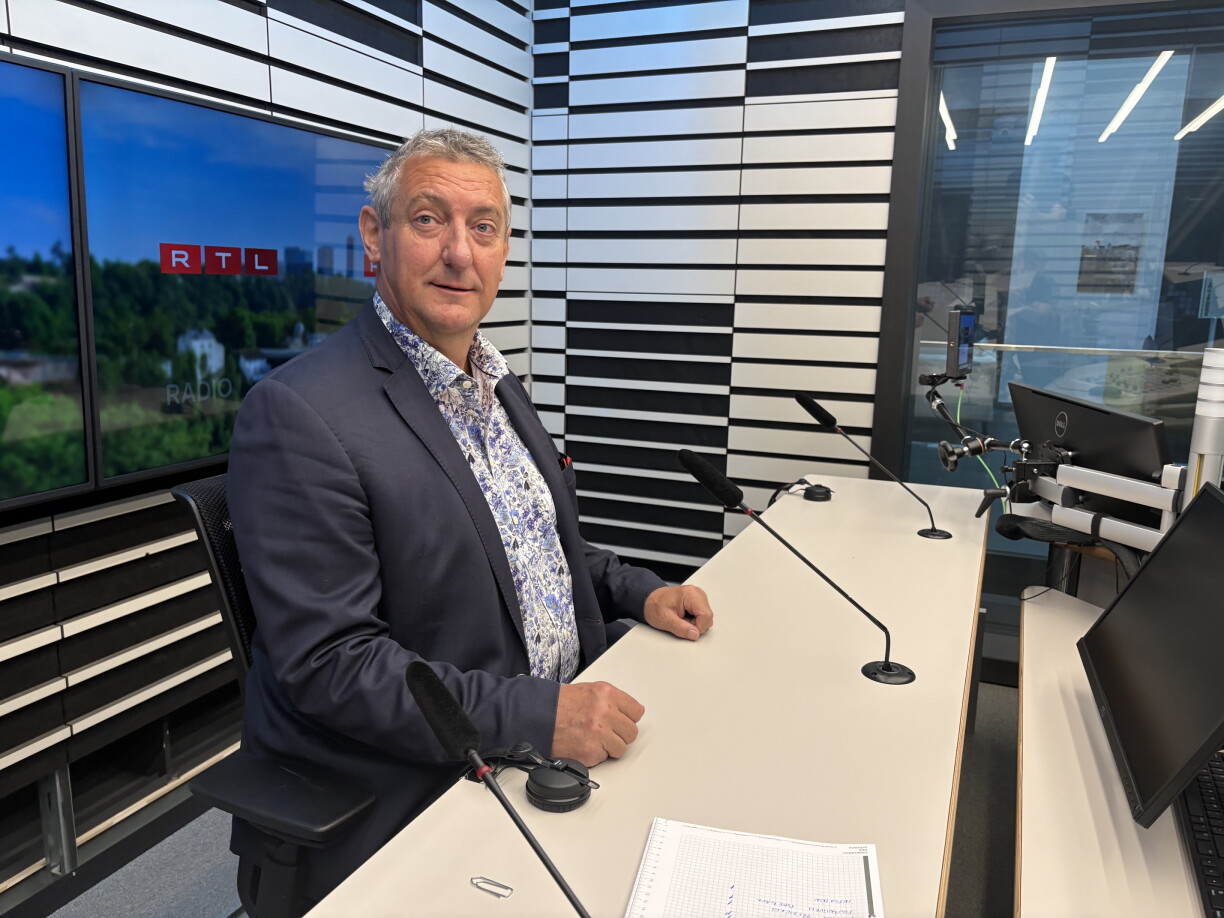
As Luxembourg prepares for the next round of tripartite negotiations, Romain Schmit, secretary general of the Fédération des Artisans (FDA), has voiced scepticism about the government’s approach to current economic challenges. Schmit said that, although Prime Minister Luc Frieden frequently championed the idea of togetherness in his State of the Nation address, the business community felt overlooked. He remarked: "There was a lot of talk about togetherness, but those running businesses still feel left behind and taken for granted."
Schmit acknowledged some positive intentions in the Prime Minister’s pledge to improve the business landscape, but criticised the lack of clear practical steps: "Overall, there was a feeling that there was a lack of oomph, substance. Where do we start, where does it actually begin?"
Schmit made clear that the FDA is ready to engage constructively in the upcoming tripartite, underlining a willingness to work together for Luxembourg’s future. However, he warned that without tackling deep-rooted problems policymakers risk only "winning battles but losing the war in the long term." Schmit urged the need to shift gears and put Luxembourg on a path where investment in the country is attractive again, saying the country must "bring Luxembourg back onto a productive path so that growth can return in a sustainable way." At present, he warned, "we are in an environment with no growth, rising unemployment, and that’s not good for Luxembourg."
When asked about the impact of recent global crises such as the US-Israeli war in Iran and its ensuing impact on energy prices, Schmit stated that whether its the crafts sector or another sector, "all the companies I hear from are complaining at the moment", but that construction is by far the hardest hit sector, "as it is already in a structural crisis." Other affected areas include automotive, where electrification trends may reduce workshop work in the long term, and personal care services, where customers are becoming more cautious.
Rising inflation and cost pressures are a constant concern. Schmit described how price increases for raw materials and energy are directly impacting the sector: "Prices are rising all around us. Ultimately all this will be reflected in the prices for finished products, that is, for craftsmen’s work." He noted that suppliers often add fuel surcharges, which ultimately feed into end prices. To cope, many businesses are looking to reduce costs and adapt their product range. "I have spoken to bakers who want to reduce their range of products", Schmit said, explaining that some are considering moving away from labour-intensive products or reducing their selection to save on costs.
Another major challenge is falling productivity. Schmit highlighted that productivity in the crafts sector "has been in free fall for years". He attributed this decline in part to an increasing administrative burden, saying, "Years ago, there was one administrative employee for every ten salaried staff; now there are three or four". These extra tasks, he noted, make work more expensive without creating visible value for clients. Compliance with accounting, regulatory, and technical standards, both national and European, has also become more demanding. Meanwhile, the total number of billable hours per employee has dropped, further eroding productivity.
Luxembourg companies invest less than their counterparts in neighbouring countries and the eurozone as a whole, yet pay out higher dividends to shareholders, according to figures compiled by the National Institute of Statistics and Economic Studies (STATEC) ahead of the recent pre-tripartite council meeting. Schmit observed that this trend is particularly evident in smaller businesses. He noted that craft enterprises rarely pay themselves dividends; instead, business owners typically take a salary at the end of the month if a profit is made. Schmit added that, in Luxembourg, major aggregates can often conceal the more modest scale of most companies' operations.
At the beginning of May, STATEC researchers proposed an alternative way to measure productivity in a new working paper. Using this method, Romain Hilgert argued in an article for the weekly newspaper d'Land last week that, in summary, capital owners in Luxembourg are "ten times stronger" than employees, suggesting a marked imbalance in economic weight. Schmit disputed this interpretation, stating he does not believe that capital owners shoulder as much as is suggested in the analysis.
With the tripartite approaching, Schmit underscored that controlling inflation is the top priority. He warned that unchecked inflation could trigger a "multiplication of index tranches" which in other words is a cycle of repeated pay rises that would further increase business costs and risk economic overheating. Once indexation is addressed, Schmit said, the debate should focus on how to handle index tranches: "Should they be compensated, postponed, or dropped altogether? I do not want to prejudge the final outcome, but we don't have endless solutions", he commented. He warned of an incoming increase in prices on the broadest front with the additional effects on inflation, which needs to be avoided at all cost.
In response to a recent statement made by the owner of a craft business at a press conference held by Economy Minister Lex Delles, Schmit dismissed the notion that the owner's approach could simply be adopted by every business. The business owner had said the three index tranches expected by September next year would be no issue for him, as he would pass the cost on to the customer. Schmit countered that each company faces relatively strong international competition, particularly in the craft sector, and that while adjustments can be made here and there in production, they ultimately end up hurting profitability and there is a limit to how much a customer is wiling to pay.
Above all, he insisted that businesses must be protected from having to use their reserves to absorb costs. Schmit is open to sector-specific or selective measures, provided they do not distort competition: "We want a level playing field for all businesses, as there is strong competition in the sector. The legal framework will determine what is possible, but it is not clear whether all the social partners are ready to support this."
Unless decisive, targeted action is taken, Schmit warns policymakers that the crafts sector’s ability to compete and contribute to Luxembourg’s economy will be further undermined by inflation, declining productivity, and mounting administrative pressures.





