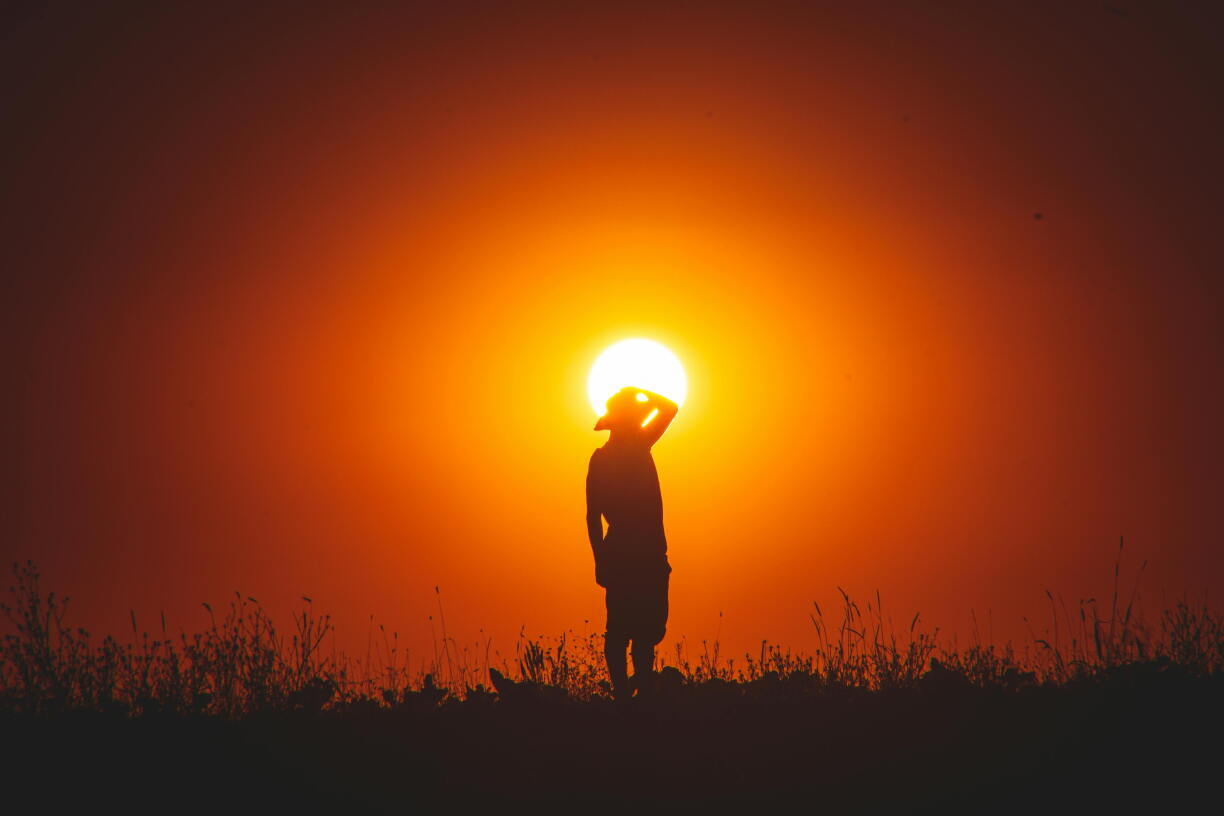
With a string of weather alerts announced over the last weeks for extreme heat, water saving measures in place, and raging wildfires causing uncountable devastation in neighbouring countries, RTL Today reached out to Meteolux Meteorologist Luca Mathias to help us understand if what we are experiencing this summer is an indication of the summers that lie ahead, or whether we can breathe a sigh of relief as it will likely be written off as an exceptional year.
Mathias explained that this is, in a sense, both the exception and also the norm. He elaborated: "Measured against today's climate, this summer is genuinely exceptional: June 2026 was the warmest calendar month ever recorded at Luxembourg-Findel (mean 19.9 °C, +3.2 °C above the 1991–2020 normal), ahead of 2003 and 2023, and it was the warmest June on record for Western Europe as a whole. But the reference frame is shifting."
He went on to explain that "Europe is warming at roughly twice the global rate, and our Findel record shows a clear increase in hot days and tropical nights over recent decades. A summer like 2026 is exceptional by today's standards, yet close to what an average summer is projected to look like around mid-century. However, individual summers are decided by the large-scale atmospheric circulation. This one was dominated by persistent blocking and high pressure systems. The next summer could be cooler and wetter again, but the trend lies in the long-term data, not in every single year."
Curious to know whether El Niño could be impacting the current weather that we are experiencing, RTL Today put this to Luca Mathias. He confirmed that "a strong El Niño is indeed underway, but it is not the explanation for our summer. It developed only during spring and summer 2026, so it was not in place when this year's heat patterns established themselves, and its influence on global temperature typically lags by several months. Moreover, El Niño's effects on Europe are weak and concentrated in autumn and winter."
With France and Spain having spent days battling unprecedented wildfires – something described by France's firefighters as a 'David vs. Goliath' situation – hundreds of thousands of residents and holidaymakers evacuated, and a never before seen in France 'pyrocumulonimbus' to contend with, we wanted to understand what the risk of wildfires in Luxembourg could be.
Mathias confirmed to us that "The wildfire risk is real, but different in character from the Mediterranean region. Our largely deciduous forests and more humid climate make catastrophic crown fires unlikely. The risk is nevertheless rising: prolonged drought dries litter and soil layers to depths that make suppression difficult. Almost all ignitions are human: cigarettes, sparks from farm machinery, barbecues, which means prevention is genuinely effective."
Indeed, at the time of writing, local councils remain divided on fire safety measures at the Upper Sûre lake – a particularly popular destination for residents in the hot weather – demonstrating that this issue is not a straightforward one, and highlighting the importance of each person to assume a level of responsibility.
Mathias confirmed to us that "Meteolux exchanges data with the CGDIS so that the emergency services can anticipate periods of elevated fire risk and adjust their readiness accordingly."
So, whilst it seems that summer 2026 does not necessarily shed any light on what next year's summer might look like, longer-term this summer is more characteristic of what we can expect and is therefore something that we should – if indeed we can – prepare for.





