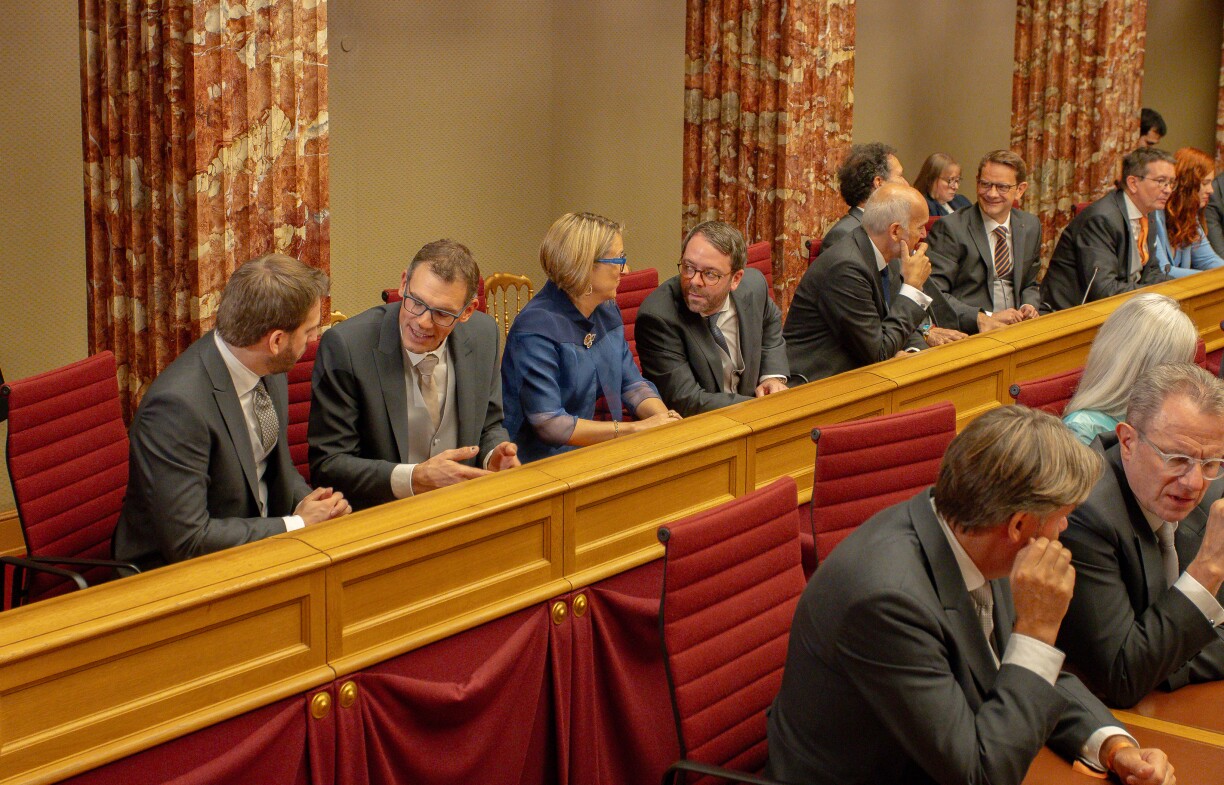
The Chamber of Deputies is working to modernise the status of its members, aiming to establish the role as a full-time profession with updated salaries and professional guarantees.
Chamber President Claude Wiseler confirmed the ongoing effort in an interview with RTL: “We are working on it, but it is complicated and therefore taking its time.” The complexity stems from members' diverse professional backgrounds and the intertwined issues of parliamentary remuneration and the practice of holding multiple mandates.
A key step toward the envisioned full-time, 40-hour role – which currently carries an official 20-hour commitment – would be ending the accumulation of mandates, a reform once championed by former CSV parliamentary group leader Marc Spautz. However, recent reports by the weekly d'Land and the news site Reporter.lu indicate that Spautz's own Christian Social People’s Party (CSV) and its coalition partner, the Democratic Party (DP), have since slowed the initiative.
President Wiseler, who is also a CSV colleague of Spautz, acknowledged there are arguments on both sides but reiterated that a full-time MP remains the objective. As noted by d'Land, party positions on dual mandates can shift with practical interests: parties with many MPs who simultaneously serve as mayors or municipal executive board members tend to oppose a separation of mandates. This political dynamic creates a risk that the status quo will prevail.
Chamber President Claude Wiseler argues that MPs must represent society broadly, coming from "all walks of life" and being "good people". To encourage this diversity, he emphasises the need for a clear reintegration path for those voted out of office – a principle he personally benefited from when he returned to his senior government advisor post after his ministerial tenure. This practice, enshrined in the civil service salary law, was also recently used by former Labour Minister Georges Mischo, who was appointed as a senior government advisor – technically a promotion, as Mischo was previously employed as a PE teacher.
Conversations with former ministers and MPs reveal the professional risk involved: entering the Chamber or government brings significant work and public responsibility, but also carries a potential professional risk. For civil servants, the transition is less risky. Incompatibility rules grant them full leave from their posts during their mandate. They receive a parliamentary allowance – currently half-taxed at approximately €9,000 – plus attendance fees and a portion of their official salary, with a guaranteed return to their position if not re-elected.
The situation is more challenging for those from the private sector and the self-employed, where "real problems" can arise, Wiseler notes. Salaried employees are entitled to just 20 hours of political leave weekly alongside their parliamentary allowance, with their employer reimbursed for half their salary by the Chamber. The self-employed receive a temporary allowance equal to twice the minimum wage. Wiseler highlights the dilemma of professionals like doctors, farmers, or employees who may struggle to maintain their businesses or return to former employers.
According to Reporter.lu, a recent proposal suggested a transitional allowance of one month per year served. The debate over MPs' status is also linked to the taxation of their allowance – currently only half-taxed, similar to ministers and Council of State members. President Wiseler acknowledges that moving toward a 40-hour MP role would make the question of taxation a central and "evident" part of the reform discussion.





