
During the 19th century, tens of thousands of Luxembourgers emigrated to the United States, hoping for better living conditions there. Most of them built a new life for themselves in the New World and, if at all, only returned to Luxembourg sporadically. Nevertheless, contact with their old homeland was often maintained over decades. A new scientific project called Growing Community Luxembourgers in Edgewater is now taking a deeper look into this exchange by analysing old letters.
What WhatsApp, SMS, or email are for us today used to be letters or even postcards. While messages arrive almost instantly today, even if the recipient is on the other side of the world, 100 years ago letters would have taken two weeks to arrive in Luxembourg from the United States. However, leaving aside the technicalities of communication, the content of the communication then and now is surprisingly similar. It was not about major world politics, but often about the weather, family celebrations, or even inheritances. Over the decades, however, contact gradually decreased, especially after the Second World War, as Marc Zimer, a member of Roots and Leaves, explains:
"I think the Second World War caused a very big gap in contact. Then people in America spoke more English and were more concerned with themselves again, instead of with Luxembourgers or their European ancestors in general. In the 1950s and 1960s, this contact decreased and, by the 2000s, a lot had been forgotten".
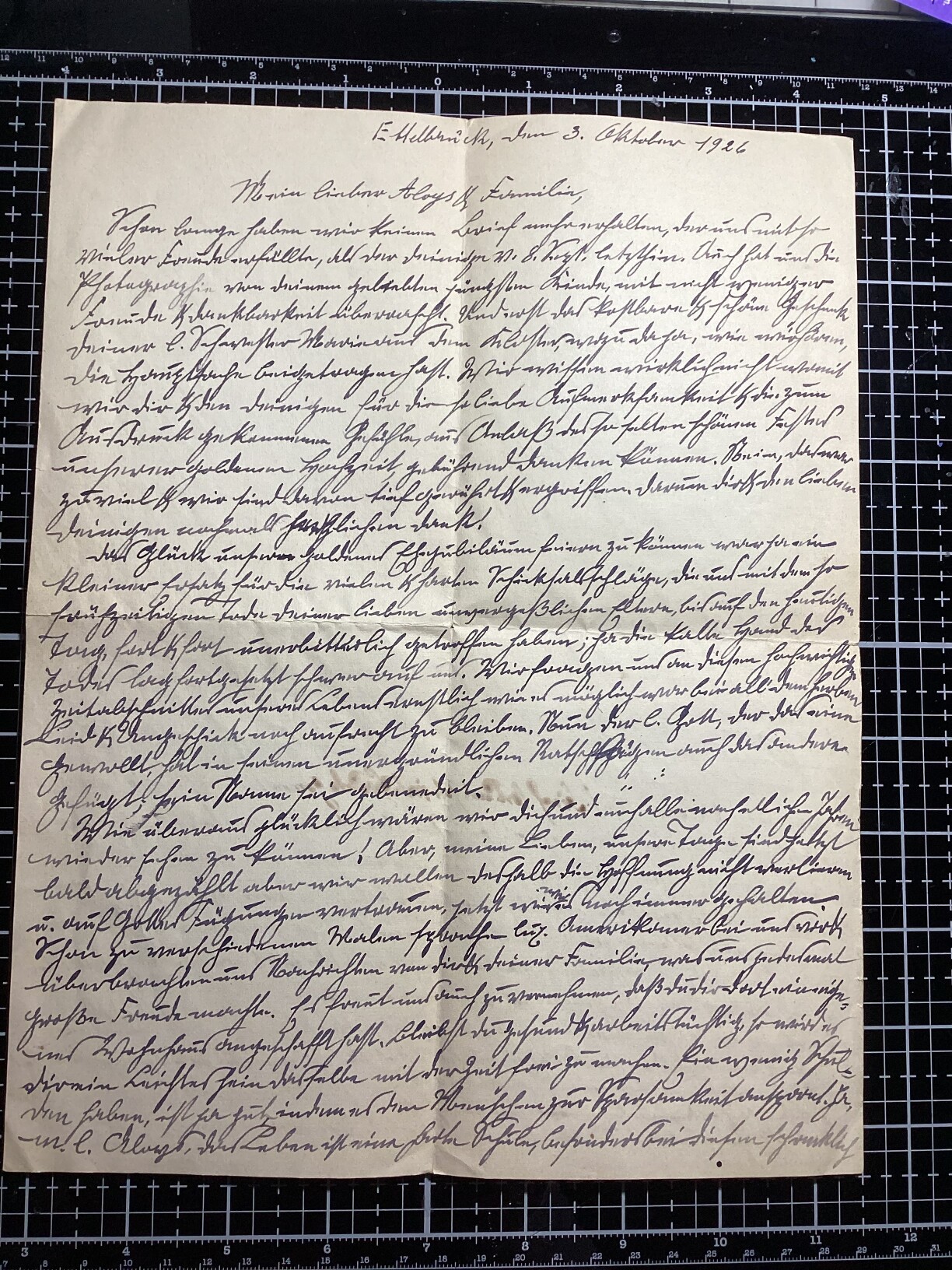
After the Second World War, letters were often no longer written in Luxembourgish or German, but in English, in order to distinguish the authors from German immigrants in the United States.
By analysing the letters, researchers can not only gain new insights into communication itself, but also into specific subjects that have so far received little or no attention, such as the everyday lives of housewives. A rather special aspect of the history of Luxembourgish emigrants to the United States is that many of them built greenhouses, although there were virtually none in Luxembourg.
"They effectively supplied Chicago through this work. The big question is where all the logistics came from to grow flowers, plants, and vegetables. The glass used for the greenhouses, the entire steel constructions, and the network had to be transported, which means that Luxembourgers were also part of this transport".
The project is being supported by Loyola University in Chicago and the University of Luxembourg (Uni.lu) and marks the beginning of a collaboration between the two universities. A group from the US will come to Luxembourg in mid-May and, during that visit, they will discuss, among other things, how an informational tour through Chicago could be set up, says Tom Becker, a geography researcher at Uni.lu.
“Here in Luxembourg, for example, tours that are guided or self-guided through public spaces work very well. Whether this would also work in the US remains uncertain, as the general public is more reliant on cars. It is unclear whether this is the most effective way to convey knowledge. However, there may be other ideas they can bring that are new to us and from which we can learn”.
Looking at the Growing Community project, Tom Becker emphasises that the information gained should be integrated into the course. The focus is on imparting knowledge rather than providing what he referred to as occupational therapy.
The researchers are relying on the help of the general public for the project. People who still have old letters at home should not send copies immediately, but first contact the university and explain what kind of document they have. This can be done via the following email address: tom.becker@uni.lu .
Plans are in the works to establish a Chicago Club for Luxembourg. Anyone who currently has family in Chicago can contact the following email address: marc.zimer@education.lu .





