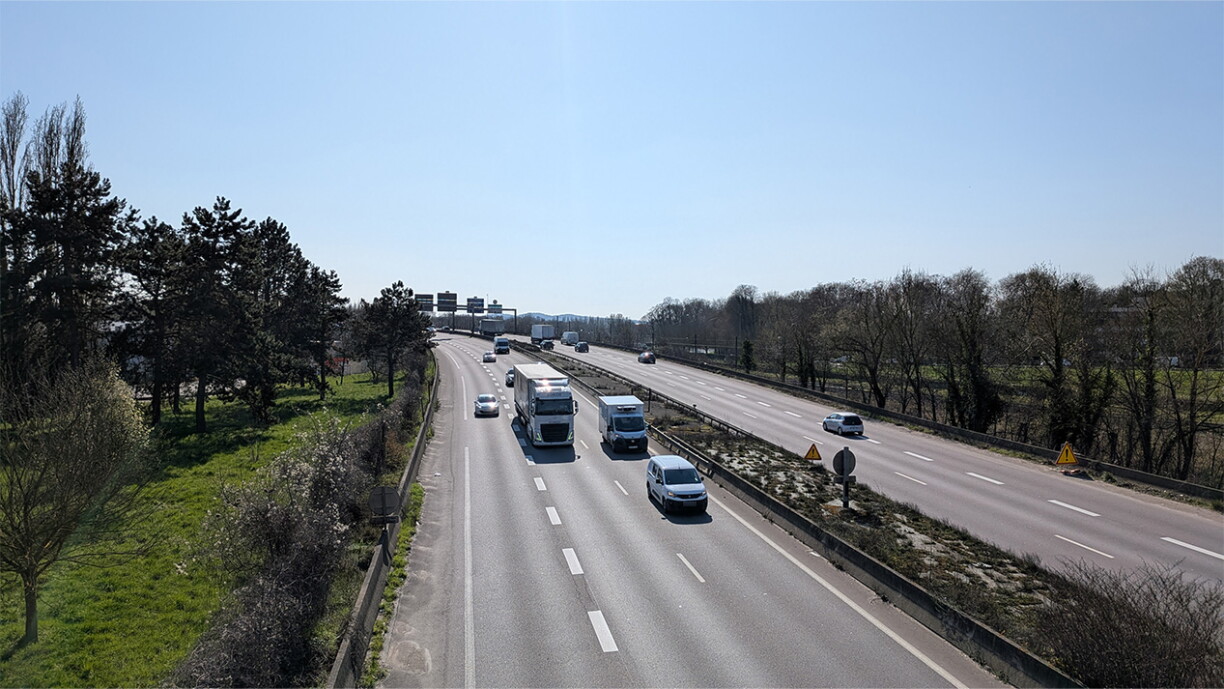
On Thursday 21 May, the first of two public information meetings was held in Thionville to discuss the process of the public consultation on the motorway project.
The consultation is being conducted by an inquiry committee which is charged with maintaining a neutral position on the topic, whilst summarising the situation for the French government. The latter will make the final decision on the future of the A31. Now is therefore the time for residents, business-owners and elected officials to express their thoughts on the expansion of the motorway.
The consultation is accessible online and can be completed until 27 June.
Depending on the progress of the public utility declaration, expected in 2027, a concessionnaire will be selected before the end of the decade, although work is unlikely to commence before 2030-2031.
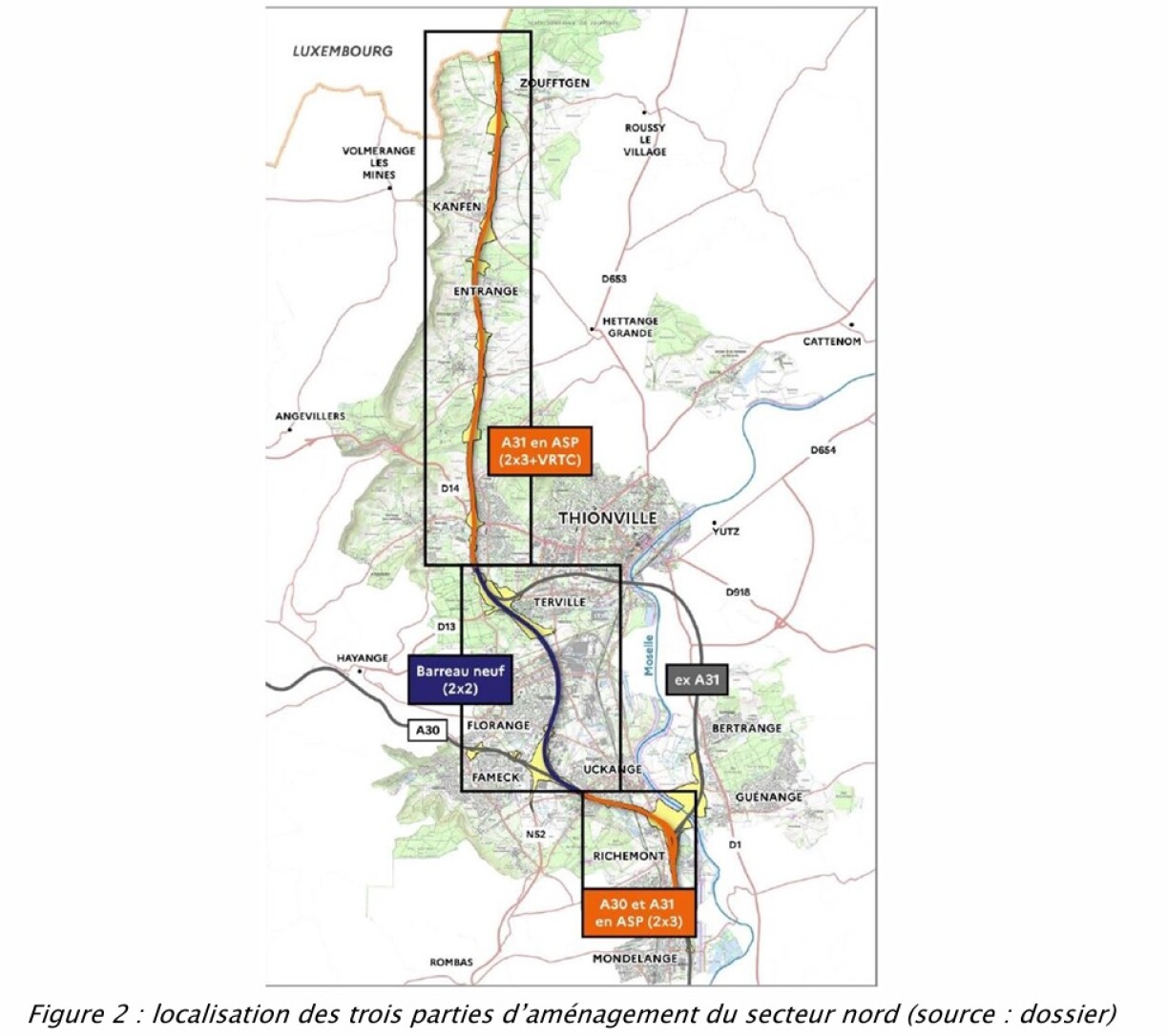
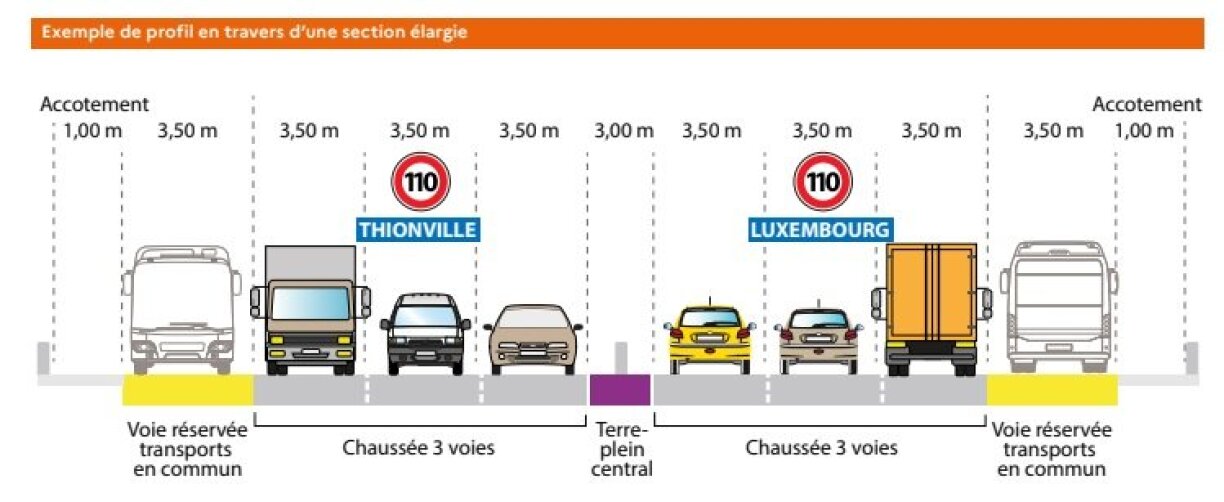
The project is the same as in 2024: an expansion of the northern stretch of the motorway, increasing the road from two to three lanes between Thionville and the Luxembourg border, as well as creating a bypass for southern Thionville. This would take the form of a tunnel passing beneath Florange and rejoining the A30. The goal is to alleviate traffic on the current motorway and to create new links with the Fensch valley and the RD652 to Rombas.
The topic of discussion for several years, the A31bis has all the characteristics of a controversial project: a motorway construction project with a negative impact on the environment, the destruction of natural spaces to expand the road, a nuisance for residents, notably in Fameck, Florange or Terville, expropriations, a new toll...
Residents have formed multiple collectives opposing the plan, citing its "public uselessness". Among their concerns, they list increased pollution, nuisances for reisdents and additional costs for motorists.
While the widening to three lanes in each direction after Thionville has so far garnered few negative opinions, the construction of the tunnel is drawing the most criticism. During the public meeting on 21 May, many attendees acknowledged that the Thionville bypass presents a problem due to its current two-lane configuration and the numerous interchanges within a small area. However, the Regional Directorate for the Environment, Planning and Housing (DREAL) has ruled out transforming the Thionville bypass into a three-lane motorway without tunnel construction. This alternative was deemed unsuitable in terms of congestion and noise pollution.
To avoid spending a single cent of public money, the government chose to place the motorway under concession to a private operator. This operator will finance the construction of the new road and tunnel (for a total amount approaching 900 million euros). In return, it will install a toll, which results in the motorway being paid for by its users.
Even with the installation of a barrier-free toll system, the price of which will not be definitively known until the concessionaire is appointed, the estimated cost of passage will deter many:
The cost for heavy-goods vehicles will be even higher, ranging from €5.91 for one journey between Thionville and Luxembourg, or €11.64 for a one-way trip from Fameck to Luxembourg via the tunnel.
If a tunnel is built to bypass Thionville, it will significantly alter the route of the A31, passing through Fameck, before entering a tunnel under Florange and emerging west of Terville.
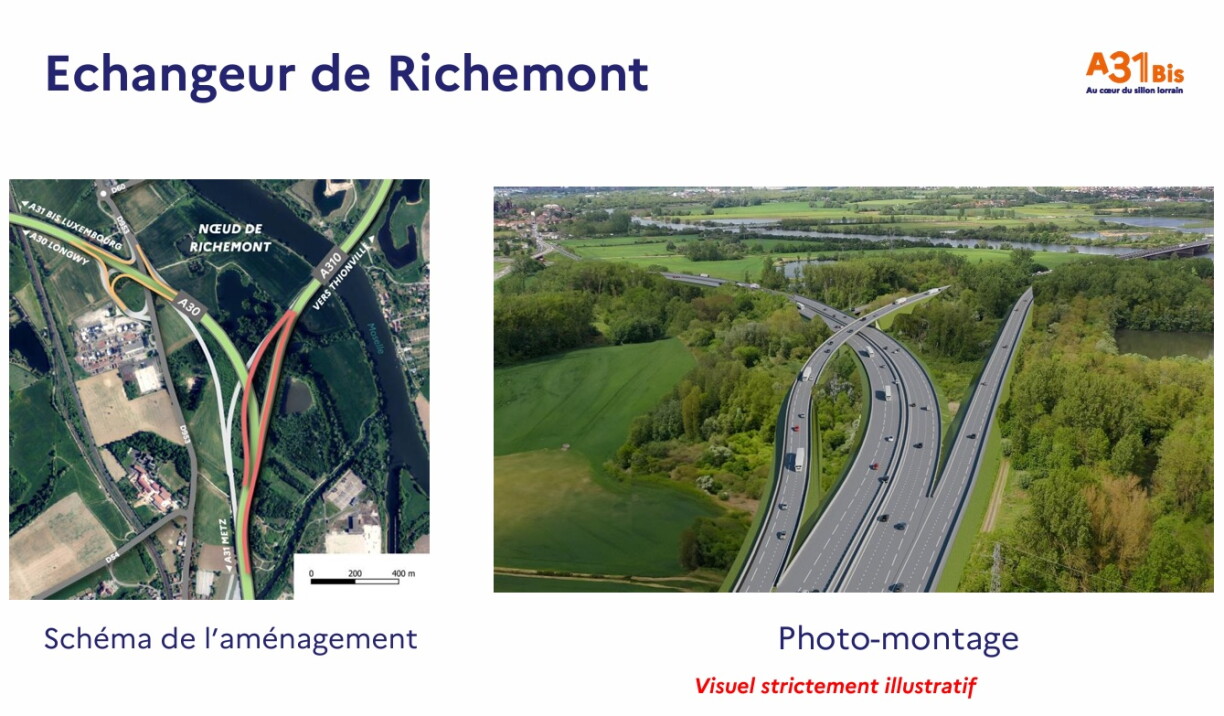
The A31 as it currently exists between Richemont and Thionville will be downgraded and will no longer be a motorway.
This means the concessionaire will be able to adapt the interchanges for the new A31 with a tunnel, so the old A31, although still existing and toll-free as far as Thionville, will no longer be the main route to Luxembourg. Drivers will therefore have to leave the motorway and take the A31 they currently use. The same will apply in Thionville, where drivers will have to merge onto the dual carriageway (2x3 lanes) after crossing the Beauregard viaduct. Several other modifications, still under consideration, will almost certainly be added, including a speed limit as far as Thionville and a ban on through traffic for heavy-goods vehicles.
One of the main demands of those opposing the A31bis project is a massive investment in public transport (buses and trains) as well as the development of working from home. While such measures are indeed planned, as the Regional Directorate for the Environment, Planning and Housing (DREAL) pointed out, cars currently account for three-quarters of cross-border travel in northern Moselle. More than 65,000 vehicles cross the border daily, while the train service will ultimately offer only 22,000 seats per day. "We're not going to disrupt the existing balance. We need solutions for trains, for carpooling, for buses, and of course, for cars," explained Marc Hoeltzel, regional director at the DREAL, in his opening remarks at the public meeting.
Despite ongoing investments on the railway line (creation of park-and-ride facilities, lengthening of platforms, arrival of new trains capable of carrying more passengers), traffic on the A31 is set to grow.
The possibility of relying more heavily on public transport, or even running buses on the hard shoulder, as is the case on the Luxembourg side, was studied, but this would require significant work to widen the hard shoulder and modify the engineering structures (bridges, interchanges) along the A31 to adapt traffic conditions. Most importantly, it was rejected because the Regional Directorate for the Environment, Planning and Housing (DREAL) deemed it unsuitable for the project without the creation of a third lane and without a bypass around Thionville.





