As of April 2023, a little over 3,000 employees in Luxembourg receive the so-called Income for People with Severe Disabilities (RPGH). The amount is currently set at €1,700 per month, which the National Solidarity Fund is paying.
However, after a person's death, their succession and properties are used to repay the RPGH.
This means that revenue received by disabled people looking for employment or for those who are simply unable to work has to be reimbursed. This has caused concern among RGPH recipients and members of their families. RTL recently spoke to one such family.
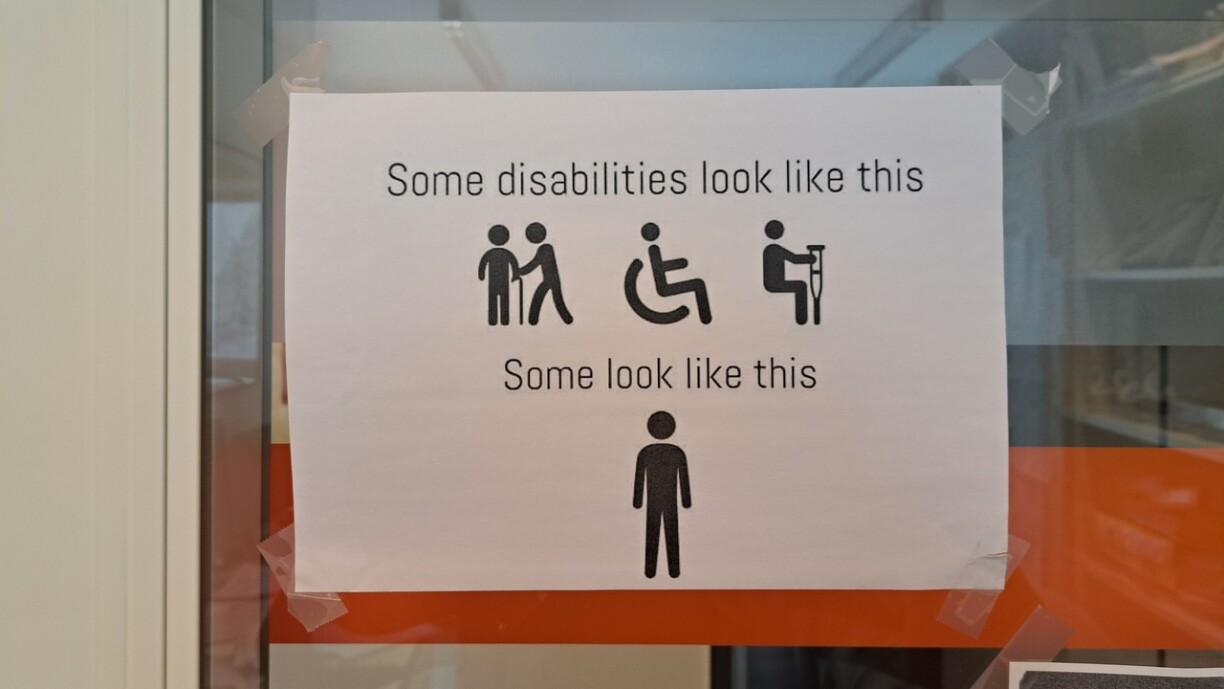
At first glance, no one would suspect that former educator Sofia Ferreira has been unable to work for the past six years.
The mother of two, who lives in the Oesling region, has been suffering from a malformation of the right shoulder, which was followed by arthritis in the hand, back issues, and early stages of osteoporosis. One diagnose after the next changed her life and she was eventually awarded the status of employee with limited work capabilities.
Unless Ferreira finds adapted employment, the family depends on the RPGH as one salary, which is not enough to get them through. She says that she was never directly informed that her house would be used as collateral, which she found out through a letter.
According to non-profit organisation Info Handicap, many people like Ferreira suffered a similar fate.
Spokesperson Andrea Di Ronco noted: "I am also under the impression that people are not told exactly how this works. The matter of the collateral is frequently ambiguous and unclear."
If the affected person is a property owner, the property is automatically taken as collateral. Direct heirs are protected up to €247,088, but if the value of the property exceeds this number, the sum of RPGH payments received is subsequently deducted from the sale of the property and used to reimburse the fund.
Over a period of ten years, this can quickly amount to €200,000.
As long as a person from the household, such as a partner or child, still lives in the house, the property does not have to be sold.
Affected people are not adequately informed about the specific social contributions that have been omitted. For instance, a person has to have worked for a certain time before receiving the RPGH to contribute to the pension fund.
The National Action Plan for the Implementation of the Convention on the Rights of People with Disabilities 2019-2024 plans on amending the RPGH. Minister for Family Affairs and Integration Corinne Cahen has already filed a respective legislative proposal.
Said proposal will differentiate between those RPGH recipients that are looking for employment and those who can no longer work at all. The draft law envisions that the latter will not have to pay back the RPGH.
The state council formally opposed this proposal as it creates inequality in inheritance.
Upon enquiry, the National Employment Agency (ADEM) noted that 1,200 RPGH recipients are currently looking for employment.
According to the National Solidarity Fund (FNS), close to 2,000 recipients are unable to work. Over a five-year period, the FNS is usually able to recover €1.1 million from deceased RPGH recipients.
Following the evaluation from the state council, the proposed law is now set to be amended, noted Minister Cahen and promised that the necessary political will is there. However, she also warned that the upcoming elections might slow down the procedure.





