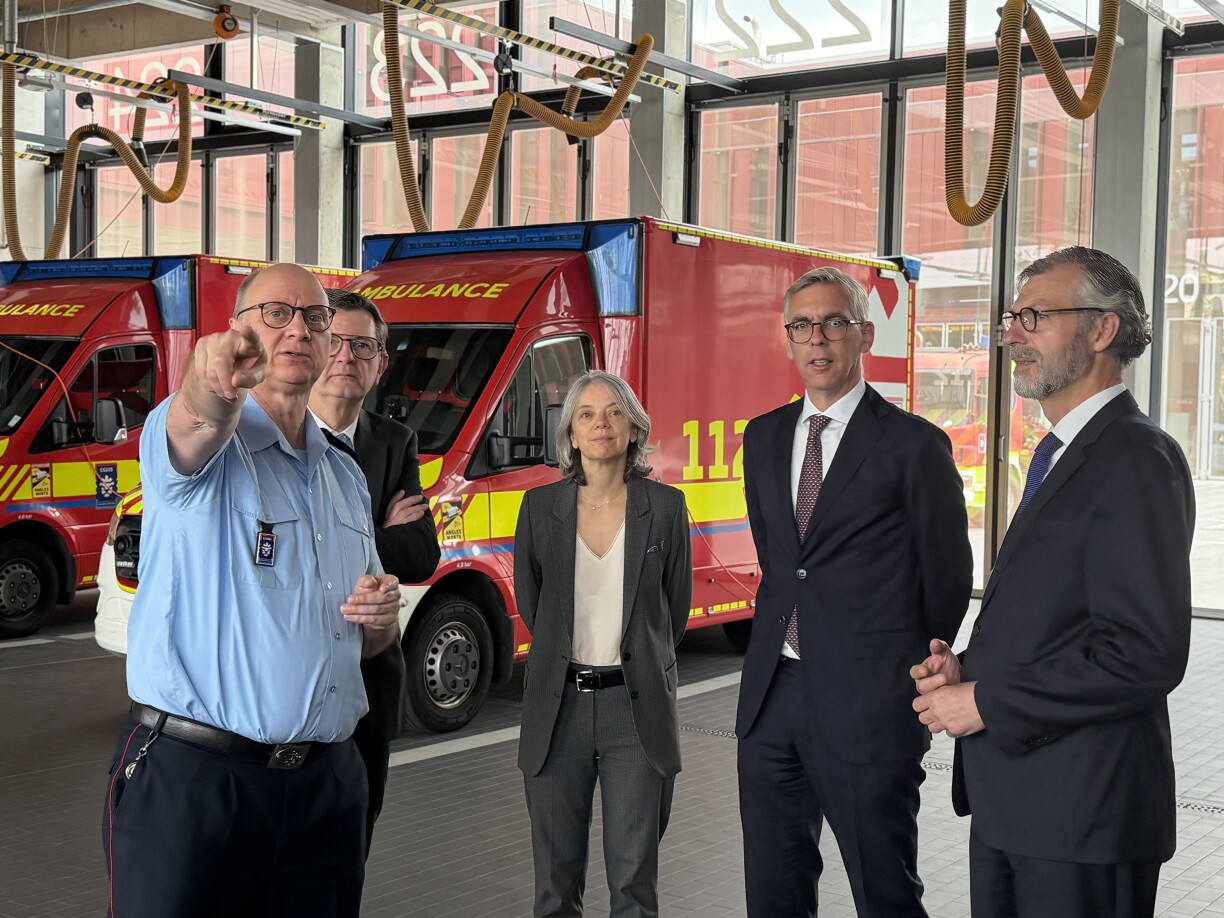
Work has begun on a major new infrastructure project at Mierscherberg, with completion targeted for the end of 2030. The Logistics and Technical Support Centre (CALT), presented jointly by the CGDIS and the Home Affairs Ministry, will centralise and modernise the emergency services' logistical and technical operations on a single site, enabling faster, more efficient and more autonomous responses to crises and disasters.
Mersch sits at the geographical heart of Luxembourg, making it the optimal base from which to reach any part of the country quickly and coordinate services effectively, explained Sven Viktor, head of the Building Department at CGDIS. The new facility will house logistics management and vehicle maintenance services across more than 18,000 square metres.
"In the new centre, we will have comprehensive workshops where we can handle almost everything in one place, from quality control to technical inspections carried out on site", Viktor said. "By consolidating every operation under one roof, we will drastically reduce vehicle turnaround times and maintain a higher operational capacity."
Home Affairs Minister Léon Gloden framed the project within Luxembourg's broader national resilience strategy, allowing Luxembourg's emergency services to react appropriately in the event of a major catastrophe. The experiences of the pandemic, he noted, made clear that the demand for crisis logistics and technical capacity had grown. "It is important that alongside preparing citizens, we also have the necessary logistics and equipment in place", he said. "This centre is a major building block of the national strategy. Another important element will be RESC-LU, which will create a dedicated unit within the fire service to purchase equipment and provide logistical support to municipalities."
The total cost of the project stands at approximately €110 million. In what marks the first public project in Luxembourg to be co-financed in this way, the European Investment Bank and the Spuerkees (BCEE) are each contributing €55 million.






