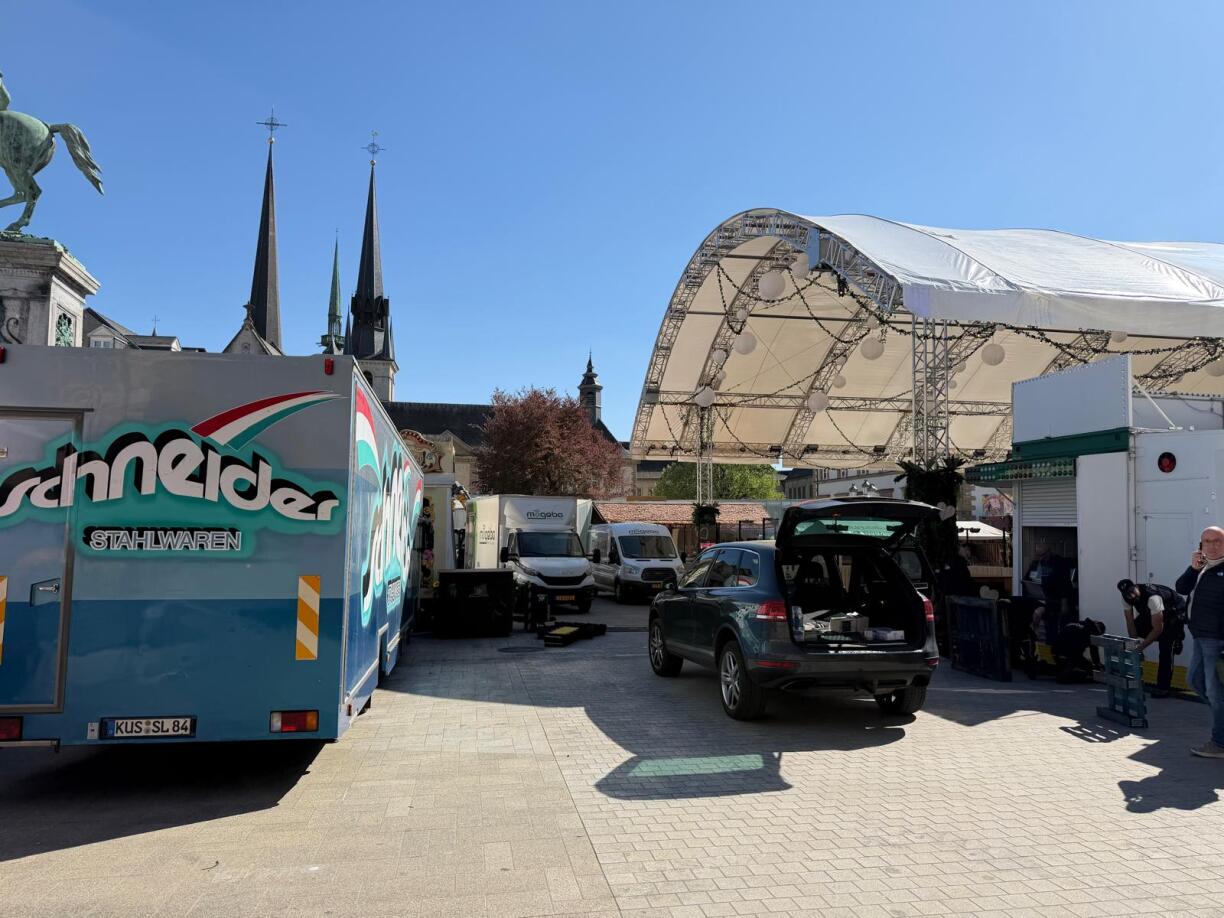
The Octave returns this Saturday for two weeks, once again marking the start of one of the most important traditional and religious events in Luxembourg with this year's theme being: 'Being human, now and here'.
The grand opening takes place at 4pm on Saturday afternoon, followed by the Night of the Cathedrals at 7.30pm, allowing visitors to see the cathedral well into the night. Among the programme's highlights will be 2 May, the feast day of Our Lady of Consolation.
The final procession will take place at 3pm on Sunday, 10 May. The full programme is available on cathol.lu, which also offers a live stream from the cathedral. The televised masses on each of the three Sundays – two from the cathedral and one from the barracks at Herrenberg – will be broadcast on RTL 2.
One of the most cherished traditions is the youth pilgrimage to Luxembourg City on foot, which takes place on the night of 25 to 26 April. The main procession sets off on Saturday evening at 10pm, with processions from Hesperange and Walferdange following on Sunday morning at 4am and 5am, respectively.
The Luxembourg Guides and Scouts are also organising various marches that night, with registration available online.


For many, the Octave is as much about the market as it is about the masses. Over the years, the Octave market, known in Luxembourgish as the Mäertchen, has changed significantly, but the 2026 edition will largely follow the same format as last year, with one notable improvement.
Opening alongside the religious programme on Saturday, a 1,000 square metre covered terrace has been installed on Place Guillaume II, surrounded by around 50 stalls offering everything from food and rides to retail stands. The roof is a full 12 metres longer than in 2025, a direct response to complaints about insufficient shelter during last year's edition.
The name Octave has its roots in Latin, where the number eight is rendered as octo. Octava means the eighth in Latin, and the event originally lasted eight days, which is how it came to be known as the Octave.
That said, the name has long since outgrown its literal meaning: the event now spans two full weeks between Easter and Pentecost, making it considerably more than an octave in the strict sense, though the name endures as firmly as the tradition itself.





