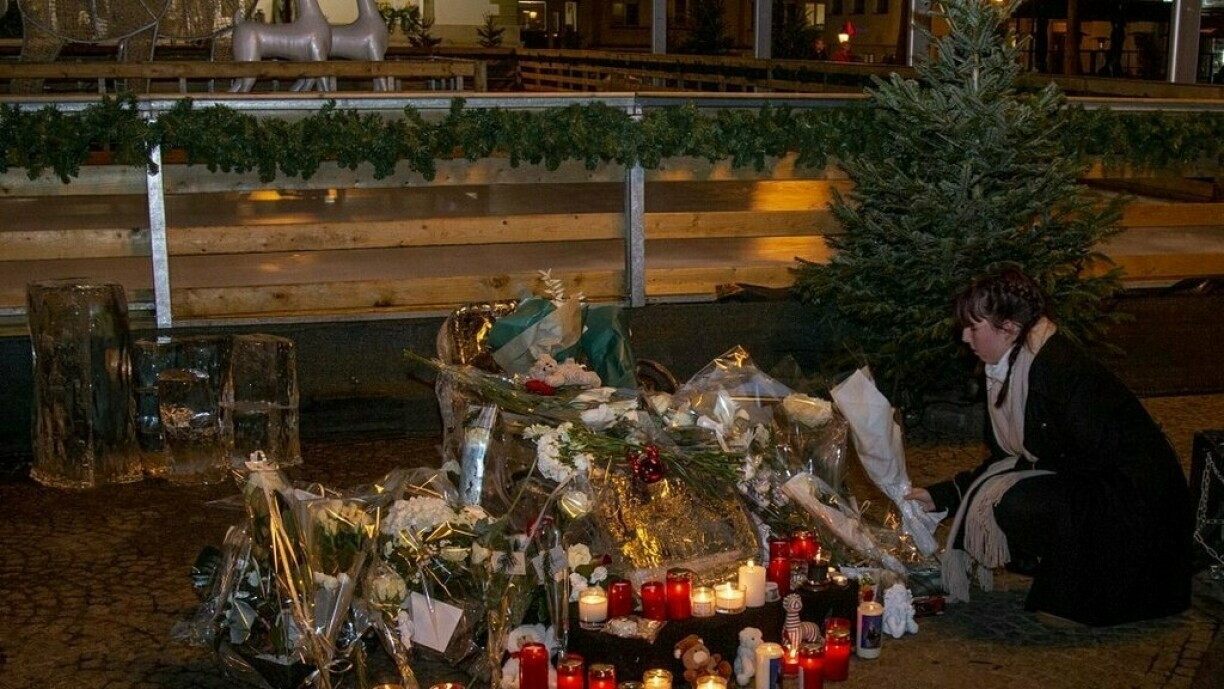
Ten people are charged with involuntary homicide, yet the prosecutor's office is itself requesting acquittals for six of them. It is an unusual situation, and one that risks giving the public the impression that accountability is being sidestepped. The explanation, however, lies primarily in a personnel change within the public prosecutor's office shortly before the trial began. RTL's Michèle Sinner takes a closer look at the details of the trial surrounding the devastating accident that claimed the life of young Emran at the Luxembourg City Christmas Market in 2019.
As lawyer François Prüm explains, the new substitute prosecutor takes a resoundingly different approach from his predecessor. Where the first substitute applied what lawyers call an "in abstracto" approach, prosecuting anyone with even a distant connection to the erection of the ice sculpture, including, for example, the director of the Luxembourg City Tourist Office (LCTO) who signed the estimate. The second applies an "in concreto" analysis, asking who specifically made a mistake, whether active or passive, and whether they could genuinely have prevented the tragedy. For those who cannot be shown to have erred in that way, he is seeking acquittal. His reasoning: the bar for involuntary homicide must be high, and none of the accused wanted little Emran to die.
Prüm, who defends one of the accused municipal employees, acknowledges that the broad initial investigation was a necessary part of the process. "We had to go through the investigation that was conducted," he said. "But I think we could have removed a whole group of people from the file well before sending them to the correctional court."
It is worth noting that the court is not bound by the prosecutor's position. It may reach its own conclusions. And since 2017, a criminal conviction is no longer a prerequisite for civil liability and the payment of compensation.
Mayor Lydie Polfer appeared as a witness during the trial, but was also included during the investigation as a "Pesapi", which stands for "personne susceptible d’avoir participé à une infraction" in French.
Lawyer Frank Rollinger, who defends one of the accused municipal officials, said he understood the reflex to exclude the mayor from prosecution: "You cannot demand that a mayor patrol an entire municipality around the clock to check for safety risks. That is an impossibility." But he added that from a strictly legal standpoint, in the current situation, accountability should begin at the top.
Rollinger also looked closely at whether the mayor had formally delegated her legal responsibility for safety to officials within the administration. His conclusion was striking: "In the entire file, across all seizures and searches, not a single document was found defining who held responsibility for what within the service."
A bill currently progressing through the Chamber could change this dynamic in future. It is intended to lift the criminal immunity of municipalities, making it possible to prosecute a municipality as a legal person, much as one can prosecute a company or a non-profit organisation,such as the LCTO. Individual politicians and officials could still be held to account for their own personal failings alongside any such action.
One aspect of the trial that may come as a shock is the defence's challenge to the compensation claims put forward by the civil parties, all of them family members of little Emran: his mother, his father and others.
At first glance this appears callous. But the reaction was largely provoked by the fact that the family's lawyer requested a fee of €44,000 for herself, despite only joining the proceedings as a civil party during the trial itself, after all witnesses and defendants had already testified. She asked no questions and submitted no requests during that phase, as she had no file until then.
All of the defence lawyers, including two former Bâtonnières of the Bar, maintained that the fees claimed were unsupported by the necessary justifications, and that some of the claims went beyond what is legally required to obtain compensation for the moral damage caused by the loss of a child.
Such is the nature of the Luxembourgish judicial system. For the family, who lost their son and are seeking some measure of justice, these procedural skirmishes will have felt needlessly cruel.
The trial resumes on Monday.





