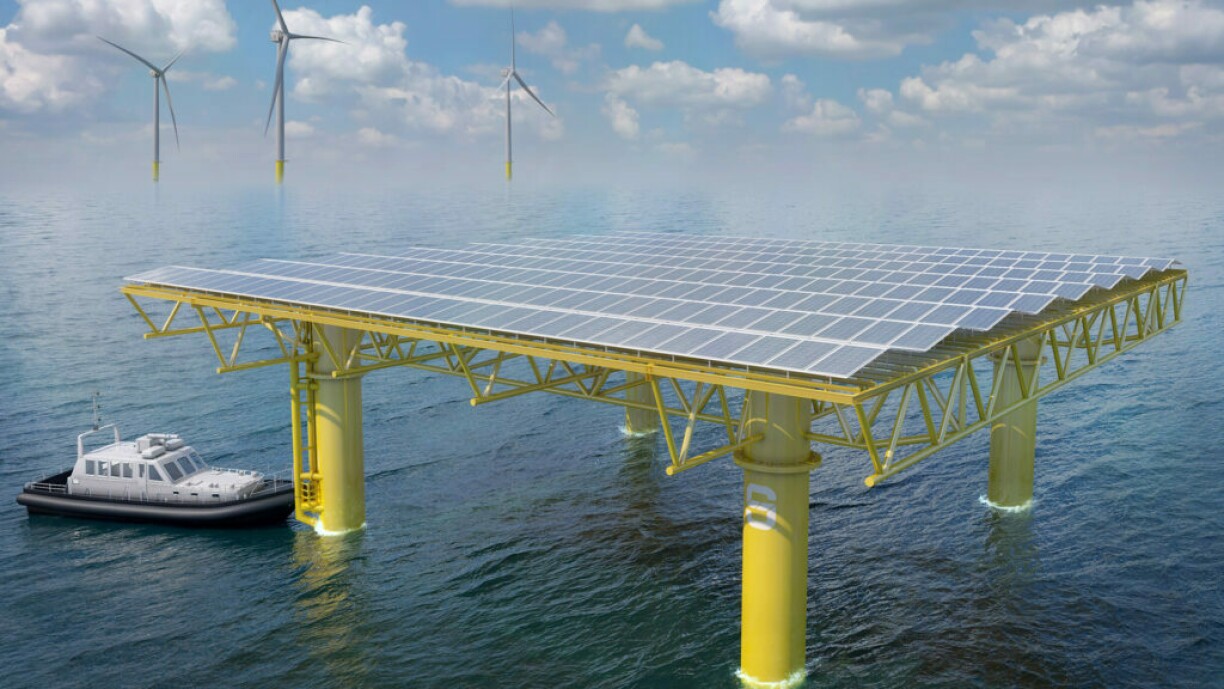
The aim of the SEAVOLT project is offshore production of electricity, which is to be achieved through the installation of photovoltaic equipment and wind farms.
In conversation with RTL, David Lutty, director of Jan de Nul, explains that they are currently aiming to produce even more electricity in already existing wind farms. The necessary transformers and cables to bring the electricity ashore have already been installed.
"When there is a lot of sun, we usually have little wind, and vice versa. By putting solar installations in our wind farms, we can produce up to 50% more electricity", noted Lutty.
The company Jan de Nul, which is based in Capellen and has long been an industry leader in offshore wind farms, developed the technology together with a Belgian partner, and part of the research was conducted in Luxembourg. The final structure is only slightly anchored into the ground, the rest of the platform floats.
"It is now a question of determining whether what we have tested in the laboratory, and which worked, also works in real conditions at sea with strong waves", says Lutty.
If you walk along the beach in Ostend, you will see a park of wind turbines on the horizon, which is where the test phase will be launched. From this summer onwards, an installation will be built at sea to analyse the efficiency of the equipment, as well as its environmental impact.
For Jan de Nul, it is important to make better use of the areas where wind farms are built in the future. Another current research project is to analyse whether oysters might be farmed there although no boats are allowed to sail in the area. According to the CEO of Jan de Nul, aquaculture should be possible.





