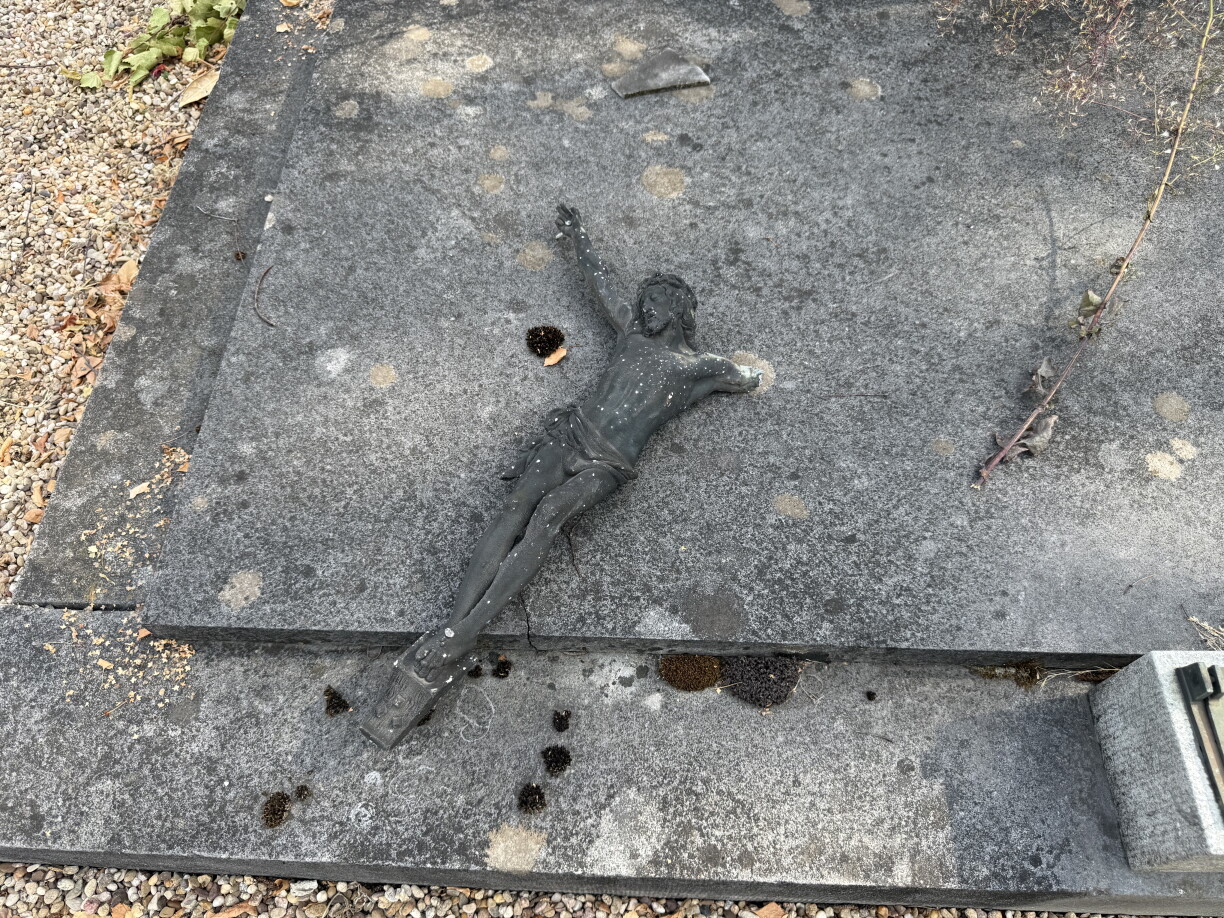
In recent weeks, a wave of targeted thefts has affected cemeteries in Luxembourg, with the most striking case occurring a week ago at the Bettembourg cemetery, where damage was reported to 67 graves. The primary items stolen were bronze crosses and figures, leading to initial suspicion that the motive was the scrap metal value.
Mike Decker, an antique dealer with 40 years of experience, confirmed this was the first assumption, but he believes the reality is more complex. In conversation with RTL, he explained that a typical bronze figure, such as a 100-year-old bronze Jesus, might weigh only about half a kilogram and fetch around €9 to €9.50 per kilo if sold as copper.
However, Decker points out that selling such stolen items is far from straightforward. Whether at a flea market or through an antiques dealer, it is immediately obvious to professionals that these objects are stolen, and legitimate dealers would never handle them.
Decker told RTL that in 40 years, he has never seen anyone try to sell these, because they do not turn up at reputable dealers or markets.
According to Decker, the real value for criminal networks lies not in the immediate resale of stolen objects as antiques, but in the use of high-quality old bronze as raw material. He suspects the bronze is smuggled out of Luxembourg to eastern Europe via organised crime networks, where specialised workshops can use it to manufacture convincing forgeries of sought-after artworks.
Decker explained that you cannot just walk into a foundry and ask them to produce a copy for you out of a ton of bronze or copper and tin, insisting that no legitimate foundry would do that because it is illegal and constitutes fraud. Therefore, he concludes that there must be a black-market foundry somewhere producing these copies.
It is at this stage that the real profits are made, Decker says, with forged copies of artworks selling for up to €150,000 or even more. These can be reproductions of both modern and ancient works, as the composition of bronze has remained essentially unchanged for thousands of years, making forgeries difficult to detect.
The risk of stealing bronze figures and crosses from cemeteries is thus tied to the lucrative world of art forgery. According to Decker, the quality of these copies keeps improving, making them increasingly difficult to distinguish from originals, a difference that often only emerges during expert appraisal, as forgeries are typically about 3% smaller than the original pieces.





