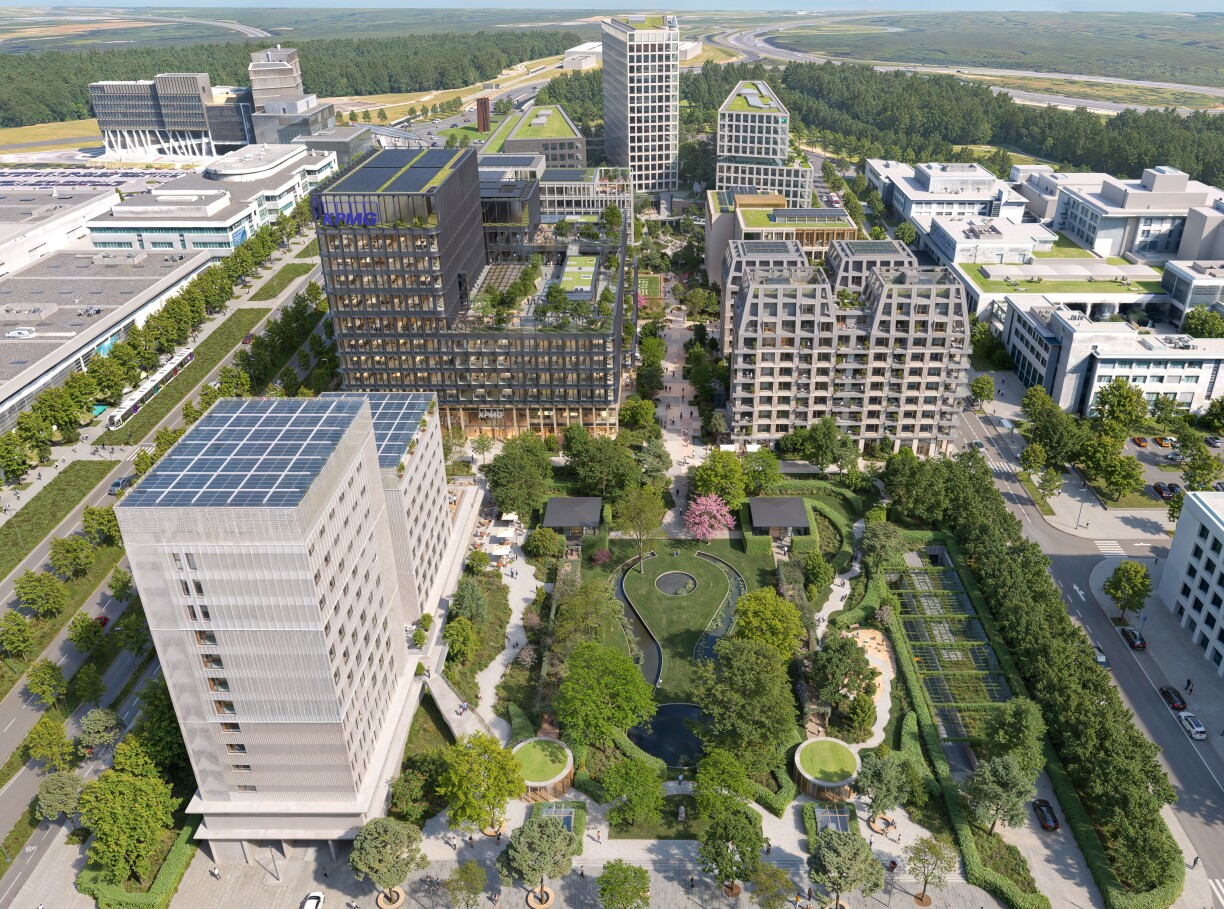
The municipality of Luxembourg City has approved the real estate project that will replace the former BGL BNP Paribas headquarters in Kirchberg.
The redevelopment, named "Kennedy Park", will include housing, offices, shops, a leisure centre, a hotel, and a co-living building, according to an announcement by BPI Real Estate on Tuesday. The first deliveries are expected as early as 2028. In total, eight new buildings are to be constructed from the ground up, eventually accommodating over 4,000 employees and approximately 830 residents.
KPMG Luxembourg and Linklaters have reportedly already chosen to establish themselves at Kennedy Park. They are expected to take delivery of their respective new headquarters between the third and fourth quarters of 2028. The two remaining office buildings are currently the subject of "advanced discussions" with "key players" from several sectors, including the hotel and leisure industries.


Kennedy Park will not be limited to office spaces, however. An apartment building named Iris, measuring 6,125 square metres, and a co-living space called Orchid, measuring 8,500 square metres, are also planned on the site. Residents will have access to a 1.6-hectare public park on their doorstep. Shops and a leisure centre are expected to open in the new mixed-use district as well.
Spanning more than three hectares, Kennedy Park has a construction budget exceeding €200 million. It is the largest real estate project launched by BPI Real Estate in Luxembourg to date and is expected to employ nearly 1,000 people, including architects, engineers, and construction workers. In addition, the use of mixed timber structures is projected to reduce the project's embodied carbon by 30%.





