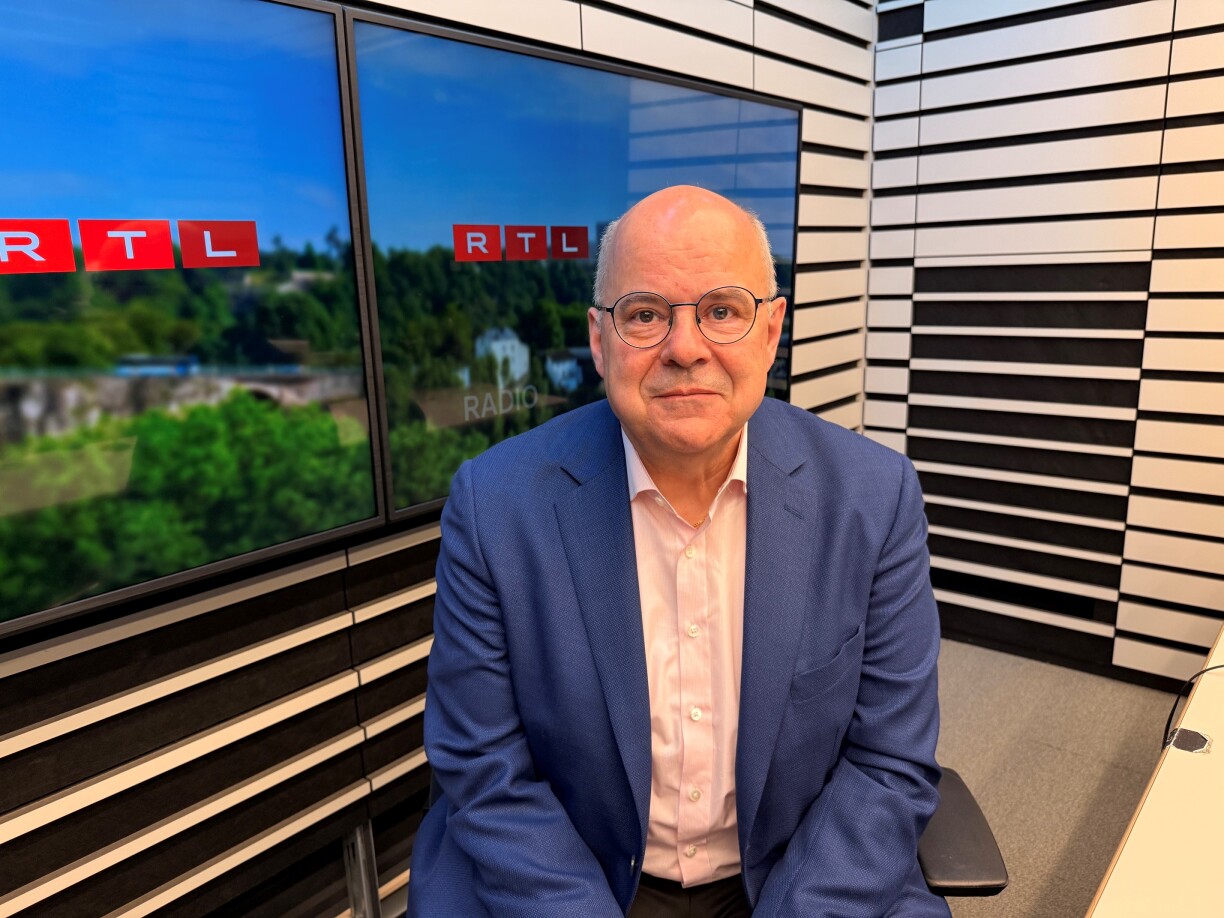
On Monday morning, Labour Minister Marc Spautz appeared as a guest on RTL, where he acknowledged that, despite persistent efforts, he has not yet succeeded in bringing trade unions and employers together for joint discussions. "Unfortunately, we have not been able to do that. They did not come to the talks.
But I am not giving up hope that we will still succeed", Spautz commented, reflecting on the more challenging climate he has faced since taking office. A former trade unionist himself, Spautz observed that experiencing May Day from the government’s perspective was a notably different experience, and that he anticipated a tougher reception now in his ministerial role.
Spautz addressed recent criticism by Luxembourg Confederation of Christian Trade Unions (LCGB) President Patrick Dury, who described the government’s meetings as empty tea-time formats. The Minister pushed back, highlighting four months of bilateral discussions with social partners.
He noted that these talks have already resulted in initial working papers, especially on platform work, with additional documents in progress. While Spautz conceded that preparing bilateral documents takes longer than drafting a single joint text, he rejected the idea that the consultations are merely superficial.
No agreement has yet been reached on the important issue of working time organisation. Nonetheless, Spautz noted that a current affairs debate has been scheduled in the Chamber of Deputies before the summer recess, enabling political parties and employers to stake out their positions publicly. He believes this parliamentary input will help clarify viewpoints, setting the stage for more productive negotiations with the social partners.
Addressing the unions’ call for an 11% increase in the minimum wage equivalent to around €300 Spautz held firm but did not rule out further discussion. He argued that any potential minimum wage rise cannot be separated from concerns about business competitiveness and Luxembourg’s already high unemployment rate.
Spautz reminded listeners that Luxembourg’s minimum wage is currently the highest in the Greater Region, and, in his view, allows for a decent standard of living. He stressed that broader cost-of-living pressures, including housing, energy, and inflation, must also be part of the debate.
On housing affordability, an issue for many minimum wage earners, Spautz defended the government’s record by citing major housing projects such as 'Wunne mat der Woltz' and 'Metzeschmelz' in Schifflange, his own municipality. He acknowledged that these initiatives have been slow to yield results and pointed to external factors, particularly the European Central Bank’s interest rate policy, which has made mortgages unaffordable for many.
When pressed on whether the government should focus more on addressing empty homes and imposing rent caps, instead of prioritising new construction, Spautz partially concedes that the solution is not limited to new builds. However, he maintained that increasing housing supply remains the key lever for stabilising or lowering prices in the long term.
Looking ahead to the anticipated tripartite negotiations between government, employers, and unions, Spautz confirmed that the Prime Minister, the Minister of the Economy, and the Minister of Finance will meet each of the social partners individually on Wednesday as part of preparations.
While the final agenda has not been decided, Spautz expects competitiveness, energy prices, and inflation to be central topics. He also proposed setting up a working group to address particularly complex subjects that may require more in-depth discussion outside the main tripartite format.
Asked whether the minimum wage will feature on the tripartite agenda, Spautz reiterated that any wage increase must account for the sustainability of businesses and the need to maintain competitiveness. He pointed out that existing support mechanisms, such as social assistance, energy aid, and rent subsidies, may also require adjustments as part of a comprehensive solution. For Spautz, addressing these challenges requires a holistic approach, and he remains hopeful for constructive and fruitful negotiations.
In a candid admission, Spautz acknowledged that his goal of bringing unions and employers together for trilateral talks has not been achieved. He believes this would have made resolving the array of issues on the table much easier. to resolve. He had hoped that the start of a new chapter would bring a fresh start, but unions chose not to participate in joint discussions.
While not abandoning hope for future trilateral dialogue, Spautz emphasised a pragmatic approach: where joint meetings are not possible, the ministry will continue bilateral talks, advance its projects, and coordinate with social partners wherever feasible. Ultimately, he concluded, the work must proceed in the interests of everyone who works and lives in Luxembourg.





