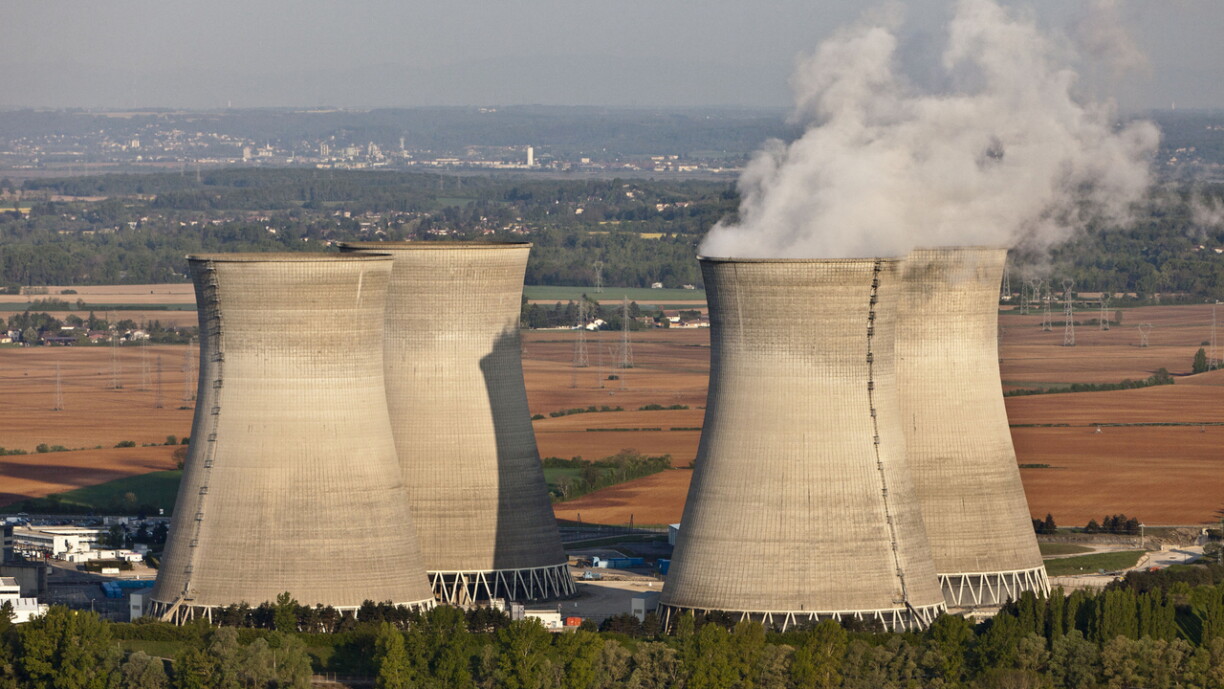
The recent drone incidents at Findel Airport, which caused major disruption to air traffic, have raised wider questions about regional security, including how well Cattenom could withstand such threats. On Tuesday, Greenpeace repeated its concerns about extending the plant's life.
On 1 October, the first reactor reached its planned 40-year lifespan. French energy company EDF intends to keep it generating electricity for several more years. A full safety review is scheduled for early 2027, with the aim of addressing identified weaknesses and potentially extending its service further.
German physicist Dr Oda Becker, commissioned by Greenpeace, has completed a new study on Cattenom's safety. It identifies ongoing concerns, particularly about the reliability of emergency systems meant to keep the reactor and fuel cool during natural disasters.
"To address vulnerabilities caused by natural events and existing reactor deficiencies, a so-called 'Hardened Safety Core' is meant to be installed", Becker explains. "This additional safety system is designed to ensure cooling of the reactor core and spent fuel pools even under extreme conditions, such as a severe earthquake or flooding. However, this system has not yet been fully implemented, and there are doubts about its effectiveness. The system must be connected to the existing plant infrastructure, but if crucial pipes or components are not earthquake-resistant, connecting earthquake-proof equipment will not guarantee overall safety."
She also points to other problems. "Some valves remain closed and rust has developed at connection points", Becker says. "If a major incident, such as an earthquake, flood, or even a terrorist attack, damages key systems, there are doubts whether emergency measures would reliably prevent the release of radioactive material."
According to Greenpeace, some of the safety measures recommended after the Fukushima disaster have still not been fully implemented at Cattenom. Roger Spautz, nuclear expert at Greenpeace Luxembourg, says Luxembourg, Germany, and neighbouring regions should increase political, and if necessary legal, pressure on the French authorities.
"As nuclear reactors age, the risk of accident increases", Spautz says. "That is why Luxembourg, Germany, and the regional governments of Saarland and Rhineland-Palatinate must become more actively involved, both politically and potentially through legal avenues, in opposing any extension of Cattenom's reactor operations."
Becker also raises serious concerns about drones. She notes that French nuclear plants recorded more than 30 drone overflights in 2014 alone, and that today's drones are far more capable.
"In 2014, there were over 30 drone overflights at French nuclear facilities", she recalls. "At the time, the drones were less sophisticated than those available today. Although an order was given to shoot down unauthorised drones, authorities never identified who was responsible or their motives. Whether it was a prank or a genuine terrorist threat remains unclear. Various scenarios were considered, and there was even discussion about stationing military units around nuclear plants. Ultimately, this idea was rejected as potentially counterproductive. As things stand today, there are still no secure or fully effective defence systems against drone incursions, and this remains a matter of debate across Europe."
Greenpeace is urging the Luxembourg government to demand clarification from the French authorities on how Cattenom is protected against drone attacks and sabotage. If adequate protection cannot be guaranteed, it says, Luxembourg should call for the reactor to be shut down.


