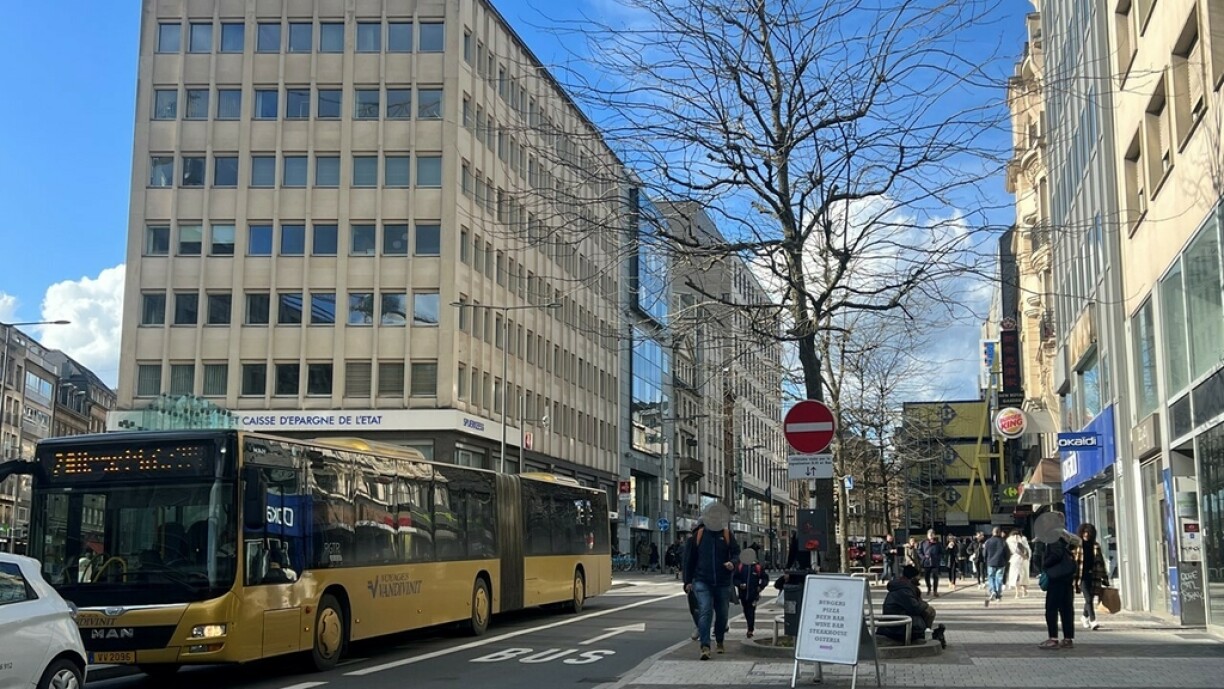
A fortnight ago, I spent a few days in the capital, at different times of the day and on different days of the week.
It's Thursday afternoon, 13 April, in the Gare district. The streets are busy, and people seem to be stressed, chasing buses and trains.
There are people at the tram stop. I see a few homeless people, two of them sitting on a bench and another one walking alone in the street. One person who many residents would recognise is sitting on the ground near a fast-food restaurant on Avenue de la Gare. He is holding a fishing pole with a cup hanging from it. Several people drop change into his cup, one woman stops and chats with him.
I don't see any more beggars in the afternoon. But I notice something else. The later it gets, the more people gather in small groups at the station. More specifically, they gather in the square next to the station, where the bus stops used to be but where there is now nothing. But it is still quiet.
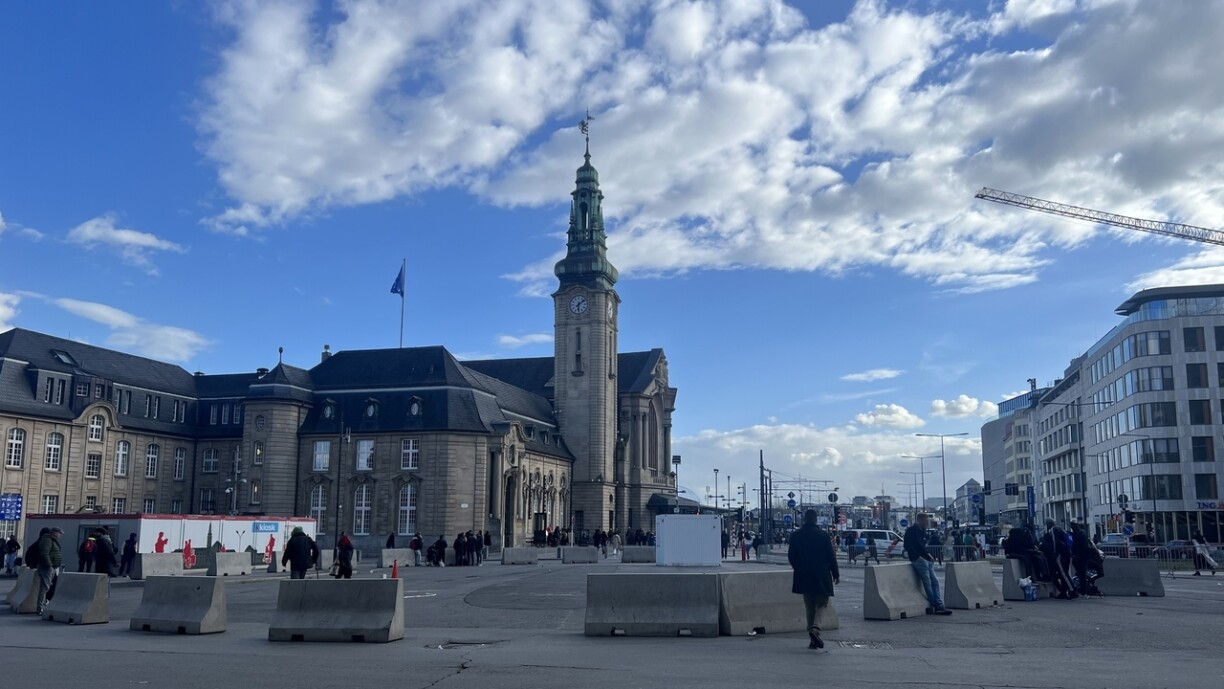
The same day, a few hours later, I walk around the neighbourhood again. The streets are mostly deserted. There are just a few people in the restaurants and cafés.
There are few deals happening, particularly in some corners of Rue de Strasbourg. In other corners, one or two people sit and drink. That night I don't encounter any beggars; instead, I am only approached once by a young man who asks me for a cigarette and who doesn't necessarily live on the street. At midnight, I leave the streets of the Gare neighbourhood.
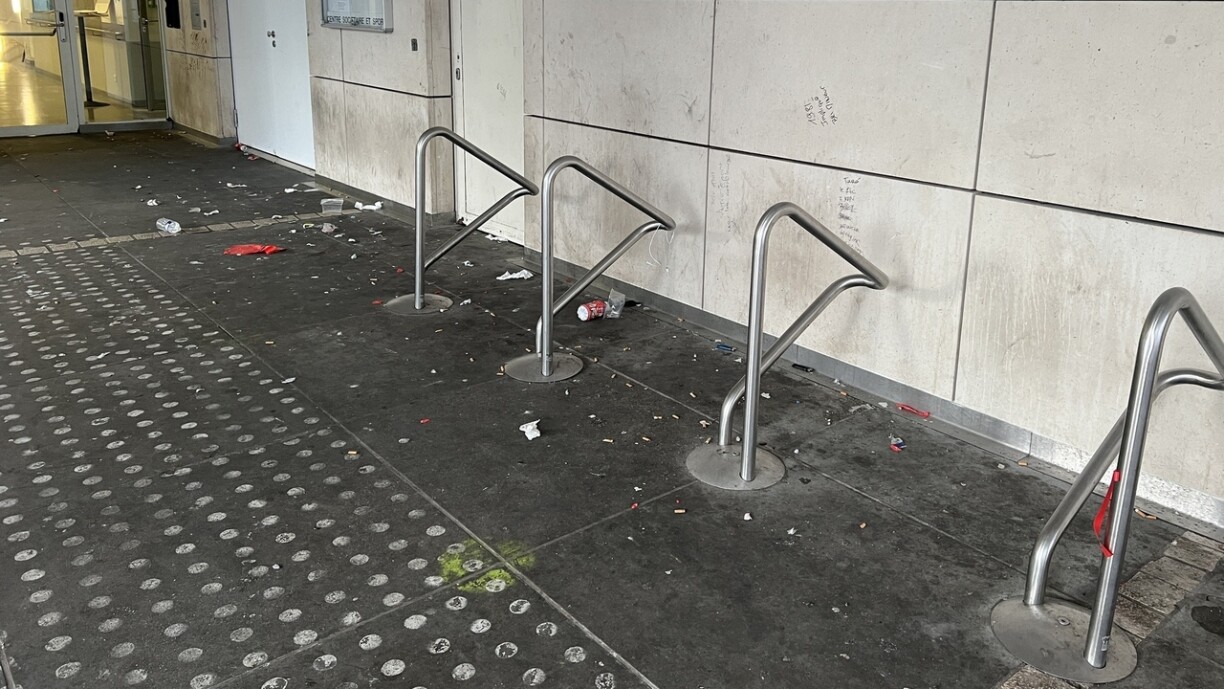
A few hours later, it's Friday morning, 14 April, shortly after 5am at the central railway station. Even though it is not yet daybreak, the station is gradually coming to life. The early birds are leaving for work or taking public transport. I meet only two homeless people who have spent the night outside. Apart from them, only the remains of the night are visible. There is rubbish where people have gathered: cigarette butts, bags, and a few beer cans. In the entrances, the cleaning crews start to clean up these remains. In the early hours of the morning, I did not meet anyone begging, nor did I see anyone sitting on the floor.
I returned to the station area a few days later, on 18 April. A woman approached me as I was leaving the parking lot. She speaks German and says she is from Bosnia. Right from the start she says she doesn't want money. But she says she is sick and can't feed her child. She asks if I could accompany her to the grocery store to buy milk or other food items. When I say no and walk away, she starts following me. "Please, please, please." Only when I no longer say no so politely, but rather firmly, she turns and leaves.
Then, just around the corner, I see a woman and a man. The woman is sitting on a suitcase on the floor. The man is wearing branded trainers and is standing next to her. They are talking and laughing together. There is a cup on the floor in front of the woman. Just a hundred metres away, another woman is begging. She is an elderly woman and wears a veil and like the other one, she is sitting on a suitcase. She too has a cup in front of her.
About twenty minutes later, she has moved a few metres. The man who had been with the young woman approaches the older woman and throws a mobile phone in her lap. Then he asks her for a lighter, lights a cigarette, and stays a few metres away from the woman.


I circle back and return to Avenue de la Gare half an hour later. By now the young woman from the group of beggars has moved on. She has again taken a seat on a suitcase on the other side of the street, right next to a bus stop. Again, the man with the branded trainers is not far away. He is sitting a few metres away on the stairs of a café.
For some, beggars are part of everyday life. "I've been working at the station kiosk for 15 years. We endure it, we suffer from it, but in the end, we just live with it. It's like this everywhere anyway, we can't change it," says Maria.
Others find it tiring. That is the case for Philippe Aroule. He has been distributing newspapers at the entrance to the station for five years and has seen a lot of begging. "It depends on the person, but they can be quite insistent at times. They ask for cigarettes or money to buy a coffee. Even though it's really just for the next dose." Aroule feels that the number of beggars has increased in recent years. "And they are definitely more direct. They talk directly to you and even shout rude things behind your back if you don't give them anything."
At the bakery opposite the station, the opposite is felt. "In the last few months, it has somehow become quieter. They used to come into the shop and approach the customers directly at the tables. We always had to throw them out. That doesn't happen very often anymore," says Natali, the bakery manager. "We have all sorts of people at the station," she continues. "We had a lot of really poor people come in. They hardly ever asked for money, but for a croissant, a roll, or something to drink."
They do, however, all agree on one point. Anyone who spends a little time in the area will notice three distinct groups: those who are actually poor and beg to survive, those who use begging to fund their addiction, and finally the organised gangs who make a business out of begging. And this is exactly how I experienced it during my few days in the station area.





