In 2026, society is both the most progressive it has ever collectively been, and the most at risk. With all that has been gained, there is all that more to lose. While Luxembourg once held third position on the International Lesbian, Gay, Bisexual, Trans and Intersex Association (ILGA) Rainbow Europe Index in 2021, it has fallen steadily over the last five years, and as of 2025, holds 10th place.
Even as European rankings adjust, a global threat remains, especially in the matter of transgender rights. In the United States, 612 bills that would negatively affect trans and gender-nonconforming individuals are under consideration this year, with 126 such bills passed last year.
Closer to home, conversations about gender neutral bathrooms have inspired massive debate and discussion, both online and among politicians.
Amidst all this and more, one local organisation, Blom, has set out to positively impact the LGBTQIA+ community with something all young people need: visible, authentic, and inspirational role models.
"Even within LGBTQIA+ spaces, certain voices remain less visible", said Julie Mocquard on behalf of the Blom team. "With the current European backlash, young people are growing up without visible examples of authentic, thriving queer lives, especially trans people, non-binary folks, people of color, those working in community organisations or less visible sectors."
To address this, Blom, with support of Rainbow Centre, Rosa Lëtzebuerg, and Faciltitec, launched Role Models in Luxembourg. With individuals and collectives nominated across a range of categories, the winners will go on to represent Luxembourg at an event to be held in Prague this May. The first EPBN – WISE Diversity Conference and Role Models Award Ceremony was held in Warsaw last year.

Beyond integrating Luxembourg into a larger EU initiative, Blom is committed to more inclusivity.
"We are a little bit different", said Olivier Li, Blom volunteer and project manager of the Role Model initiative. "European-level events are really focused on political people and big companies. And here in Luxembourg, we want it to be more grassroots. We want it to be a hub to connect all the social classes."
Set up by three queer individuals last year, Blom was launched with the aim of strengthening bonds within LGBTQIA+ communities. As a non-profit, it is entirely volunteer run.
While the larger EPBN – WISE Diversity Conference and Role Models project is funded by the European Commission and patronised by the European Parliament, Luxembourg's event is independently funded.
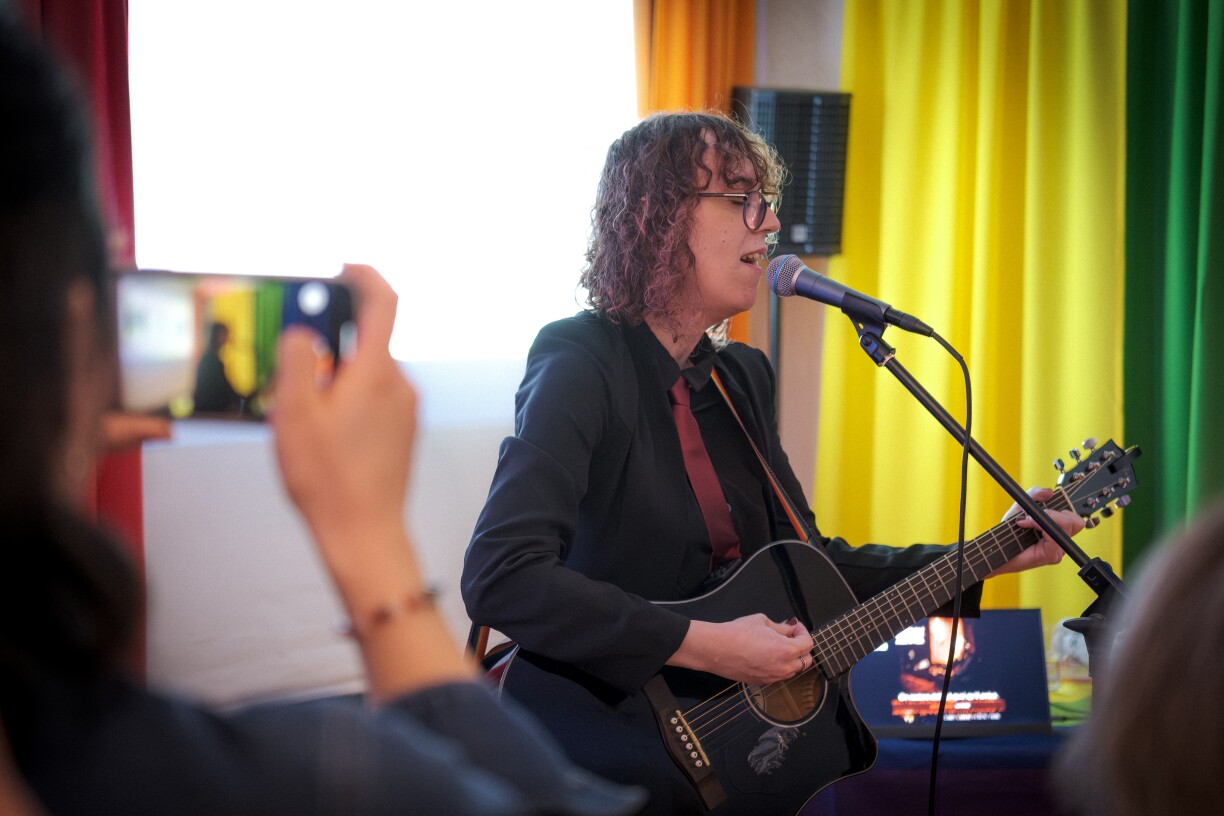
The awards ceremony kicked off with a cosy evening held at the Rainbow Centre. Non-binary DJ Artemis_Sia and Blom co-founder Mia Vale (performing under the name of Cherry Red) brought music to welcome guests as drinks were served and the crowd grew to maximum capacity.
11 nominees were ranked based on the impact they have had on the community, their ability to inspire, the authenticity, and their commitment despite challenges and obstacles. An intersectional jury of six, representing grassroots activism, corporate diversity, and community bridge-building, were tasked with honouring winners across six categories.
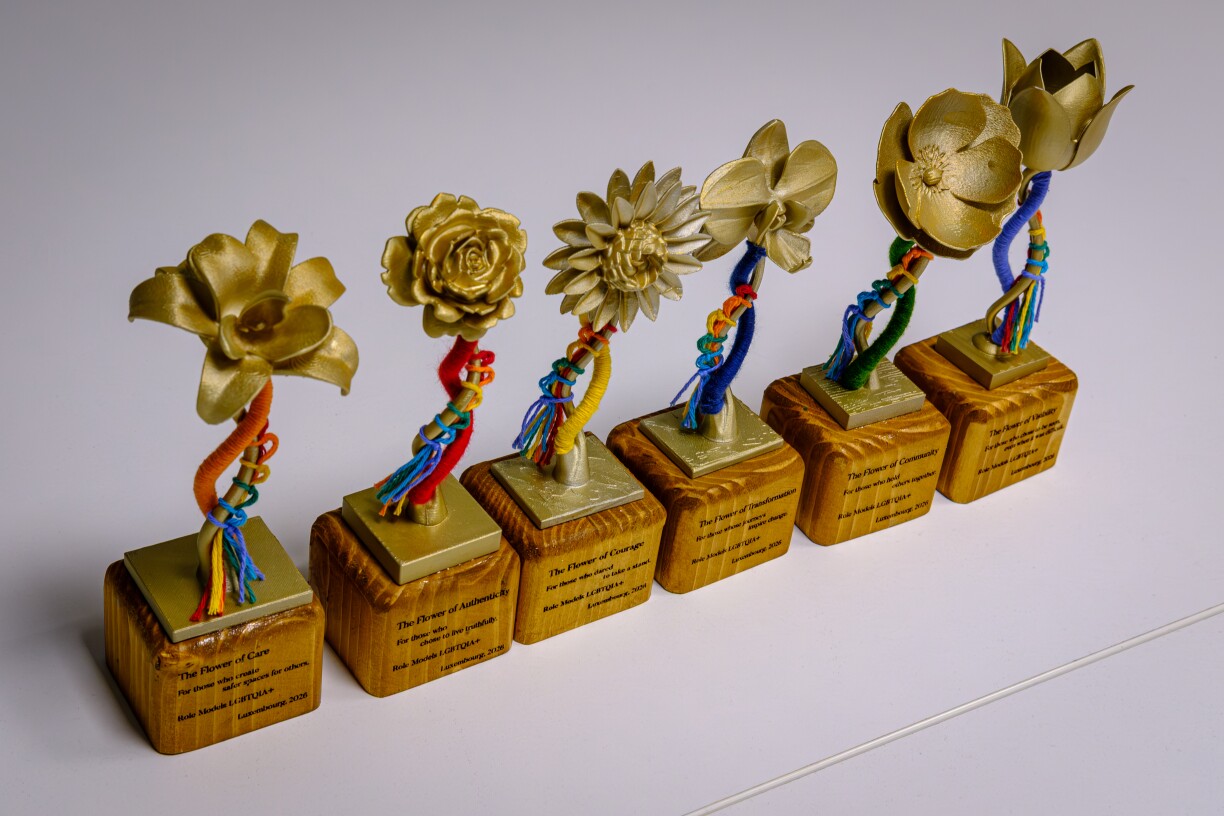
The winners were presented with specially designed trophies by CVRCLE, each in the form of a flower to represent a particular form of impact.
Describing the trophies on behalf of CVRCLE, president and artistic director of the collective Anna Rexha said, "Each trophy combines a solid structure with a textile component: the textile's fragility representing the societal challenges and marginalisation faced by LGBTQIA+ identities, and how these identities are often questioned or pushed to the margins."
Each trophy has two stems: One with all six colors of the LGBTQIA+ flag, and the second with a single color of the flag. Together, this symbolises the relationship between individual achievement and community representation, meant to illustrate how each Role Model's personal journey contributes to and strengthens the broader community.
From the six winners, a jury in Prague will choose three to represent Luxembourg at the European awards in May 2026.
Over the course of the evening, the winners were announced:
Dedicated to welcoming and presenting a range of ethnic, cultural, and social backgrounds, the goal of the event, and the nominees representing it, was to highlight inspiring stories from both individuals and institutions.
"The inspiration can be small", said Li. "You could say, 'oh, I didn't know that a gay man could be a respected lawyer. Or I don't know that lesbians could work in this industry. And if they can do that, why not me?"
With the Luxembourg ceremony complete, the focus is now on greater communication to get the word out. The next step: the 2026 EPBN – WISE Awards in Prague.
Meanwhile the work continues for Blom and their co-organisers.
"From my personal view, Luxembourg, in terms of legislation, is quite advanced, and we, in daily life, seldom suffer physical violences or insults", said Li. "However, we have a lot of self-censorship, self-limitation. [Some] are ashamed to say that I'm gay, I'm lesbian."
"This kind of thing even reflects in the workplace", he continued. "Often we are the people who don't want to disturb others – just be accepted, stay safe, and not so ambitious."
Manon Pézot, co-founder of Blom, stressed that the challenge doesn't just stem from internal self–censorship, but from external structures. "Focusing on the absence of daily visible violence can obscure the institutional violence that trans, intersex, and non-binary people face in healthcare, legal recognition, and administrative processes," she said. "That makes full authenticity difficult or impossible for many."





