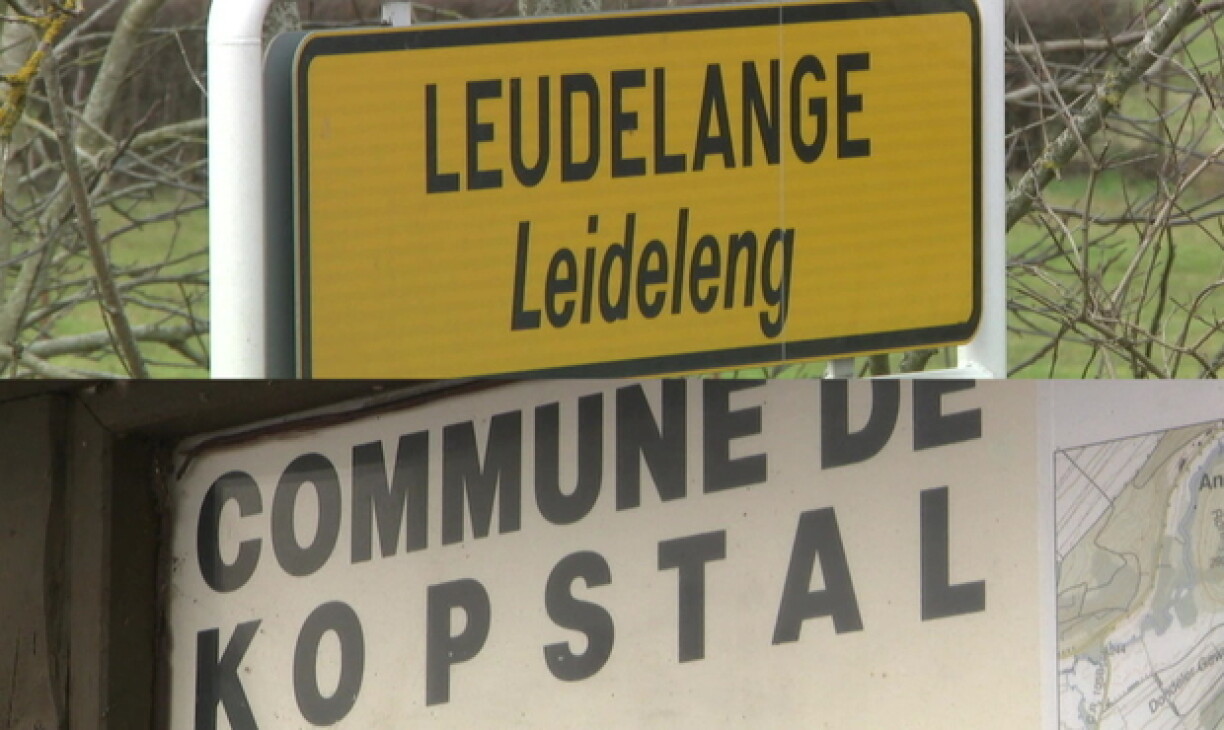
Whilst the "Together for Leudelange" group and the DP section for Kopstal are strongly advocating this change in electoral law, the majority of the municipal council is against the change.
In 2017, there had already been such a referendum in Kopstal and 63% of voters supported the change of constituencies. However, the opinions of national politicians may dampen the hopes of the groups in favour of the change.
Both "Together for Leudelange" and the DP section for Kopstal want Leudelange to no longer belong to the administrative canton of Esch-sur-Alzette. Instead, the groups want the town to belong to the Luxembourg canton. As for Kopstal, this municipality would switch from the canton of Capellen to either Luxembourg or Mersch. In this scenario, both municipalities would then belong to their desired constituency, the central constituency.
Taina Bofferding, the minister for home affairs, did not provide the groups with optimism when she confirmed that this procedure is perhaps not as simple as the groups believe. Bofferding explained that a law suffices to switch cantons, but switching constituencies would require a change in the constitution. As the upcoming constitutional referendum suggests, changing the constitution is a complicated matter.
In order to do so, the vote would require a two-thirds majority in the Chambre des Députés, Luxembourg's parliament. In this case, this type of majority would not be self-evident. Martine Hansen, the head of the CSV in parliament, explained to RTL that these types of discussions require a generalised examination of the electoral law. Hansen believes that you cannot simply change the law for one municipality, as other municipalities would follow, claiming to feel like 'marginal municipalities'.
With the issue requiring such a global discussion, this might be the time to consider a single constituency for the whole of Luxembourg, which certainly has some support. However, this option is not as clear-cut either. Bofferding said she would not exclude any such discussions and would treat it as a matter worth considering if the desire is there.
Hansen's position differed: she stressed the importance of territorial representation, explaining that the country needs representatives from all the different regions to represent those citizens. Again, Hansen referred to examining the electoral law as a whole.
The topic may come up in parliament, although it is hard to say when. For the groups in Leudelange and Kopstal, it seems that the short term will not offer their desired change.





