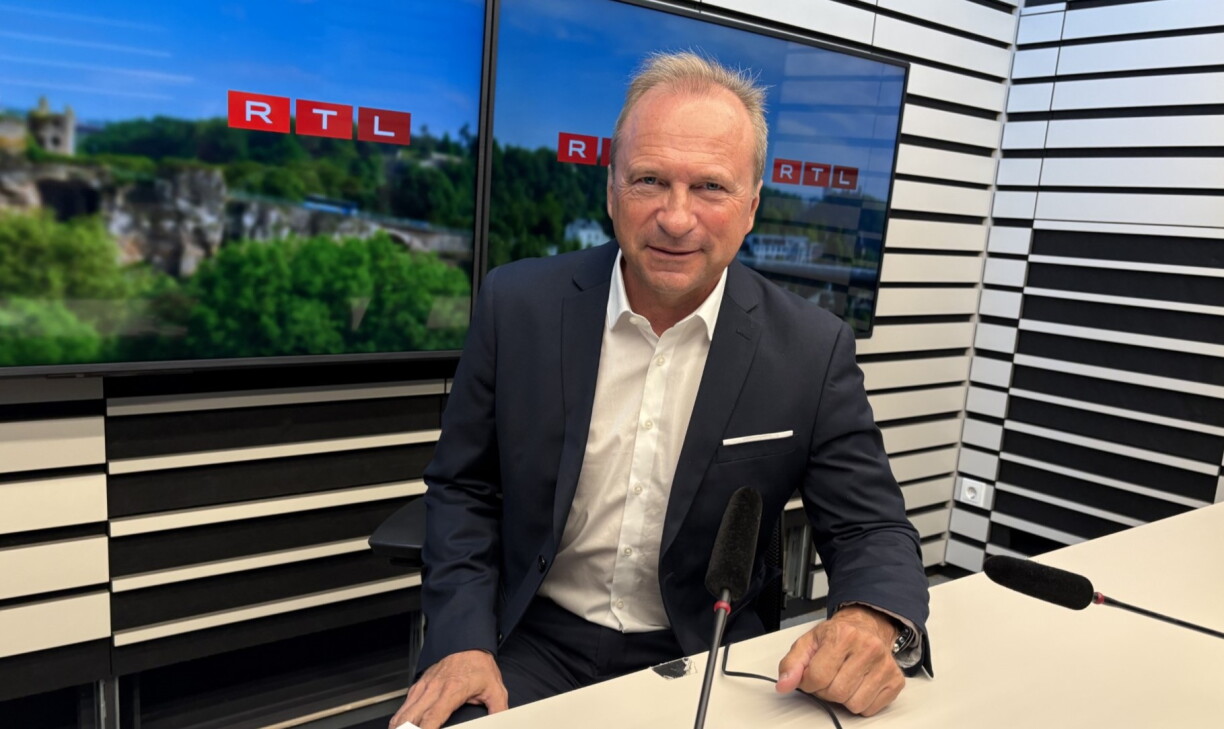
In conversation with RTL Radio on Monday, Finance Minister Gilles Roth has pushed back against warnings that Luxembourg's public debt could rise sharply over the coming decade. He insisted that the country's finances remain robust despite higher defence spending, tax cuts, and major public investment.
A recent report by the International Monetary Fund (IMF) projected that Luxembourg's public debt could reach around 39% of GDP by 2036. It also suggested that the budget deficit could exceed the European Union's 3% limit within three years.
Asked whether the country's finances were in their weakest position since the Second World War, Roth said the IMF figures represented a scenario rather than an inevitable outcome.
He pointed to earlier projections made when the current government took office, which suggested public debt would already exceed 30% or 31% of GDP by 2026. According to Roth, the current figure is around 28%.
"Scenarios are not automatic outcomes", he said, adding that he did not expect debt to reach the 32.4% forecast for next year.
Roth also noted that the IMF had described Luxembourg's public finances as robust, an assessment he said was supported by the country's continued AAA credit ratings.
Despite difficult economic conditions, the government has provided substantial tax relief, increased defence spending by more than €600 million last year, and invested in affordable housing, he said. Roth noted that Luxembourg nevertheless continues to have the second-lowest public debt in the EU, behind Estonia.
Roth acknowledged that the government would need to manage spending carefully as defence costs rise, the population ages, and an extensive tax reform is introduced.
The government intends to maintain high levels of public investment, he said, but must ensure that projects are delivered efficiently.
"You cannot have everything at once", Roth said, arguing that major infrastructure costs would need to be kept under control.
He also accepted the IMF's recommendation that Luxembourg monitor the growth of the public-sector wage bill. This did not mean cutting salaries, he stressed, but considering how many additional employees the state could sustainably recruit each year.
Broadening the tax base would also be essential, he added.
Roth said recent revenue figures gave him reason for optimism. By the end of May, state income was more than €850 million higher than during the first five months of 2025.
Preliminary figures for the first half of the year suggested that revenues could be more than €1 billion above the level recorded during the same period last year, he said.
The minister rejected suggestions that the government had deliberately underestimated revenues. Instead, he attributed the increase partly to the strong performance of Luxembourg's financial sector, which had generated higher corporate tax receipts.
However, he stressed that such income could not be taken for granted. Unexpected international developments, including the temporary closure of the Strait of Hormuz, demonstrated how quickly economic conditions could change, he said.
The central challenge, he said, was to restore stronger economic growth in Luxembourg and across Europe.
This required active, countercyclical policies rather than waiting for conditions to improve, Roth argued. He cited government measures supporting housing construction, infrastructure investment, and household purchasing power through tax relief.
The IMF report also raised concerns about the cost of Luxembourg's planned tax reform.
Roth defended the introduction of a single tax class, saying it would address inequalities affecting households in which both partners work. Under the current system, he said, the second earner can be disadvantaged because the couple's income is combined for tax purposes.
He also argued that the reform would treat parents more fairly regardless of whether they were married, divorced, or separated.
The estimated cost of the reform is €850 million. Roth said the IMF had clearly stated this figure and had separately identified a further €400 million to €450 million linked to adjusting tax brackets for inflation.
While these measures are frequently described as a cost to the state, Roth said they should instead be seen as "an investment in people's purchasing power".
The minister was also questioned about why the reform would provide relief to higher earners rather than asking them to contribute more.
Roth acknowledged that, while in opposition, his party had previously considered adding another tax bracket for the highest incomes. However, the coalition had committed not to increase the top tax rate, and he said he would respect that decision.
Including the solidarity surcharge, Luxembourg's highest marginal income tax rate stands at around 45.78%, he said.
Roth added that the highest-earning 2.5% of households already contribute approximately 45% of all personal income tax revenue. "I think that is already a substantial contribution", he said.
Roth also defended the temporary economic tax credit agreed during tripartite negotiations, despite criticism that it benefits higher earners.
The credit provides only a small monthly gain for people on low incomes, while those earning above approximately €6,000 per month receive around €24.
Roth said the measure could not be considered in isolation. It formed part of a wider package that included support for businesses, measures to curb inflation, and an increase in the minimum wage financed partly through the state budget.
The tripartite measures are expected to cost around €180 million this year and €250 million next year.
"If that is the price we have to pay for social dialogue to function again and for social peace in the country, then I think it is acceptable", Roth said.
Asked whether Luxembourg still had sufficient financial reserves for future crises, Roth said the government was strengthening the country through investment and economic reform.
He remained confident that Luxembourg would retain robust public finances and its AAA credit rating.
The figures for the first half of the year are expected to become available in the coming months, with Roth saying they may lead to a more positive assessment of Luxembourg’s finances.





