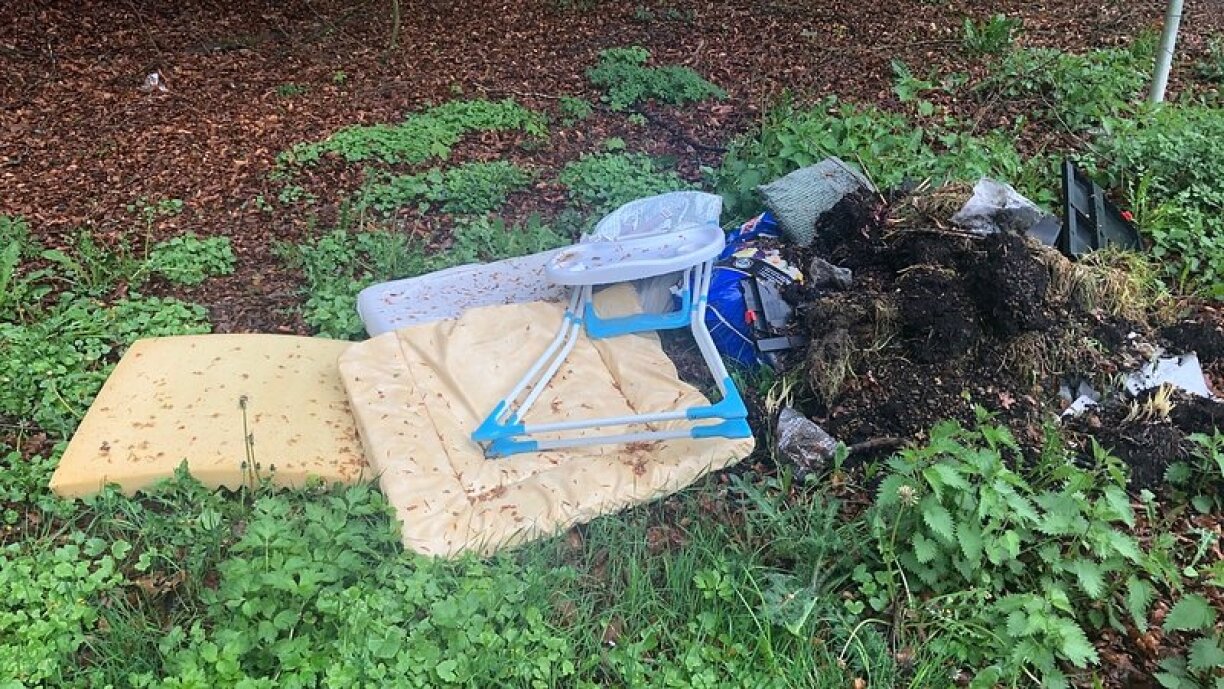
Since the beginning of the pandemic, people have been drawn more to spending time in nature and of course, the amount of waste found out and about has simultaneously increased.
A campaign, announced yesterday, is set to raise awareness about the dangers of leaving plastic, glass, or other waste behind.
Luxembourgish farmers are set to post a total of 350 signs, all showing what happens to a cow's digestive system if too much waste is consumed.
The problem goes so far that farmers occasionally have to extract metal particles from the animals' stomachs, which is done with the help of small magnets.
So far, the amount of pollution has not yet affected the quality of Luxembourgish products, but rather that of animals. Farmers report that around 10% of the Grand Duchy's cattle livestock is plagued with infection symptoms that can be traced back to the consumption of waste. These conditions may provoke death in the worst-case-scenarios.
Now that grass is currently cut shorter, farmers have to make sure that the fields are free of waste, as most objects will at some point no longer be detectable.
Minister of the Environment, Climate and Sustainable Development Carole Dieschbourg noted: "If everyone paid attention, these animals would not have to die."
From this year on, people caught littering may have to pay a €145 fine. Furthermore road cleaning operations cost around €1.2 million per year, with an average of 103 kilograms of waste being collected per kilometre.





