In recent months, the refugee policy of the coalition government formed by the Christian Social People's Party (CSV) and the Democratic Party (DP) has been the subject of often highly emotional debate.
From concerns over the planned implementation of the European Migration and Asylum Pact, which some argue could come at the expense of refugees' fundamental rights, to criticism of conditions in certain accommodation facilities, the government's approach has faced sustained scrutiny.
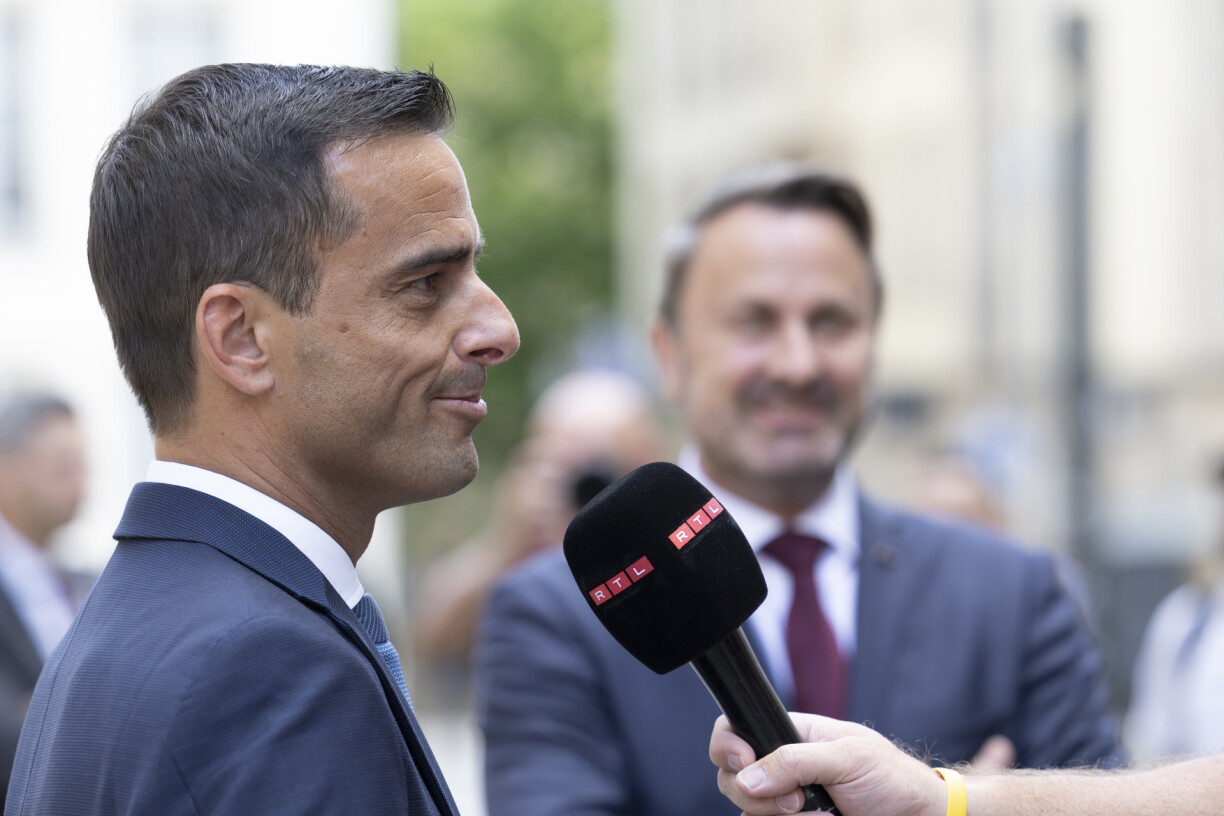
On Saturday, Minister for Family Affairs, Solidarity, Living Together and Reception of Refugees, Max Hahn invited the public to Rodange to present what he considers an ideal structure. He explained that when he took on the role just over two years ago, he inherited a particularly complex portfolio.
However, he expressed satisfaction at being able to rely on strong partners, both within the administration and across ministries and municipalities. He pointed to the new facility as an example of what can be achieved: a modular building with a capacity of 30 beds, designed with a clear layout, on-site cooking facilities, social support services, and on-site supervision.
From 4 May, the three-storey building on the border in Rodange will provide accommodation for 29 people. The project cost €3.6 million.
Hahn is currently presenting the concept to local authorities across Luxembourg, with initial progress already visible.
He explained that construction is underway on three such facilities in Wiltz, while public consultations have recently been held in Niederanven for two new sites. He added that another facility is due to open in Käerjeng in November, all based on the same model as the one in Rodange.
However, such facilities do not appear overnight. Ideally, planning and construction take at least two and a half years. Only then can older structures be phased out. For instance, around 34 smaller units would be needed to replace a large facility such as the "T Building" in Kirchberg, at a time when 98% of the country's 8,400 available places are already occupied.
For Pétange mayor Jean-Marie Halsdorf, acceptance in what remains a sensitive debate depends largely on transparency. He stressed that many concerns stem from a lack of understanding of what such a structure entails, and that open communication can make a significant difference.
As an example, he noted that residents were invited to visit the new facility to see for themselves how it operates.
Hahn stood by his position, emphasising that newcomers must be told the reality from day one. He pointed out that life in Luxembourg comes with high living and housing costs, and that refugees, often unfamiliar with the country's languages, must be prepared to make a strong effort to integrate from the outset.
According to Hahn, there is ultimately only one way to leave such accommodation after being granted refugee status: finding employment. To support this, the government has this week submitted draft legislation that would reduce the waiting period for asylum seekers to access the labour market from six months to four.





