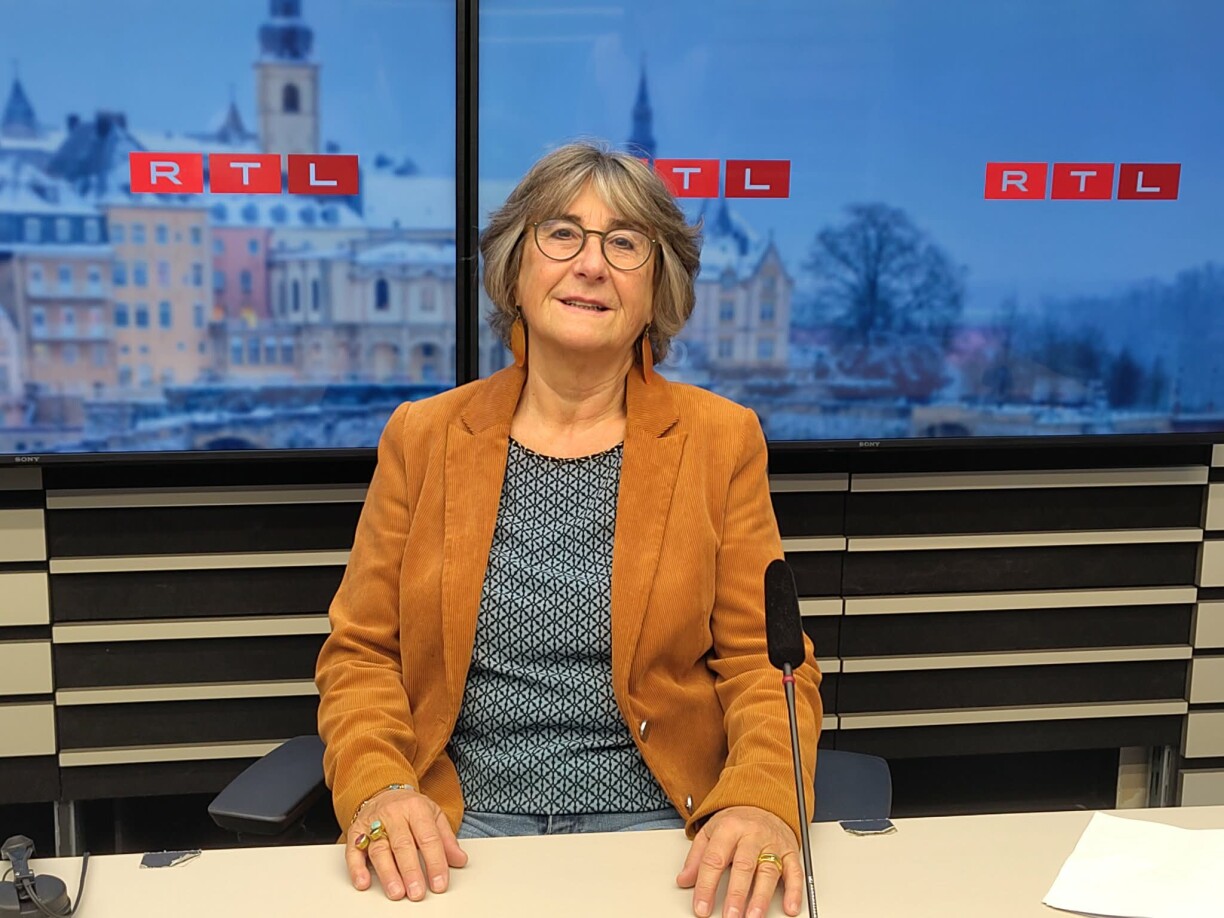
On Wednesday morning, Laura Zuccoli of the Luxembourg Refugee Council spoke with our colleagues from RTL Radio about asylum and migration policy.
The interview coincided with Human Rights Day, observed annually on 10 December. Echoing criticism from other human rights organisations, Zuccoli expressed regret that Europe's shift toward a more restrictive asylum policy signals a continent increasingly isolating itself. Her comments followed a key milestone on Monday, when European interior ministers moved forward with a joint asylum and migration pact, which is scheduled for implementation in June 2026.
The pact's goals are unequivocal: to curb illegal immigration through stricter border controls and to increase the number of deportations for those denied asylum.
A particular point of contention for the Luxembourg Refugee Council is the pact's provision for "return hubs" in third countries. These facilities would receive rejected asylum applicants in the future. Zuccoli voiced concern over the concept, whether used as transit points or as permanent housing. She criticised the approach as an externalisation of the issue, arguing it could send people to countries with which they have no connection. The Council also questions whether such hubs would comply with international law.
At a national level, Luxembourg's government operates the "Maison de retour" ("Return Centre") to pressure rejected asylum seekers into voluntarily returning home, according to Zuccoli. She noted that although the facility at Luxexpo in Kirchberg is accommodating a growing number of individuals – including families – a clear long-term strategy remains absent, even one year after its opening.
For years, shelters for asylum seekers have been chronically overstretched, with over 97% of the approximately 8,300 available beds currently occupied. According to Zuccoli, this reflects a clear and ongoing shortage where little progress has been made.
In light of this situation, Zuccoli raised questions about the status of the government's multi-year reception plan, which the Ministry of Public Works was tasked with drafting. She also noted that an announced audit of the National Reception Office (ONA) and its management of refugee accommodations remains pending.
Reiterating the Council's long-held position, Zuccoli called on the responsible minister, Max Hahn, to hold municipalities more accountable. She emphasised that a truly national effort, marked by solidarity and an equitable distribution of facilities across Luxembourg, is necessary. Such an approach, she argued, would also facilitate the establishment of smaller-scale shelters – a stated government goal.
Among other potential solutions, Zuccoli pointed to the use of temporary container housing and the development of vacant building plots to alleviate the chronic shortage.
Zuccoli pointed to the Don Bosco shelter as a case study. Originally slated for renovation and closure in 2015, the plan was suspended due to the large influx of refugees from Syria. While the Ministry of Family Affairs maintains the situation has remained an emergency, the Refugee Council representative described conditions at Don Bosco as "deplorable".
She noted a similar situation at the shelter in Mersch, where residents cannot even lock their room doors – a circumstance she criticised as "anything but humane."
Consequently, the Refugee Council is calling for Luxembourg's new public health law to be extended to cover refugee facilities. Zuccoli argued this would provide a crucial legal framework for minimum standards, citing the law's mandate of nine square metres of living space per person. She contrasted this with the current reality in shelters, where an average of 6.7 people share a single room.
Zuccoli also reiterated the Council's longstanding appeal to grant asylum seekers the right to work immediately upon application. Activating people early, she argued, would help integrate them into the workforce by the time they receive refugee status and must leave asylum shelters. This is a pressing issue, she noted, as many recognised refugees today find themselves without housing. Over 100 people, primarily from Eritrea, highlighted this precise problem in a letter to the government this past summer.





