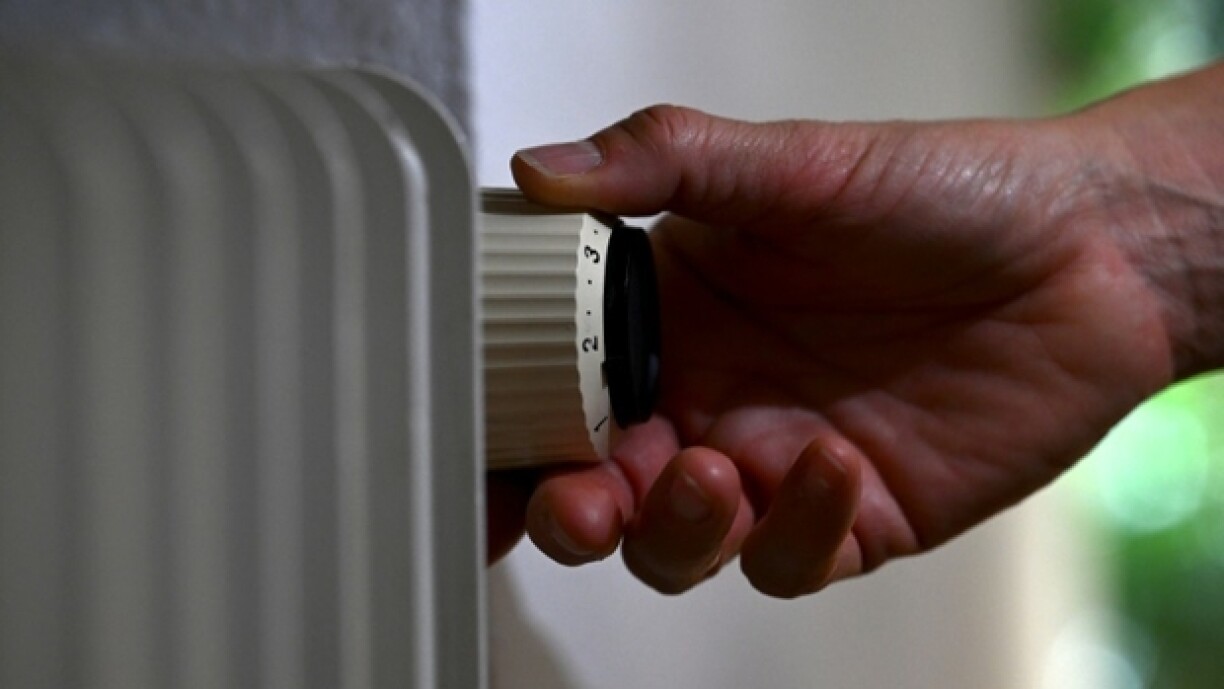
On the financial markets, European gas has risen to €72 per megawatt hour, well above its usual band of €30 to €50. Luxembourg's largest energy group has already secured enough gas for this year, according to energy holding company Encevo director Claude Seywert.
Next year's bills, he said, would be "slightly" more expensive, though he was quick to add that even then they would still come in cheaper than in the three years since the Russian attack on Ukraine.
The current price rise is being attributed to the US-Israeli strike on Iran at the end of February, according to Seywert. The Russian attack on Ukraine had already caused a change from pipeline supplies to tankers carrying liquid gas. As a result, the near-closure of the Strait of Hormuz has bitten harder, since a ship at sea, as Seywert put it, "can stop wherever it wants".
All of that explains why Europe's gas storage facilities stood at just 65% full at the end of August, compared to 83% in October last year. European buyers have been holding off in the hope of picking up cheaper gas since the spring.
Even so, Seywert and Economy and Energy Minister Lex Delles both moved to calm nerves, saying that no bottlenecks are on the horizon. Luxembourg, like a number of other smaller EU countries, only needs to hold 15% of its annual gas consumption in storage, and it is already at 90% of that target, they stated.
Seywert did note, however, that with less gas in storage, the EU has, by nature, less flexibility, and that any spike in consumption would mean having to buy more expensive gas.
Seywert also stood by what he had said back at the end of May. Bills will not rise this year either, since everything has already been bought for 2026 and a large share of the supply for next year is also in place, he said.
While gas bills have not risen appreciably or at all so far, fuel is once again notably more expensive at the pump. For Delles, that shows that the subsidies on fuel, gas, and electricity agreed at the tripartite on 8 June were the right tools for keeping inflation in check and protecting purchasing power.
In the same breath, however, Delles noted that the state can only respond to price movements "to a limited extent" and that decarbonisation and electrification must therefore be pushed forward consistently.
In that context, he pointed to the reform projects on state financial support for the energy transition (photovoltaics, heat pumps, electric vehicles) currently being developed by his government colleague, Environment Minister Serge Wilmes.
On the other hand, Seywert put it more plainly. Energy efficiency, he said, is always a good thing, both for the wallet and for the climate.
The tripartite measures aimed at cushioning price rises are due to expire at the end of the year, but the Economy and Energy Minister said he could not "look into a crystal ball". The situation, he added, remained extremely volatile, meaning it could shift at any time.
Making forecasts for next year would, in that context, be very difficult, according to Delles. The US mid-term elections are due in November, and no one can yet say for sure when the El Niño weather pattern will make itself felt in Europe this winter.
The tripartite agreement of 8 June envisages a follow-up meeting between the government, employers, and trade unions to take stock of the situation by October at the latest. No exact date has yet been set, according to Delles.





