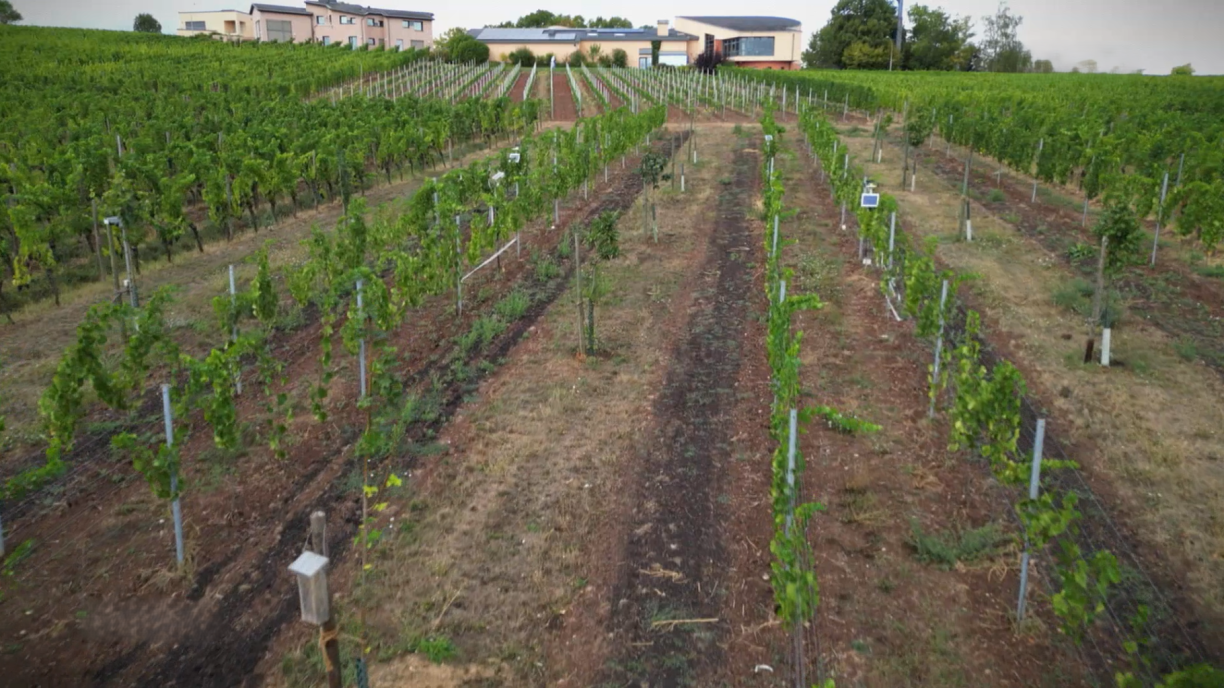
Researchers Mareike Schultz and Daniel Molitor are investigating which soil management techniques best help vines cope with drought conditions.
In the vineyards of Luxembourg’s national wine institute, they are currently comparing five methods, ranging from bare soil, to cover crops, to straw mulching.
Their goal is to develop practical recommendations tailored to different locations and conditions, advising which approach works best and when.
So-called “Piwi” varieties, which are grapes bred to be resistant to fungal diseases, are being trialled as a way to reduce reliance on plant protection products.
While Mareike Schultz believes these vines will still need some treatment, particularly during vulnerable periods, she explains that although less frequent, treatments are still necessary.
However, with fewer passes by the tractor, there are fewer emissions and less use and production of pesticides. According to her, this "not only saves time and money, but also benefits the climate".
These Piwi grapes are new cultivars imported from abroad. The intention is not to replace traditional Luxembourg varieties such as Riesling or Rivaner, but to supplement them and offer winegrowers more options in the face of changing conditions.
Trees among the vines remain a rare sight in Luxembourg. Daniel Molitor, from the Luxembourg Institute of Science and Technology (LIST), is exploring whether introducing trees to vineyards could help vines better endure increasingly dry years.
Molitor notes that the shade cast by trees can slow the drying of the soil, but it may also mean vines receive less sunlight. In the past, this would have been viewed as a clear disadvantage.
However, he argues that it might actually help by slightly delaying grape ripening. What remains to be seen is whether trees could also compete with vines for resources.





