Here are five things you should know at the end of this week:


Luxembourg's government and the CGFP reached a wage agreement granting civil servants a 2.5% salary increase over two years, costing €195.5 million, with partial recovery through taxation.
Salaries raised – The agreement includes a 2% increase in the index point value in 2025, followed by an additional 0.5% rise in 2026, effectively raising salaries across the public sector. This measure is expected to cost the government €195.5 million, though officials project that €80 million will be recovered through taxation.
The pay raise applies to approximately 37,500 civil servants, with monthly salary increases ranging from €98 for clerical workers to €198 for university graduates in higher career groups.
Additional benefits – As part of the agreement, civil servants in leadership positions will receive seven additional index points, while head teachers will be granted an annual flat-rate payment of €1,750. Additionally, the correction coefficient for teachers' overtime pay will be removed, ensuring full compensation for extra hours worked.
Other significant measures include an expansion of government mortgage subsidies, raising the loan threshold from €150,000 to €400,000 and extending repayment terms from 15 to 25 years. The agreement also applies to municipal employees and certain state-linked businesses, though specific funding details for the latter remain under negotiation.
Wage gap widening – Government officials, including Minister Serge Wilmes, argue that the deal reflects a balanced approach that rewards civil servants while considering economic realities. MPs from the ruling coalition, such as Maurice Bauer (CSV) and André Bauler (DP), praised the agreement as a responsible and necessary compromise, given that initial union demands were much higher.
However, opposition MPs and private sector representatives raised concerns about widening salary gaps between public and private employees, with MP Djuna Bernard (Déi Gréng) warning that low-income private sector workers may struggle to keep up. Additionally, MP David Wagner (Déi Lénk) argued that improved public sector wages could set a positive benchmark for the private sector, encouraging broader wage increases.

Luxembourg's Prime Minister Luc Frieden this week met with European Commission President Ursula von der Leyen, stressing the need to reduce over-regulation in the EU to prevent job losses and reaffirming Luxembourg's opposition to internal border controls.
Luxembourg opposes Germany's continued border checks, with Home Affairs Minister Léon Gloden warning that the policy contradicts EU free movement principles and stating that Luxembourg may appeal the decision to the European Commission.
Concerns over border controls are growing, as Germany's CDU signals plans to uphold them indefinitely, prompting Luxembourg and Spain to argue that such measures should remain an exception within the EU.
Shared vision – During their meeting in Luxembourg, Frieden expressed concerns that excessive regulation within the EU could drive businesses and jobs to other parts of the world, ultimately harming European prosperity. He described the discussion as productive, noting that the new European Commission appears to share Luxembourg’s economic priorities.
Additionally, Frieden reiterated Luxembourg's strong support for the Schengen Agreement, arguing that while some EU countries face challenges, reinstating internal border checks is not a viable solution. Despite ongoing tensions, he expressed optimism that the situation would improve in the coming months.
EU principles violated – Following a meeting of EU interior ministers in Warsaw, Gloden made it clear that Luxembourg sees Germany's decision to prolong internal border controls as a violation of fundamental EU principles. He stressed that if Germany extends its measures, Luxembourg would take action by appealing to the European Commission, which would then determine whether Germany's policy is justified under EU law.
Gloden also highlighted the significant disruption such checks would cause, particularly for Luxembourg's economy, which relies heavily on the daily movement of 250,000 cross-border workers from Germany, France, and Belgium.
Luxembourg and Spain aligned – Luxembourg's concerns intensified after Germany's CDU stated that, if elected, it would continue border checks indefinitely to address security and migration issues. This stance has sparked backlash from Luxembourg and Spain, both of which insist that internal border controls should only be used in exceptional circumstances rather than becoming a permanent measure.
At an EU meeting in Warsaw, Spanish officials aligned with Luxembourg's view, warning that such policies undermine the spirit of Schengen and the EU's core principle of free movement. The debate is expected to escalate as Germany moves forward with its plans, potentially setting up a legal confrontation between EU institutions and Berlin.

CFL saw a 10% rise in train passengers in 2024, reaching 31.3 million, prompting major expansion projects in 2025, including new trains, track renewals, and station modernisations.
Luxembourg and France are jointly investing €460 million to double cross-border train capacity by 2030, with longer trains, expanded platforms, and more frequent services.
Infrastructure improvements include new park-and-ride facilities, expanded bus routes, and ongoing efforts to widen the A3 motorway, though delays persist on the French side.
Rising demand – Luxembourg's national railway company CFL reported a significant increase in train usage, reflecting a 122% growth over the past two decades. To accommodate this rising demand, CFL is focusing on four key areas in 2025: increasing capacity with the addition of four new trains, enhancing punctuality and customer service, improving safety, and modernising infrastructure.
Major works include extensive construction along the Luxembourg-Bettembourg axis, a new dedicated rail line to ease congestion, and the removal of a level crossing in Dudelange. Additional projects involve renewing 38km of track and upgrading stations in Esch-sur-Alzette, Differdange, and Mersch, all aimed at ensuring a more reliable and efficient rail network.
Bilateral efforts – With 125,000 cross-border workers commuting daily from France to Luxembourg, overcrowded trains and road congestion remain pressing challenges. To address this, Luxembourg and France signed bilateral agreements in 2018 and 2021, committing €460 million equally to rail expansions.
The plan will increase train seats during peak hours from 9,000 to 13,500 by 2026 and further to 22,500 by 2030. Upgraded infrastructure, such as extended platforms at seven key French stations and a new maintenance centre in Montigny-lès-Metz, will support these improvements.
By 2030, up to ten trains per hour will operate between the two countries, including a TGV and a freight service, significantly boosting mobility options for commuters.
Persisting challenges – To further support public transport, Luxembourg and France are expanding park-and-ride facilities near major train stations, with new parking spaces in Longwy and Thionville improving commuter access. Public transport links have also been strengthened, with new bus routes such as the Forbach-Luxembourg service launched in January 2025 and additional train connections from Longwy.
Meanwhile, the long-awaited A3 motorway widening project, which aims to add a third lane in each direction between Luxembourg and France, has faced delays. Although the section between Croix de Gasperich and Aire de Berchem is now expected to open by March, work on the French side of the A31 motorway is not scheduled to begin until 2030, meaning congestion issues will likely persist for years to come.

A US military helicopter and a passenger jet collided midair over Washington’s Potomac River, killing all 67 people on board both aircraft, with investigators recovering black boxes and shifting from rescue to recovery efforts.
The crash raised concerns over air traffic control staffing and aviation safety, as reports indicated only one controller was handling both aircraft at the time, while experts questioned how modern collision-avoidance systems failed.
President Trump has blamed diversity hiring policies for the incident, drawing backlash from Democrats and transportation officials who called his remarks misleading and inappropriate.
Devastating collision – A US military helicopter and a passenger jet collided in midair over Washington's Potomac River, killing all 67 people on board both aircraft. The crash occurred at night under clear weather conditions, raising immediate questions about how such a disaster could happen in crowded but well-regulated airspace near the White House.
Rescuers battled freezing temperatures, wind, and ice as they worked through the night, recovering at least 40 bodies by the following evening. The aircraft wreckage was found in multiple sections of the river, with divers and emergency teams conducting extensive search operations.
The National Transportation Safety Board (NTSB) confirmed that the cockpit voice recorder and flight data recorder from the passenger plane had been recovered and sent for analysis. The American Airlines-operated Bombardier jet had 60 passengers and four crew on board, while the Black Hawk helicopter carried three crew members conducting a routine night training mission.
Investigation underway – The collision sparked concerns over air traffic control staffing and aviation safety, as reports revealed that only one controller was managing both the passenger jet and the military helicopter at the time of the crash, rather than the usual two. Investigators are looking into whether overworked personnel and a lack of oversight played a role in the failure to prevent the crash.
Dramatic air traffic audio recordings showed controllers repeatedly asking the helicopter if it had the jet in sight, followed by urgent instructions to "pass behind" the plane moments before impact. This incident has raised questions about how modern aviation safety systems, including collision-avoidance technology, failed to prevent the midair disaster.
Given the high volume of air traffic in Washington's heavily monitored airspace, experts are demanding a closer look at the regulations governing civilian and military aircraft operations near Reagan National Airport.
Hiring policies – President Donald Trump's response to the crash sparked controversy, as he blamed diversity hiring policies for the air traffic control failures. During a press conference, Trump alleged that Democratic administrations had lowered hiring standards in aviation to prioritise diversity over competence, claiming this led to the disaster.
His remarks, particularly his criticism of former Transportation Secretary Pete Buttigieg, were condemned as misleading and offensive, with Democrats and aviation officials calling his comments a distraction from real safety issues. Buttigieg responded by calling Trump's claims "despicable", while Senator Chris Murphy pointed out that the crash happened under Trump's administration, making his attempts to shift blame politically opportunistic.
Despite backlash, Trump issued an official directive calling for an investigation into aviation hiring practices.
As part of a fragile ceasefire deal, Hamas released 11 more hostages this week, including five Thai nationals, while Israel freed 110 Palestinian prisoners, including high-profile militant leader Zakaria Zubeidi.
More than 376,000 displaced Palestinians have returned to northern Gaza through the Netzarim Corridor, finding widespread destruction and dire humanitarian conditions.
Israel has cut ties with UNRWA, the UN agency for Palestinian refugees, accusing it of supporting Hamas, a move condemned by the UN and humanitarian organisations as worsening the aid crisis in Gaza.
Swaps continue – As part of the ongoing ceasefire agreement between Israel and Hamas, 11 more hostages were released from Gaza, including three Israeli civilians and five Thai nationals who had been held captive since Hamas' October 2023 attack. In exchange, Israel freed 110 Palestinian prisoners, among them Zakaria Zubeidi, a former leader of the Al-Aqsa Martyrs' Brigade and a prominent figure in the Jenin refugee camp.
The prisoner exchange is part of a broader deal aimed at securing the release of remaining hostages while facilitating negotiations for a potential long-term truce. The exchange was marked by emotional reunions, particularly among the Thai families who had endured months of uncertainty about their loved ones' fate.
However, disputes over aid deliveries and accusations of ceasefire violations continue to threaten the fragile truce.
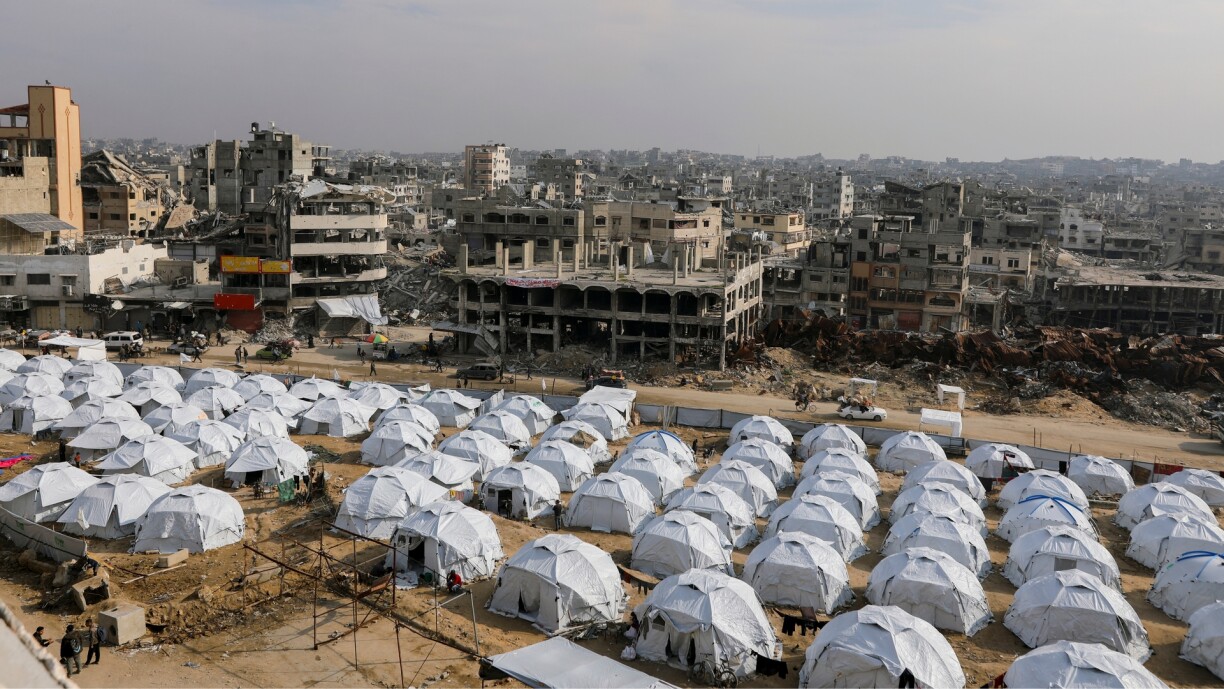
Return to northern Gaza – More than 376,000 displaced Palestinians have returned to northern Gaza following an agreement allowing them to pass through the Netzarim Corridor, a route previously blocked by Israeli forces. Many returnees have found their homes completely destroyed after more than a year of war, with little access to food, water, or shelter.
Humanitarian agencies warn of a severe crisis, as Gaza's infrastructure has been decimated, leaving thousands living in makeshift tents amid shortages of medical supplies and clean water. The return has been hailed as a "victory" by Hamas, but displaced residents express despair over the extent of the destruction, fearing further conflict and prolonged suffering.
Meanwhile, the international community continues to press for increased aid deliveries and a more stable ceasefire agreement to prevent further displacement.
Aid agency under fire – Israel has officially cut ties with UNRWA, the United Nations agency responsible for Palestinian refugees, accusing it of harbouring Hamas operatives and providing cover for militant activities. The move, backed by the United States, bars the agency from operating on Israeli soil, including in East Jerusalem, and prohibits Israeli officials from engaging with UNRWA representatives.
This decision has drawn widespread condemnation from the UN, humanitarian organisations, and several governments, who argue that UNRWA is essential for delivering aid, particularly in Gaza, where it has been the primary distributor of food and medical supplies. Critics warn that Israel's action will severely impact humanitarian efforts, exacerbating the already dire conditions faced by displaced Palestinians, while the UN continues to insist on the agency's neutrality and its irreplaceable role in crisis response.
Business & Tech – European stock markets rose Thursday as the European Central Bank cut interest rates again while US shares were steady after a mixed bag of company earnings reports.
Science & Environment – The Central Intelligence Agency has shifted its official stance on the origin of Covid-19, saying Saturday that the virus was "more likely" leaked from a Chinese lab than transmitted by animals.
Entertainment – Music's biggest stars including Beyonce and Taylor Swift will vie for top awards at Sunday's Grammys gala, a glitzy ceremony proceeding despite devastating wildfires in Los Angeles.
Education – International School Gaston Thorn is growing, with new campuses in Kirchberg and Walferdange set to ease pressure on its packed Cessange and Hollerich sites.
Healthcare – In a written statement, the Centre Hospitalier Emile Mayrisch confirmed it has suspended a medical staff member following concerns about patient care, initiating an internal investigation as a result.
Press – In a sharp rebuke, the Luxembourg Press Council has condemned a recent court ruling restricting RTL Luxembourg from naming convicted fraudster in a high-profile embezzlement case, warning it undermines press freedom and the public's right to information.

Your Weekly Recap is published every Friday at noon. Read earlier versions.





