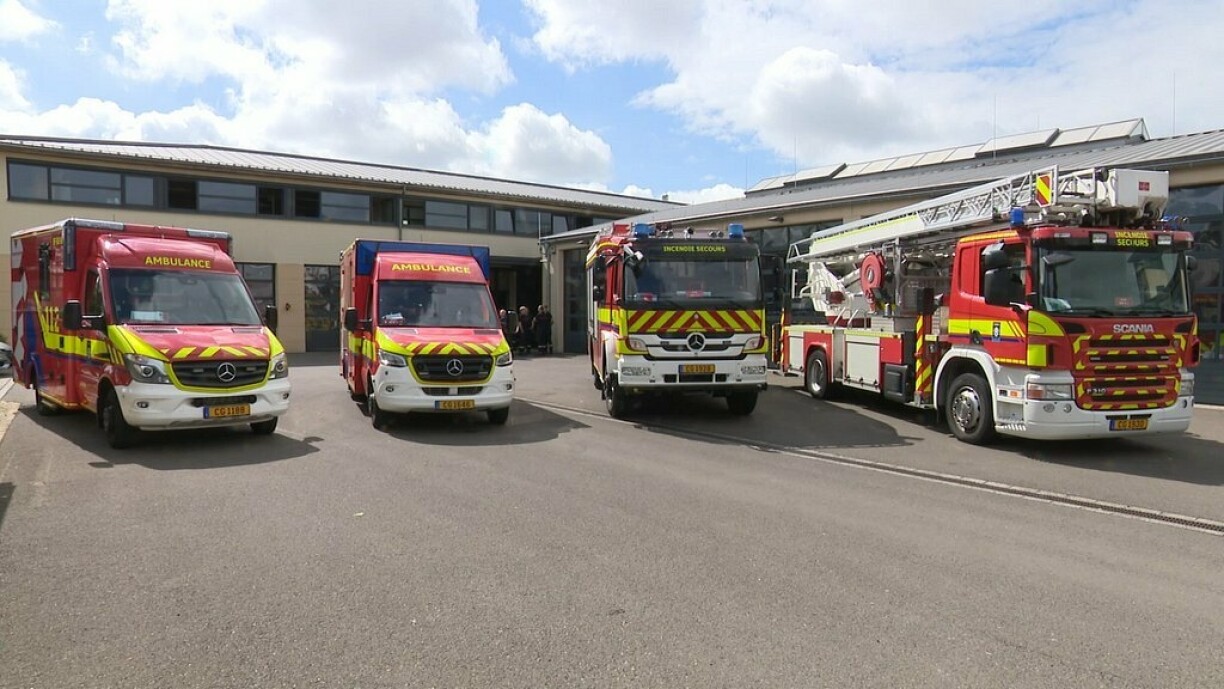
Luxembourg's Grand Ducal Fire and Rescue Corps (CGDIS) carried out around 75,700 operations in 2025, up 5% from about 72,000 the year before, driven largely by a rise in ambulance missions, director Paul Schroeder said in an RTL Radio interview. Ambulance call-outs made up about 90% of all CGDIS missions and accounted for most of the increase, he said, rising from 64,400 to 67,900.
Fires, technical rescues, and road traffic collisions made up most of the remainder, while a small share fell into other categories. Schroeder said activity was broadly steady throughout the year, with only a slight dip during the main summer holiday period.
Among the more demanding incidents, he pointed to several large fires, including an industrial blaze in Colmar-Berg and multiple farm fires, with two separate periods in which three major fires occurred close together. "Luckily we were spared any major catastrophes", he said.
Schroeder acknowledged that unforeseen and extreme weather events can trigger spikes in call-outs, but noted that Luxembourg was "relatively spared" in that regard last year.
On New Year's Eve, CGDIS registered 132 operations between 6pm and 6am, which Schroeder described as "rather calm" and "normal" for the night. The incidents included one facial injury linked to fireworks and five small fires, also caused by fireworks. "That was all within the norm", he noted.
Asked about fire safety following the deadly New Year's tragedy in Crans-Montana, Switzerland, Schroeder said Luxembourg has rules in place, but prevention also depends on awareness and behaviour. "The legislative framework is already in place", he said, adding that recurring factors in major venue disasters include pyrotechnics, highly flammable materials or insulation, overcrowding, and insufficient or blocked emergency exits.
He further appealed to people's accountability and described fire safety as a "collective duty". The CGDIS director stressed the importance of quick reactions in an emergency, particularly for younger people who may underestimate how fast conditions deteriorate.
"People need to be aware that when such a situation happens, you have to get out immediately", he said.
During the interview, Schroeder also gave an update on a planned reform of the SAMU framework, a topic that drew debate last year over which doctors are allowed to respond on certain missions. He said relevant bodies had been asked for opinions before year-end and that CGDIS has now received them. "We are in the process of analysing them internally", he said, emphasising that many constructive ideas had been shared, which they will now seek to include ahead of a management board meeting "next week", where the feedback would be presented and proposals be made to revise the reference framework.
Looking to 2026, Schroeder said a key focus will be national and local resilience planning, alongside recruitment. CGDIS is working on revising the status of volunteers and plans to launch a recruitment campaign for professional staff in March, he said.
Read also





