
Apprentice allowances in Luxembourg are set to rise as part of a government effort to boost the appeal of vocational training.
On Monday, Minister of Education Claude Meisch announced two key measures: an across-the-board increase in apprentice stipends and the introduction of a new bonus for employees who mentor trainees within companies.
“These allowances hadn’t been adjusted for a long time, so we needed to catch up,” Meisch explained. The new structure aims to balance two principles: equal pay for trades of equal value, and progressive increases as apprentices advance. “Someone in their first year should receive more when they move into their second year, and more again in the third,” the minister said, adding that passing the intermediate integrated project will also trigger a raise.
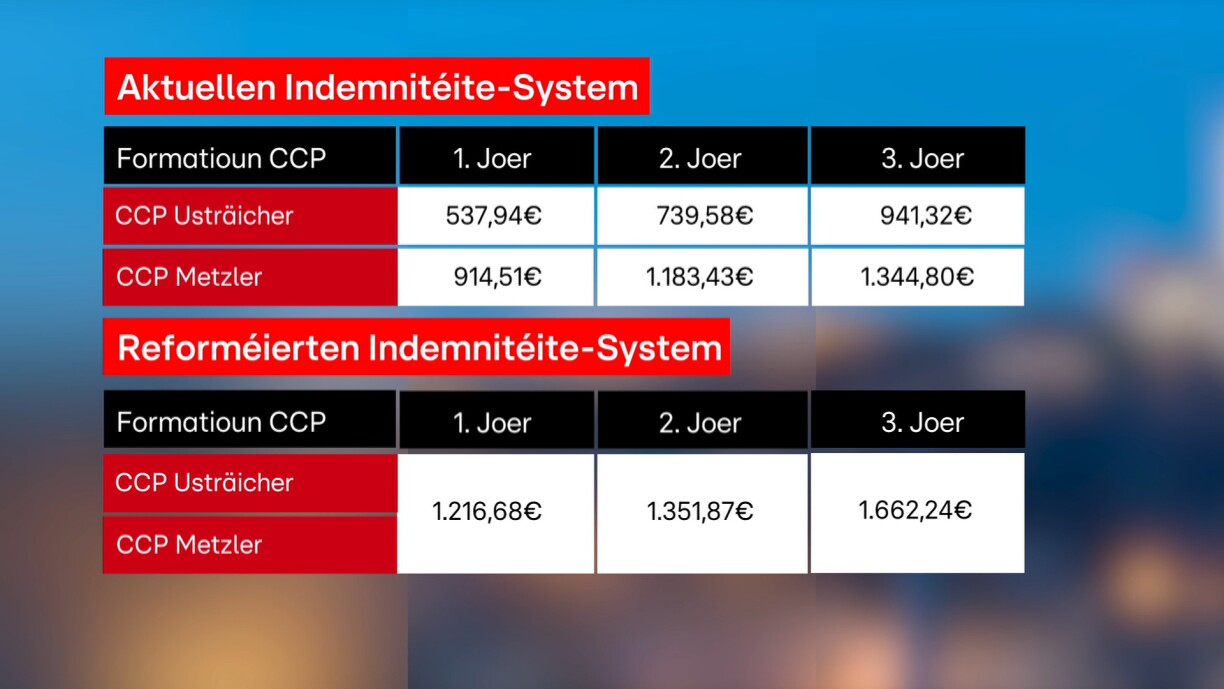
Under the current system, allowances vary widely between trades. For example, a first-year apprentice in the “Vocational Capacity Certificate (CCP) in painting” course received about €500, while a first-year butcher received €914. After the reform, both will start at approximately €1,200 in their first year and receive over €1,600 in their third.
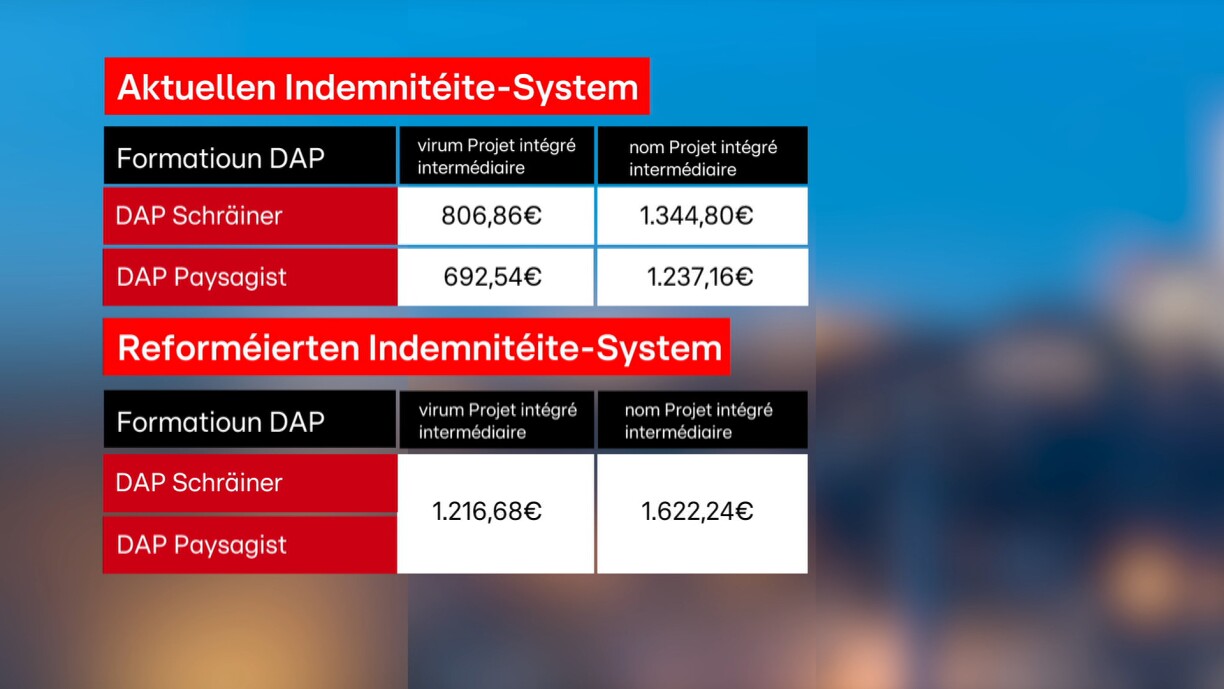
Similarly, for the Vocational Aptitude Diploma (DAP), previous allowances differed – around €800 for a carpenter before the intermediate project, compared to nearly €700 for a landscape gardener. These will now be standardised at €1,216 before the project and €1,622 after.
The alignment applies both within and between pathways: a first-year CCP apprentice will receive the same as a DAP apprentice before the project, and a third-year CCP apprentice will match a DAP apprentice after it.
Claude Cardoso, deputy director of the Chamber of Employees, clarified that no current apprentice will see their allowance reduced. “There are a few exceptions, three or four trades that are above this level, for which an exception is planned,” he said, adding, “Nobody will lose anything – quite the contrary: in the end, they will all benefit.”
The newly standardised allowances have been benchmarked against the unskilled social minimum wage. “Since 2000, the allowances have lost 28% of their value compared to the evolution of the minimum wage, not including index-linked adjustments. That represents almost a third,” explained Cardoso.
The reform also extends support to companies. A new annual bonus of €750 per apprentice will be introduced to recognise the investment of time and mentorship by training firms. “It’s also important for the companies, which invest time and commitment,” said Tom Wirion, director of the Chamber of Skilled Trades and Crafts. “We see this reform as a win-win situation, although we will of course have to see how things develop,” Wirion noted.
To ensure businesses are not financially disadvantaged, the state will fully reimburse the additional costs resulting from the increased allowances, Minister Meisch confirmed.
The Government Council approved the corresponding bill on 6 February. Several procedural steps remain before it enters into force. However, it has been decided that the new system will apply retroactively from 1 January 2026. Once enacted, apprentices will receive back pay for the difference in their allowances, and companies will be reimbursed promptly for their related costs.





