A fire broke out on New Year’s Eve at the bar Le Constellation in the Swiss ski resort of Crans-Montana, leaving at least 40 people dead, most of them in their teens and early twenties. The youngest victim was 14 years old. More than 100 people were seriously injured and required urgent medical treatment. Disasters on this scale can quickly overwhelm local hospitals, particularly when many of the victims, as in this case, are suffering from severe burns.
Given the scale of the tragedy, Switzerland activated the European civil protection mechanism, enabling international coordination of rescue efforts. Luxembourg’s Ministry of Foreign Affairs subsequently used the emergency.lu programme to mobilise Luxembourg Air Rescue (LAR) for the transfer of injured patients to specialised clinics.
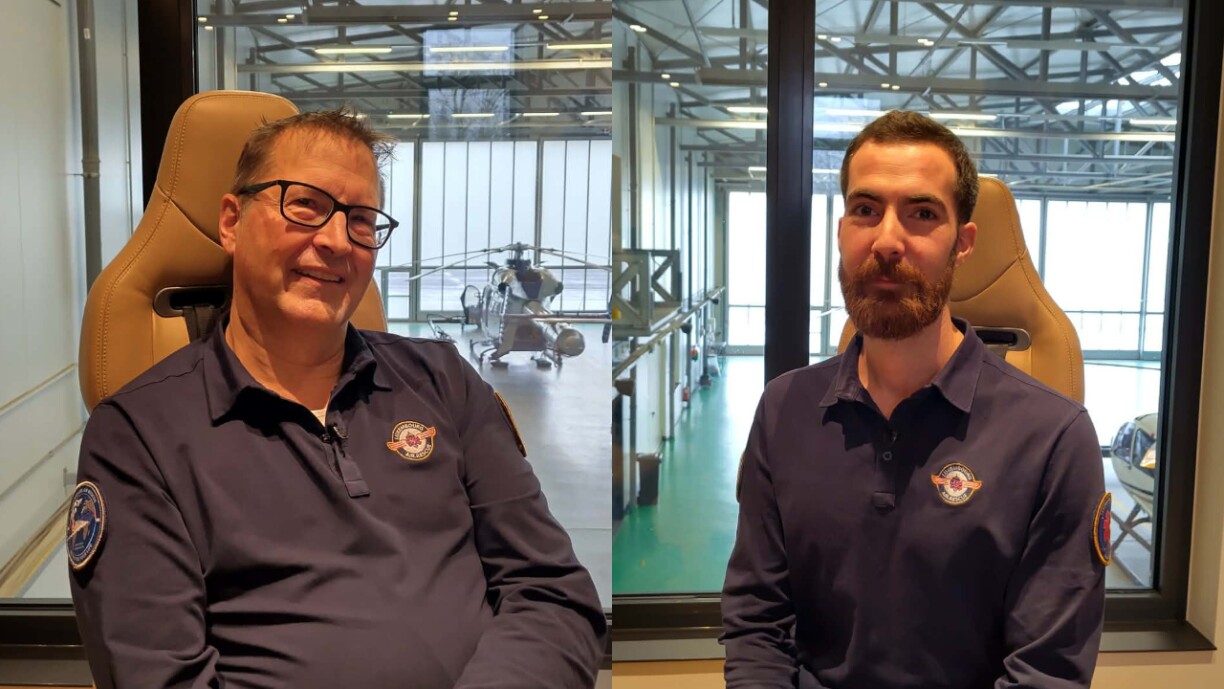
Anaesthetist Marc Manicke and anaesthetic nurse Dimitris Kokiopoulos, who accompanied two medical evacuation flights from Luxembourg, said that even for highly experienced professionals, the mission was far from routine. On 2 January, a patient was transferred from Payerne in Switzerland to Leipzig, followed the next day by a second transfer from Zurich to Berlin. From a technical standpoint, the flights themselves proceeded smoothly, but the medical context made the operation particularly demanding.
For Manicke, a father of two boys aged 13 and 16 – roughly the same age as many of the injured – the mission struck closer to home than most others. Both patients were placed in an induced coma. “The first patient had burns covering around 70 per cent of his body,” Manicke said. He added that the patient’s circulation was “extremely unstable”, requiring artificial ventilation and deep sedation throughout the transfer. The patient is expected to remain in a specialised burns intensive care unit for several months.
Much remained unclear until shortly before take-off, largely because both patients’ conditions were highly unstable. However, the team suspected early on that they might be called in. “Switzerland has only around 10–12 intensive care beds for patients with severe burns,” Manicke said, noting that reports of around 100 seriously injured people were already circulating.
Even before it was confirmed that flights would depart from Luxembourg, Kokiopoulos had placed himself on standby. “It’s part of the job to be ready to fly at any moment,” he said.
Medics, they stress, are also human, and the images from the scene are likely to stay with the team for a long time. “It was shocking to see the condition the patients were in,” Manicke said. One of the patients had required extreme fluid resuscitation to protect kidney function, carrying around 20 litres more fluid than normal, which caused severe swelling. “That is not something you see every day, and it has stayed with me,” he added.
Despite having accompanied around 700 flights during his career, Manicke said this mission left a particularly deep impression. His thoughts were also with the families of the severely injured, anaesthetic nurse Dimitris Kokiopoulos said, noting that relatives were kept informed throughout the operation. “That is extremely important for the families,” he said, “so they know we are there and that we are carrying out our work with the same professionalism as the teams who treated the patients in the first phase.”
After such an intervention, the crew makes a point of supporting one another, Kokiopoulos explained, with medical staff and pilots discussing what they have experienced. “That is what we did in the hotel that evening,” Manicke said. “Emotionally, it was very difficult to process.”
The team does not yet know how the patients are doing. “It is still too early – the situation first needs to stabilise,” Manicke said. In many cases, however, families later reach out to express their gratitude, something both medics described as a powerful source of motivation in a demanding job defined by teamwork and unpredictability.
Both Manicke and Kokiopoulos also highlighted the level of international cooperation involved. Initial care at the scene had been “extremely professional”, Kokiopoulos said, with rescue services, hospitals and medical teams working seamlessly across borders. Manicke described the wider operation as exceptional, recalling the presence of Swiss Rega aircraft and Romanian military planes transferring patients. “You don’t see something like this every day,” he said, calling the scale of coordination “extremely impressive”.





