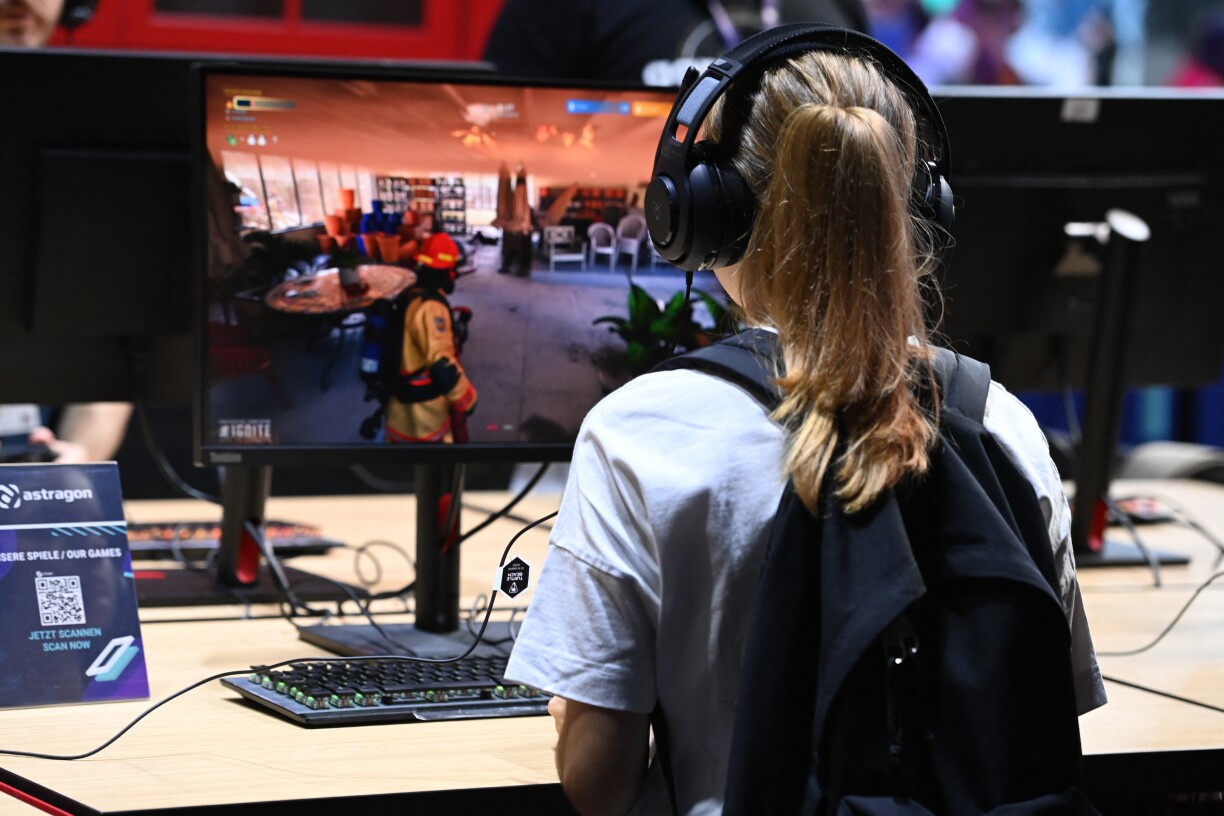
French President Emmanuel Macron recently caused a stir after speaking out about the dangers of video games for young people's mental health. The video game industry has reacted with confusion to the suggestion of banning violent games for minors.
The issue arose during an interview with Brut, in which the French president said he had asked experts to examine the potential risks of video games for young people's mental health between now and May or June. If there is a scientific consensus that certain games have a very bad impact on young people, particularly those in which players spend "five to six hours a day killing people", then "perhaps they should be banned", he warned.
What do people in the Grand Duchy think about such a ban? Our colleagues from RTL Infos took the streets of Luxembourg to feel the pulse.
Parents in Luxembourg express largely similar views when asked for their opinions, with many saying it was not the state's role to intervene.
"Banning is not right. It's our decision as parents. He doesn’t have any video games at home", explained one mother, standing next to her son, who said he preferred playing football to taking part in gaming sessions organised by friends.
Another mother shared a more nuanced perspective, saying she supports the idea in principle, but believes responsibility ultimately lies with parents. Enforcing rules on a daily basis is not always easy, she admits, yet clear boundaries are essential: if rules are not respected, gaming privileges are revoked.
A young woman who is not a parent also voiced concern. She argued that video games, particularly violent ones, are not necessarily advisable for children. In her view, constant stimulation leaves little room for rest, which she believes is important for a child's ability to learn and develop.
However, Thomas Rohmer, director of France's Observatory for Parenting and Digital Education, points to research suggesting there is no proven causal link between playing violent video games and committing violent acts. Numerous studies, he says, have failed to establish a direct relationship.
For some parents, that distinction is reassuring. They say supervision, rather than prohibition, is the appropriate response. Monitoring their children's gaming habits is already part of their routine, they explain, but a blanket ban would go too far.
For now, the proposal has not gained traction among Luxembourg's political parties. Yet following the recent ban on mobile phones in schools, tighter regulation of violent video games could emerge as the next topic of debate among lawmakers concerned about young people's mental health.





