
Here are five things you should know at the end of this week:

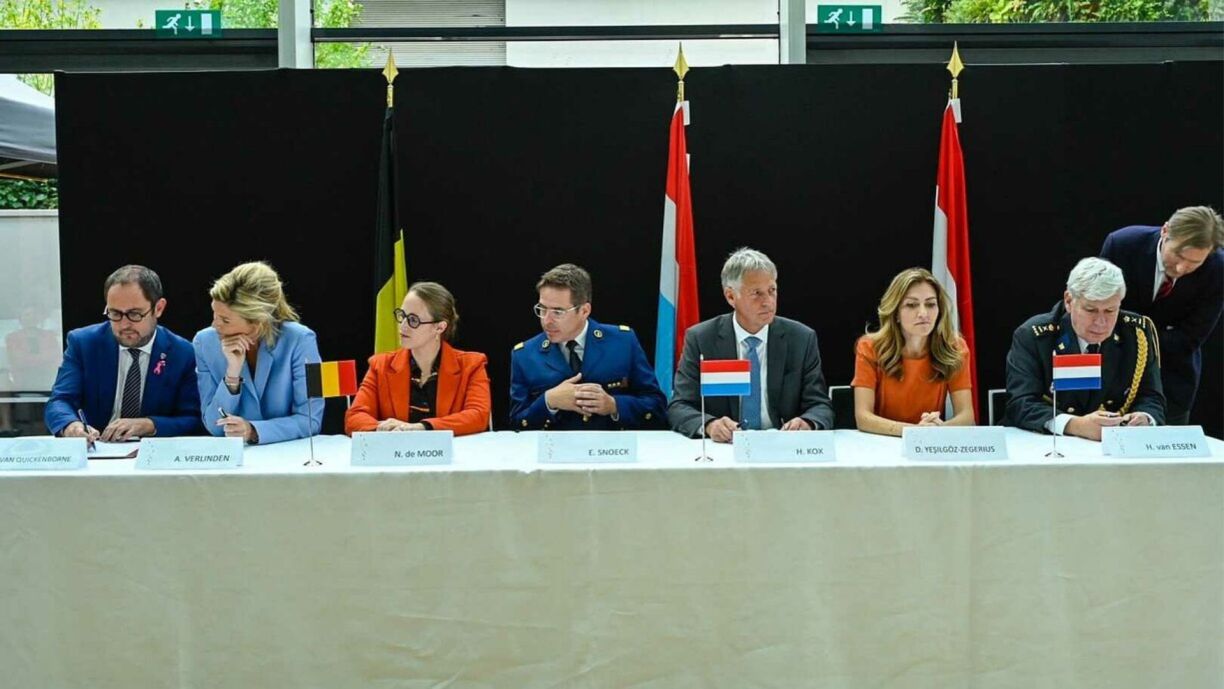
A new Benelux treaty enhances cross-border police cooperation among Belgium, the Netherlands, and Luxembourg, allowing pursuits and operations to continue seamlessly across borders starting October 1, 2023.
Reducing restrictions - The upcoming Benelux treaty, slated for implementation on October 1, 2023, represents a significant evolution in cross-border police cooperation amongst Belgium, the Netherlands, and Luxembourg. One of the fundamental changes eliminates border restrictions during pursuits, addressing a historical challenge where law enforcement activities were often hindered at the border.
Now, police officers from any of the three nations can continue their operations seamlessly, ensuring that law enforcement is more efficient and that criminals cannot exploit border restrictions to evade justice.
Shared data bases - The enhanced cooperation is further amplified by the provision for reciprocal access to databases among the police forces of the three nations. Previously, limitations in information sharing could potentially slow down investigative processes and response times.
With the new treaty, real-time data exchange will be facilitated, making joint patrols and investigations more effective. This not only bolsters the efficiency of law enforcement, but also strengthens security in the border region by ensuring that officers are always informed and prepared.
Quick mobilisation - The special police units' capacity to actively intervene across borders is another pivotal aspect of the treaty. In a world where international cooperation is increasingly necessary to address security challenges, this provision ensures that resources and expertise can be quickly mobilised across the Benelux countries.

Belval district is undergoing a major transformation that includes a new tramline, prioritising sustainable mobility, and reducing vehicular traffic in favour of pedestrian walkways and cycling lanes.
The redevelopment plan involves a €3 billion high-speed tramline project connecting major cities, promoting public transport, walking, and a 14-fold increase in cycling journeys by 2035.
In collaboration with Agora, the government is re-evaluating Belval's road network to include eco-friendly transport options and enhance urban green spaces, aiming to improve environmental quality and citizens' quality of life.
Strategic shift - Belval district is embracing an era of change characterised by a comprehensive redevelopment initiative. The crux of this transformation is pivoting towards sustainable mobility options. The vehicular traffic is poised to see a significant reduction, making way for expansive pedestrian walkways and dedicated cycling lanes.
This metamorphosis from a car-centric environment to one that prioritises pedestrians underscores a strategic shift. It amplifies the commitment to eco-friendly, sustainable urban living, intertwining modern infrastructure with environmental consciousness.
Tram project linked - A cornerstone of Belval's redevelopment is the ambitious €3 billion high-speed tramline, a project that signifies more than a mere expansion of the transport network. Connecting Belvaux and Belval to Cloche d'Or, this tramline is integral to the Luxembourg City/Esch-sur-Alzette link.
More than aesthetics - A partnership between the government and Agora is spearheading a comprehensive reassessment of the Belval district’s road network. This alliance is set to transform avenues and boulevards into eco-conscious transport and green spaces.
The greening of tram tracks, tree planting along roadways, and soil improvements are not just aesthetic enhancements but strategic moves to uplift the quality of life for citizens, making Belval a nexus of urban living harmonised with nature.
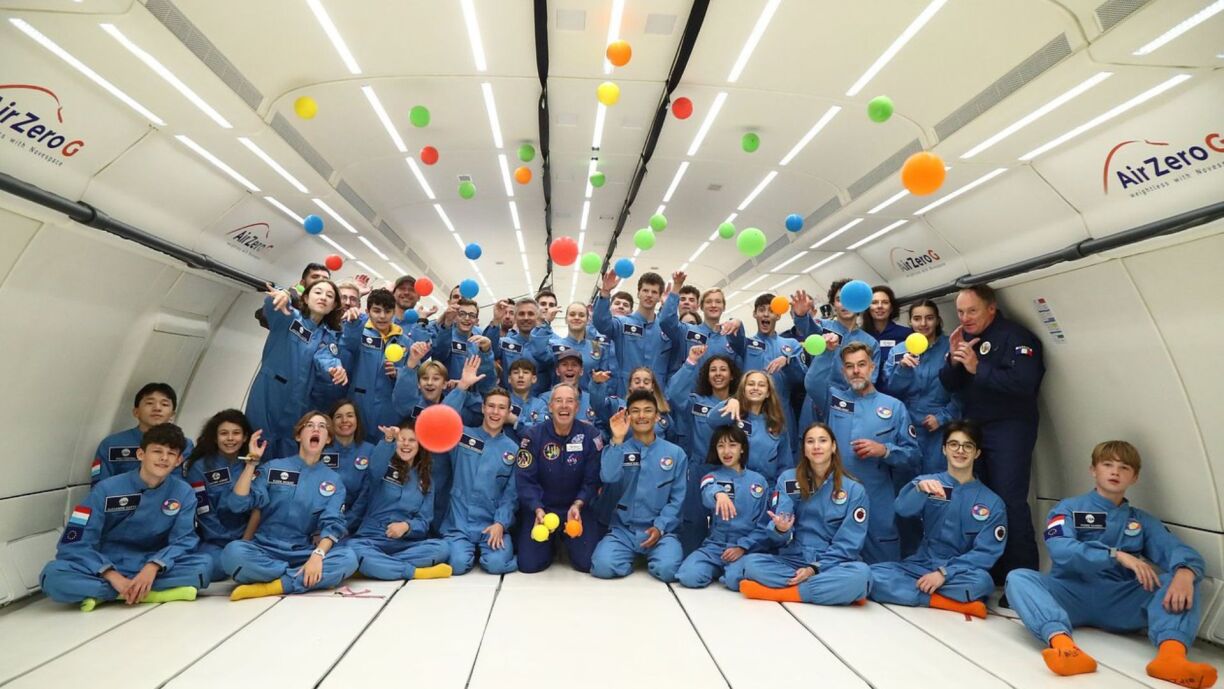
Luxembourg's first zero gravity flight, organised by the Luxembourg Space Agency and conducted by Novespace, offered 35 teenagers a unique experience of weightlessness, simulating space conditions.
The participants, aged between 13 and 19, were dubbed "space ambassadors" for the 2023/2024 school year and will promote space-related events and activities in their communities.
The young "astronauts for a day" will visit the astronaut training centre in Cologne in November as part of their ongoing engagement with space education and awareness.
Zero G - In a landmark event, 35 teenagers from Luxembourg were offered an unparalleled experience to defy gravity, thanks to the country’s first-ever zero gravity flight. Organised by the Luxembourg Space Agency (LSA) and executed by Novespace, this pioneering initiative marked a significant milestone in both space tourism and education.
The Airbus A310 soared into the skies from Findel Airport, plunging the young participants into a world where the constraints of gravity were momentarily suspended. Amidst the awe and exhilaration, these teenagers floated in a space-like weightlessness, experiencing first-hand the enigmatic allure of the cosmos that had hitherto been the exclusive preserve of astronauts.
Space ambassadors - These privileged adolescents are not just temporary space sojourners; they have been named "space ambassadors" for the academic year of 2023/2024. This role entrusts them with the responsibility of fostering space enthusiasm within their local communities.
The zero gravity flight experience is poised to equip these young ambassadors with insights and stories, igniting a spark that will be instrumental in promoting space-related events and activities. They stand as the bridge connecting the esoteric world of space exploration with the eager minds yearning to unravel the mysteries of the universe.
Training centre visit - The journey does not conclude with the mesmerising zero gravity flight; another enriching expedition awaits the young space ambassadors. In November, they are slated to visit the astronaut training centre in Cologne, an experience that promises to augment their understanding and fascination with space.
Under expert guidance, they will delve deeper into the intricacies of astronaut training, space missions, and the technological innovations propelling humanity's exploration of the final frontier. This visit is not just a continuation but an amplification of their roles as conduits of space knowledge, turning their brief zero gravity experience into a lifelong journey of space exploration and learning.
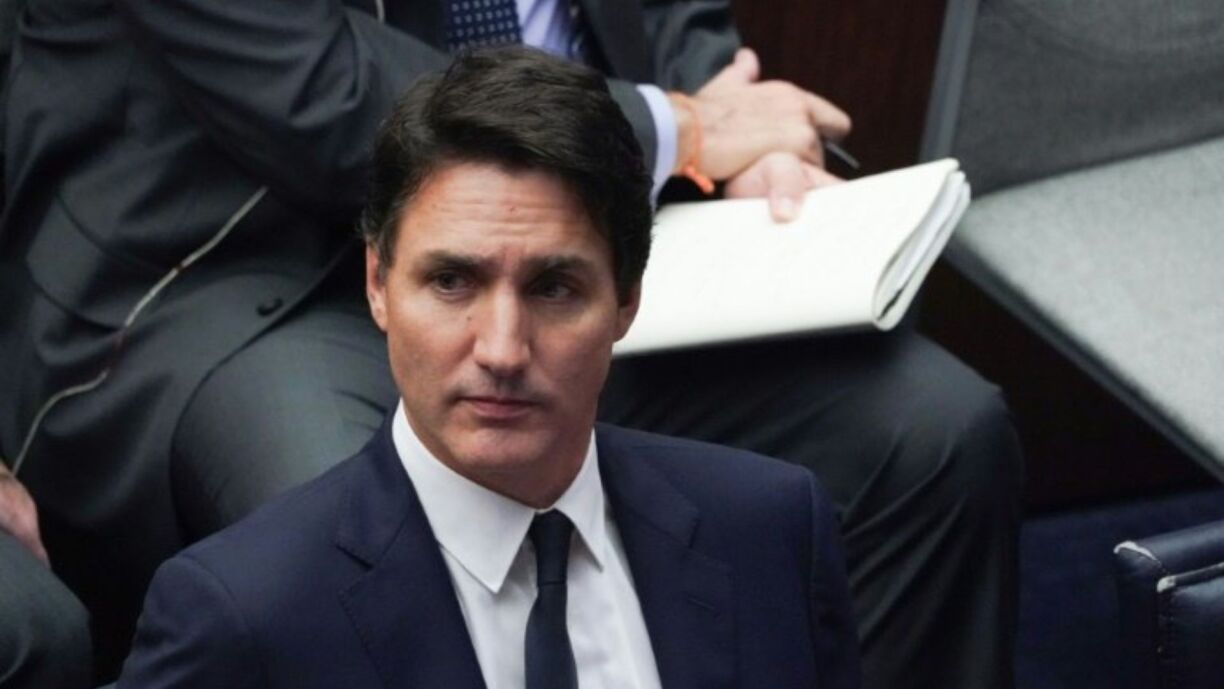
Canadian Prime Minister Justin Trudeau issued an "unreserved" apology after the parliament unwittingly honored a Ukrainian WWII veteran who had fought alongside the Nazis during a visit by Ukrainian President Volodymyr Zelensky.
The incident led to the resignation of House Speaker Anthony Rota earlier this week and has been described as a significant diplomatic embarrassment for Canada.
Russia seized upon the error as an opportunity to criticize Canada and fuel its propaganda against the pro-Western Ukrainian government.
Trudeau apology - During a visit by Ukrainian President Volodymyr Zelensky to Canada, the Canadian Parliament mistakenly celebrated a Ukrainian World War II veteran, Yaroslav Hunka, who had fought alongside the Nazis. This egregious mistake was recognised post-event, prompting Prime Minister Justin Trudeau to issue an "unreserved" apology publicly.
Trudeau acknowledged the gravity of the error, emphasising the insult to the memory of millions who suffered during the Holocaust, and the embarrassment it caused to Canada, the Ukrainian delegation, and Jewish communities globally.
Rota resignation - The incident resulted in significant repercussions both domestically and internationally for Canada. House Speaker Anthony Rota, who had praised Hunka as a hero during the session, resigned amid the controversy, expressing "profound regret" for his mistake.
Conservative opposition leader Pierre Poilievre termed the incident the "biggest single diplomatic embarrassment" in the nation's history, underlining the severity of the situation and the potential long-term impacts on Canada's international standing.
Russia's reaction - Russia capitalised on Canada's mistake to bolster its propaganda narrative against Ukraine. Moscow has consistently sought to portray Ukraine's pro-Western government as neo-Nazi, a claim intensified in Russian state-controlled media to justify the invasion of Ukraine.
Russia's ambassador to Canada, Oleg Stepanov, vehemently condemned the "outrageous commemoration" and demanded an apology from Trudeau to Moscow, illustrating how such incidents can be exploited in the complex geopolitical landscape, further straining relationships and fueling conflicts.
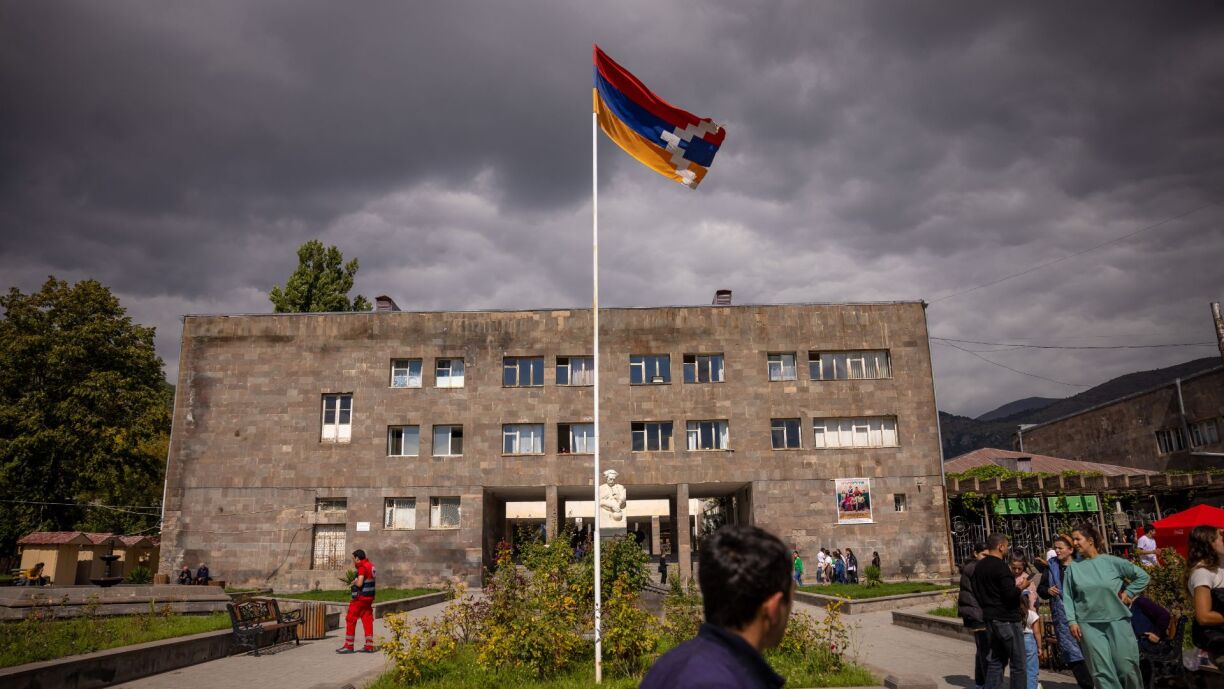
Nagorno-Karabakh's separatist leader declared the end of the self-proclaimed republic, announcing its "cease to exist" decree after over half of the ethnic Armenian population fled due to an assault by Azerbaijan.
Armenia accused Azerbaijan of "ethnic cleansing" as tens of thousands of ethnic Armenians left Nagorno-Karabakh, a region officially recognized as part of Azerbaijan since the collapse of the Soviet Union.
Amidst the reintegration talks and disarmament of rebels facilitated by Russian peacekeepers, Azerbaijani authorities detained and charged Ruben Vardanyan, a former head of the Nagorno-Karabakh government, with "financing terrorism."
Independence dream shattered - In a significant development marking the culmination of decades-long conflict, the leader of Nagorno-Karabakh, an ethnic Armenian statelet within Azerbaijan, pronounced a formal decree marking the cessation of the region's claimed independence.
This dramatic announcement comes in the aftermath of a large-scale retreat of the ethnic Armenian population, propelled by a swift and impactful assault by Azerbaijani forces. The resultant exodus of the populace and the subsequent disarmament and proposed "reintegration" under Azerbaijani governance highlights a poignant closure to the ethnic Armenians' protracted and bloody bid for an independent state.
Allegations of ethnic cleansing - The mass exodus of ethnic Armenians from Nagorno-Karabakh, instigated by Azerbaijani military advances, has elicited grave concerns and accusations of "ethnic cleansing" from the Armenian government.
More than half of the enclave's estimated 120,000-strong population have departed, a movement indicative of the profound fear and uncertainty engendering this mass migration. The international community, being apprised of the situation, is now tasked with assessing and responding to these developments, which bear profound implications for regional stability and international human rights norms.
Former regional leader charged - Amidst the unfolding dynamics of territorial reclamation and population movement, legal and political confrontations are emerging as key facets of the ongoing conflict resolution process. Azerbaijani authorities detained Ruben Vardanyan, who led the Nagorno-Karabakh government briefly and charged him with "financing terrorism".
This development accentuates the intricate layers of the conflict, intertwining legal accountability, political reprisals, and the inextricable tensions rooted in decades of hostilities and aspirations for territorial and political autonomy. The role of legal mechanisms and international oversight is poised to be pivotal in navigating the delicate and volatile pathway to a sustainable resolution.
Business & Tech - The value placed on startup OpenAI has rocketed to between $80 billion and $90 billion in talks with potential investors, the Wall Street Journal reported on Tuesday.
Science & Environment - Britain on Wednesday authorised oil and gas production in its largest undeveloped field to boost energy security, one week after diluting net zero targets, triggering more condemnation by green groups.https://today.rtl.lu/news/world/a/2066108.html
Entertainment - The leaders of the Writers Guild of America on Tuesday called off a monthlong strike that has paralysed Hollywood, accepting a pay deal hammered out with production studios.
Monarchy - Shortly after the start of the new school year, the House of the Grand Duke launched a new version of its website, Monarchie.lu, aimed specifically at children.
LLO.lu - The 'Léier Lëtzebuergesch Online' website has launched a new Luxembourgish course this week, free of charge.https://today.rtl.lu/news/world/a/2066108.html
EU directive - Luxembourg has unveiled its new 'National Action Plan Against Antisemitism' (PANAS) amid an alleged rise in anti-Jewish sentiments across Europe.

Your Weekly Recap is published every Friday at noon. Read earlier versions.





