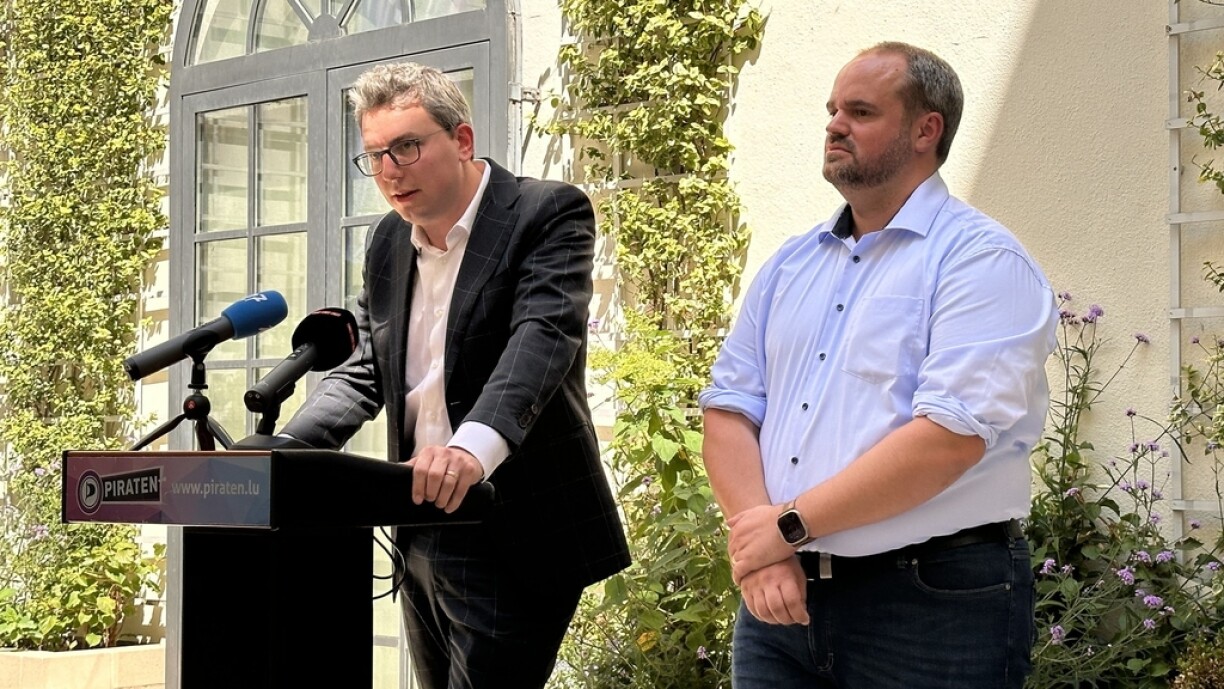
A special report by the Court of Auditors into the finances of the Pirate Party political faction for the 2018-2023 legislative term has been forwarded to the public prosecutor’s office. The report, which identifies profound accounting shortcomings, was presented on Wednesday to parliamentary committees.
Following the auditors' announcement, Chamber of Deputies President Claude Wiseler confirmed the Chamber's Bureau would also transmit the report to judicial authorities.
The audit found numerous missing invoices and supporting documents, particularly for communication, travel, and dining expenses. In several instances, the Court of Auditors found it impossible to distinguish between the party's finances and those of its MPs. Internal control was deemed almost non-existent.
From a sample of over €600,000 in expenditure, auditors could not obtain supporting documents for approximately €118,000, or 18% of the total. Further information was explicitly requested for €90,000, of which €68,000 remains undocumented. The Court did acknowledge that it is difficult to maintain an overview given the sums involved. Commenting on the scale, MP Sam Tanson of the Green Party (Déi Gréng) suggested the findings represent just "the tip of the iceberg."
During the period from 2018 to 2023, the Pirate Party had up to three MPs at certain points. According to the Court of Auditors, one MP in particular stood out, though their name was not disclosed. However, this aligns with previous press reports from October 2024, which revealed that MP Marc Goergen had borrowed approximately €33,000 from the faction – a sum later repaid but without proper documentation. The Court of Auditors reiterated that parliamentary factions are not permitted to issue loans.
Current Pirate Party MP Sven Clement, the party's founder, acknowledged "major management errors" and attributed them to the inexperience of the MPs at the time. He described a period where receipts were kept "in a simple shoebox." Clement stated that many of the auditors' recommendations have since been implemented to improve financial oversight.
Regarding his relationship with fellow Pirate Party MP Marc Goergen, Clement assured that they have both "matured" in recent years and have chosen to resolve the matter cooperatively rather than through confrontation.
Other parliamentary factions and groups have reacted with shock to the audit's findings and to Clement's statements.
MP Mars di Bartolomeo of the Luxembourg Socialist Workers’ Party (LSAP) drew a sharp comparison, stating it appeared at least one Pirate Party MP had treated Chamber funds as if in "a shop with a self-checkout."
The criticism extended to the party's public framing of the scandal. Laurent Zeimet, head of the Christian Social People’s Party (CSV) parliamentary group, labelled it "outrageous" that the Pirate Party now claims their case is improving financial transparency for all parliamentary groups. MP Marc Baum of the Left Party (Déi Lénk) went further, calling the claim "obscene". He argued the Court of Auditors should now scrutinise the entirety of the Pirate Party's accounts with the same rigour applied to the sample.
While the situation risks damaging public trust in all political groups, other parties were keen to stress this was an isolated incident.





