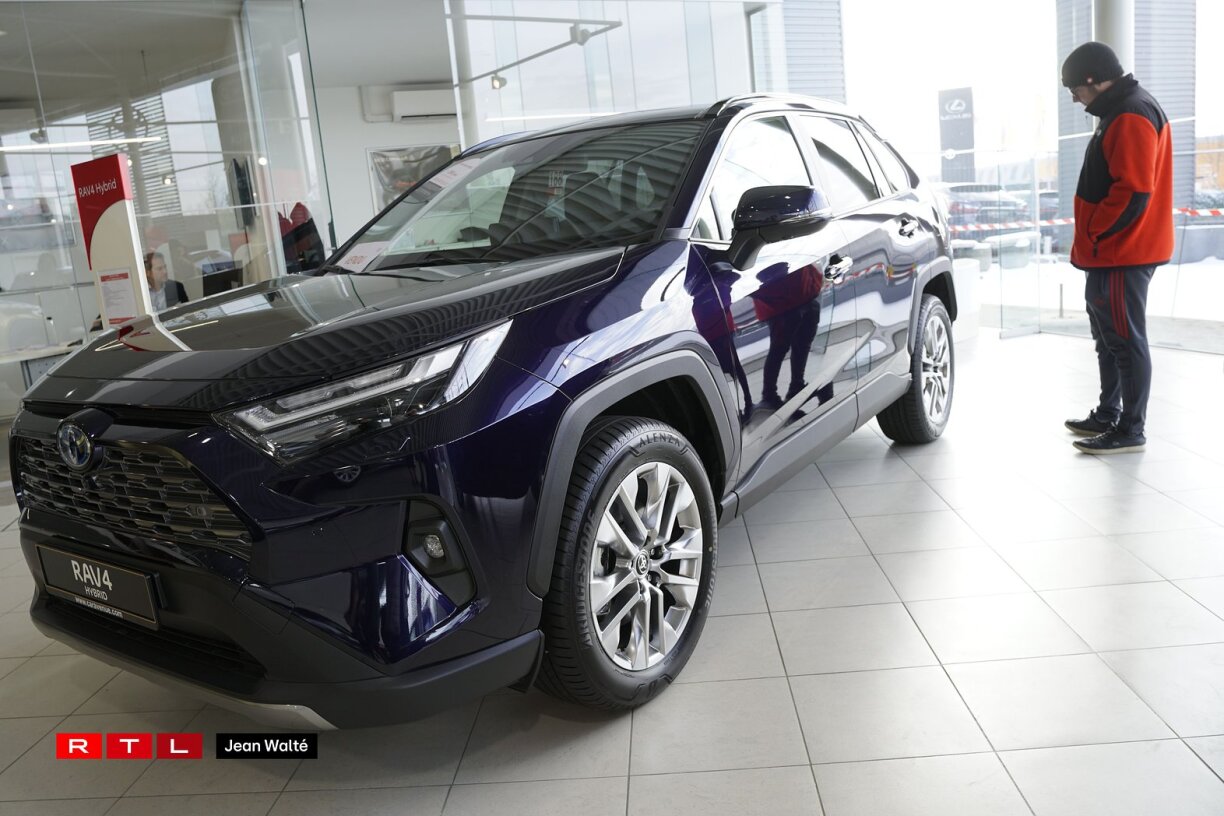
According to the Federation of Automobile Distributors and Mobility (Fedamo), the context is “favourable” for purchases after a year marked by increased electric vehicle adoption, despite a 5% drop in overall new registrations. The 61st edition of the Autofestival will run for its traditional ten-day duration, from Saturday, 25 January, to Monday, 3 February, across 90 dealerships. This marks a shift from the extended formats of recent years due to COVID-19, which stretched the festival to up to 15 days.
At the event's press launch, Fedamo President Philippe Mersch emphasised that "the conditions and advantages of the Autofestival are valid from today". This annual showcase allows potential buyers to tour 170 showrooms, compare models, ask questions, test-drive vehicles, and negotiate prices and options. Dealers in recent months have seen an uptick in consumer interest to buy, says Mersch.
Despite “substantial” price increases in 2024, Mersch highlighted that the economic environment is now favourable for individual buyers. Interest rates are falling, leasing options are attractive, and government subsidies for electric vehicles remain available.
Although the electric vehicle premium has dropped from €8,000 to €6,000, it still applies to cars consuming no more than 16 kWh/100 km, provided they are kept for at least three years under new regulations introduced in October 2024.
In 2024, new vehicle registrations in Luxembourg fell by 5.1%, with 46,635 vehicles registered – 2,520 fewer than in 2023.
Mersch described 2024 as a “transition year,” noting a 10% increase in private purchases. However, company car sales saw a sharp 14% decline, reflecting a cautious economic environment. Businesses, particularly in construction and crafts, have reduced investments. “At some point, leases will expire, and renewals will follow”, Mersch predicted.
Read also: Petrol overtakes diesel as Luxembourg's most popular car fuel
Read also: Opinion: Keep your eyes peeled: electric cars are coming!
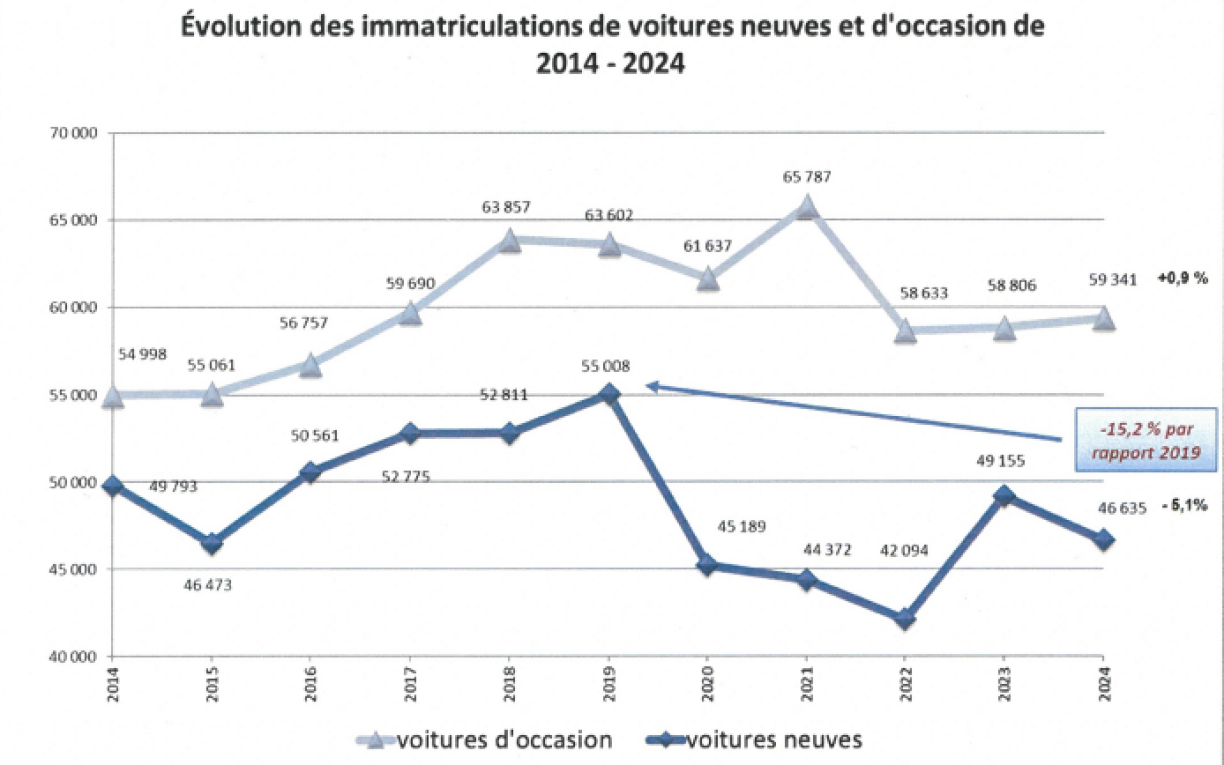
The share of electrified vehicles (including hybrids) in new registrations rose from 26% in 2023 to 36% in 2024. Fully electric vehicles now account for 10.9% of the national fleet, far short of Luxembourg’s target of 49% by 2030.
According to Manuel Ruggiu, operational director of the Société Nationale de Circulation Automobile (SNCA), the pace of electrification is constrained by the turnover of older vehicles. While 35% of new registrations are for electrified models, older vehicles exiting the fleet slow overall progress. Ruggiu projects that Luxembourg will reach a 40% electrified fleet by 2030 and 49% by 2035.





