
Here are five things you should know at the end of this week:

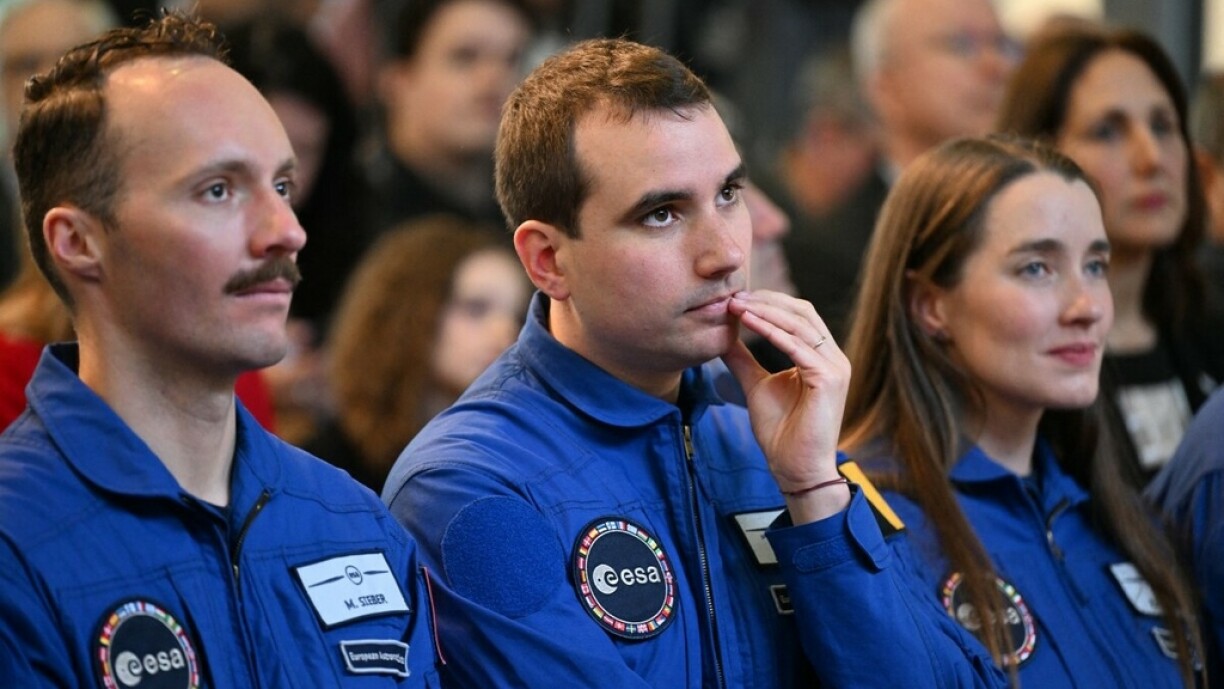
Raphaël Liégeois, holding dual Belgian and Luxembourgish nationality, will become the first Luxembourger to set foot on the ISS in 2026, following his completion of ESA astronaut training.
Historic announcement – Raphaël Liégeois, a Belgian-born astronaut who obtained Luxembourgish nationality in 2018, will make history as the first Luxembourger to visit the International Space Station (ISS). This milestone follows his successful completion of astronaut training at the European Space Agency’s (ESA) astronaut centre in Cologne in April 2024. Liégeois, aged 34, brings a background in biomedicine and neuroscience, adding to the scientific expertise aboard the ISS.
Six-month mission – The mission to the ISS will be conducted in two segments, with Sophie Adenot, a former helicopter pilot in the French Army and engineer, embarking on the first part of the approximately six-month duration. Raphaël Liégeois will follow, taking over the European spot on the ISS for the latter half of the mission. This division ensures continuous European presence and contribution to the ongoing scientific research and operations aboard the ISS.
Boots on the moon – In his announcement, ESA Director General Josef Aschbacher stressed the importance of this mission as part of a broader strategy to enhance European participation in space exploration. He emphasised the collaborative efforts with NASA’s Artemis programme aimed at returning humans to the moon, which serves as a crucial precursor for future missions to Mars.
Aschbacher stressed the necessity of involving younger astronauts like Liégeois to ensure the sustainability and advancement of Europe’s role in future space endeavors.

Justice Minister Elisabeth Margue affirmed Luxembourg’s swift commitment to implementing the EU’s Artificial Intelligence Act to harness AI’s potential while ensuring human rights and fostering trust in technology.
The Act aims to position Europe as a leader in AI innovation, with strict regulations prohibiting applications like social scoring and requiring clear labeling of AI-generated content.
The regulations, reflecting widespread demands, were a major topic at a recent summit in Seoul, where leading companies discussed AI risks and preventive measures.
Leveraging AI – Justice Minister Elisabeth Margue emphasised Luxembourg’s dedication to promptly adopting the EU’s Artificial Intelligence Act, reflecting the nation’s commitment to leveraging AI’s capabilities responsibly. The Minister highlighted the importance of balancing technological advancements with the protection of human rights, ensuring that AI development benefits society while maintaining ethical standards.
No social scoring – The EU’s Artificial Intelligence Act aims to establish Europe as a frontrunner in AI innovation by fostering a supportive environment for technological growth while imposing necessary restrictions to safeguard public interests. Notable regulations include a ban on social scoring, which prevents the evaluation of individuals based on their behaviour, and a prohibition on the use of AI for emotional recognition in workplaces.
Additionally, the Act mandates that all AI-generated content must be clearly labelled, promoting transparency and helping users distinguish between human and machine-generated outputs.

Several Luxembourg-based banks have launched a special purpose entity to invest €250 million in new-build apartments and housing projects to revitalise the housing market.
The initiative aims to purchase VEFA properties that are close to reaching their pre-sale thresholds and requires developers to agree to discounted prices.
The project, praised by the Minister of Finance, is intended as a temporary measure until 2025 to unblock housing projects, stabilise property prices, and maintain employment in the housing sector.
Collaborative effort – Several Luxembourg-based banks, including Spuerkeess, BIL, Raiffeisen, SNCI, and BGL BNP Paribas, have launched a special purpose entity to invest €250 million in new-build apartments and housing projects. This collaboration aims to address the ongoing housing crisis by targeting stalled projects that lack sufficient funding to proceed, thereby stimulating economic activity and supporting the banking sector through increased property transactions.
Supply boost – The initiative aims to purchase VEFA (sale in future state of completion) properties that are close to reaching their pre-sale thresholds, excluding luxurious penthouses and student accommodations, and requires developers to agree to discounted prices.
By focusing on projects that are nearly viable but still short of the 80% pre-sale mark, the entity seeks to ensure these developments can be completed, thus providing a boost to the housing supply while negotiating favourable terms for investment.
Balancing prices – Although the government is not directly involved, the initiative is seen as a proactive step to prevent further economic decline in the housing market, ensuring that construction jobs are preserved and that more housing options become available to the public, potentially leading to more balanced property prices.

Ireland, Norway, and Spain have announced they will formally recognise the State of Palestine on 28 May, leading to strong reactions from Israel, including recalling their envoys and summoning European ambassadors.
The move has been praised by many Arab and Muslim states, while Israeli leaders, including Prime Minister Benjamin Netanyahu and National Security Minister Itamar Ben Gvir, condemned it as a reward for terrorism, and the White House reaffirmed the need for Palestinian statehood to be achieved through direct negotiations.
The International Criminal Court’s prosecutor has meanwhile sought arrest warrants for Israeli Prime Minister Benjamin Netanyahu and top Hamas leaders on charges of war crimes and crimes against humanity, igniting fierce condemnation from Israel and the United States.
Date set – Ireland, Norway, and Spain announced they will officially recognise the State of Palestine on 28 May, a decision made during the ongoing conflict in Gaza. This move, intended to support the two-state solution, has drawn praise from many Arab and Muslim states, but has infuriated Israel.
The Israeli government responded by recalling its ambassadors from these countries for urgent consultations and summoning the European ambassadors for a formal rebuke, signalling heightened diplomatic tensions.
‘Reward for terror’ – Israeli leaders, including Prime Minister Benjamin Netanyahu and National Security Minister Itamar Ben Gvir, strongly condemned the recognition of Palestine, arguing it rewards terrorism, particularly in the context of the 7 October attack by Hamas. Netanyahu labelled the recognition a “reward for terror”, while Ben Gvir’s visit to the contentious Temple Mount site added to the controversy.
The White House, under President Joe Biden, maintained that Palestinian statehood should be achieved through direct negotiations rather than unilateral recognition, emphasising the need for a negotiated solution to the Israeli-Palestinian conflict.
Arrest warrants – The International Criminal Court (ICC) prosecutor has applied for arrest warrants against Israeli Prime Minister Benjamin Netanyahu and top Hamas leaders, charging them with war crimes and crimes against humanity. Netanyahu and Israeli officials condemned the move, while the United States also criticised it.
The charges against Netanyahu and Israeli Defence Minister Yoav Gallant include “starvation” and “wilful killing” of Palestinians, while Hamas leaders face charges of “extermination” and “rape” among others. The ICC’s decision on the warrants could take weeks or months, and if issued, member states would be obliged to arrest the individuals if they travel to those countries.
Luxembourg is among the 124 countries that recognise the authority of the International Criminal Court, but the Ministry of State has so far declined to comment on the arguments presented by ICC Chief Prosecutor Karim A.A
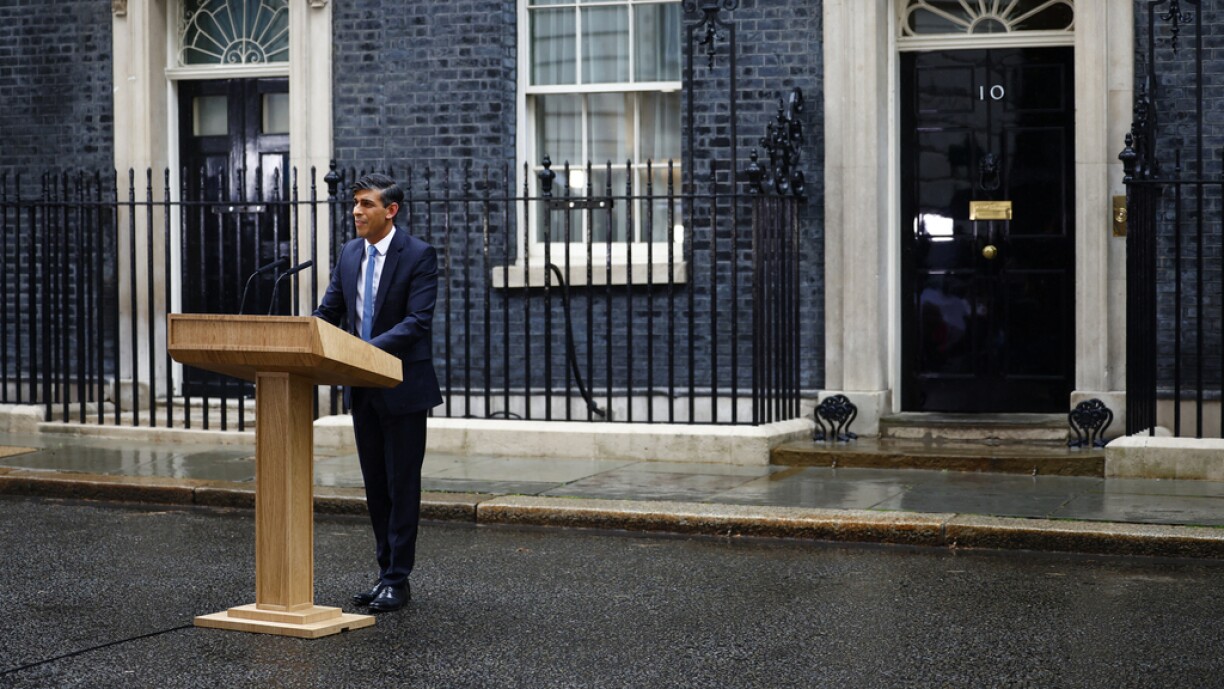
UK Prime Minister Rishi Sunak announced a general election for 4 July after requesting the dissolution of parliament from King Charles III, leading to a five-week campaign period.
The election will be a contest between Sunak’s Conservatives, who have faced recent internal turmoil and a cost-of-living crisis, and the opposition Labour party, which holds a significant lead in opinion polls.
Sunak emphasised national security and economic stability as key campaign issues, while Labour leader Keir Starmer aims for a record swing to achieve a majority amid the possibility of a hung parliament and coalition negotiations.
Strategic move? – UK Prime Minister Rishi Sunak has called a general election for 4 July, following a formal request to King Charles III for the dissolution of parliament. This decision triggers the start of a five-week campaign period during which current Members of Parliament will cease to hold their positions and become candidates if they are running for re-election.
The election announcement came amid an intensifying rumour mill and speculation within Westminster, especially after economic data showed a significant reduction in inflation, suggesting a strategic move by Sunak to capitalise on favourable economic news.
Labour on the rise – The upcoming election will see Sunak’s Conservative party, which has been in power since 2010, competing against the main opposition Labour party. The Conservatives have been grappling with internal conflicts, leadership changes, and a severe cost-of-living crisis that has affected their popularity.
Labour, led by Keir Starmer, has maintained a strong lead in opinion polls, largely due to the public’s dissatisfaction with the Conservatives’ recent governance rather than overwhelming support for Labour policies. This sets the stage for a highly competitive election, with the potential for significant political shifts.
Too close to call – Sunak has positioned national security and economic stability as the central themes of his campaign, arguing that his government has restored stability after the tumultuous tenure of his predecessor, Liz Truss. He aims to convince voters that the Conservatives are best suited to secure the country’s future.
On the other hand, Keir Starmer needs an unprecedented swing in voter support to secure a Labour majority. The possibility of a hung parliament looms, which could result in coalition negotiations, potentially involving smaller parties like the Liberal Democrats.
Business & Tech – More than a dozen countries and some of the world’s biggest tech firms pledged on Wednesday to cooperate against the potential dangers of artificial intelligence, including its ability to dodge human control, as they wrapped up a global summit in Seoul.
Science & Environment – Europe’s Euclid space telescope revealed new images on Thursday, including a mind-boggling number of shining galaxies, a purple and orange star nursery and a spiral galaxy similar to our Milky Way
Entertainment – The US Department of Justice filed a major antitrust lawsuit Thursday seeking to break up an alleged monopoly in the live music industry between concert promoter Live Nation Entertainment and its subsidiary, booking website Ticketmaster.
Airport chaos – In a press statement, LuxAirport confirmed that the “technical problem” that led to delays and cancelled flights on 10 May was in fact a metal detector that was not properly plugged in.
Gloomy weather – MeteoLux on Wednesday published its preliminary weather report for spring 2024, finding that the season has been “slightly too warm, very wet, and without much sun” in comparison to the reference period of 1991–2021.https://today.rtl.lu/news/world/a/2066108.html
DJ under fire – Luxembourg’s DJ Se7en faces serious allegations of sexually abusing young women and girls, exploiting his status to manipulate them into unwanted sexual acts, a claim he publicly denies as a court case has opened against him.

Your Weekly Recap is published every Friday at noon. Read earlier versions.





