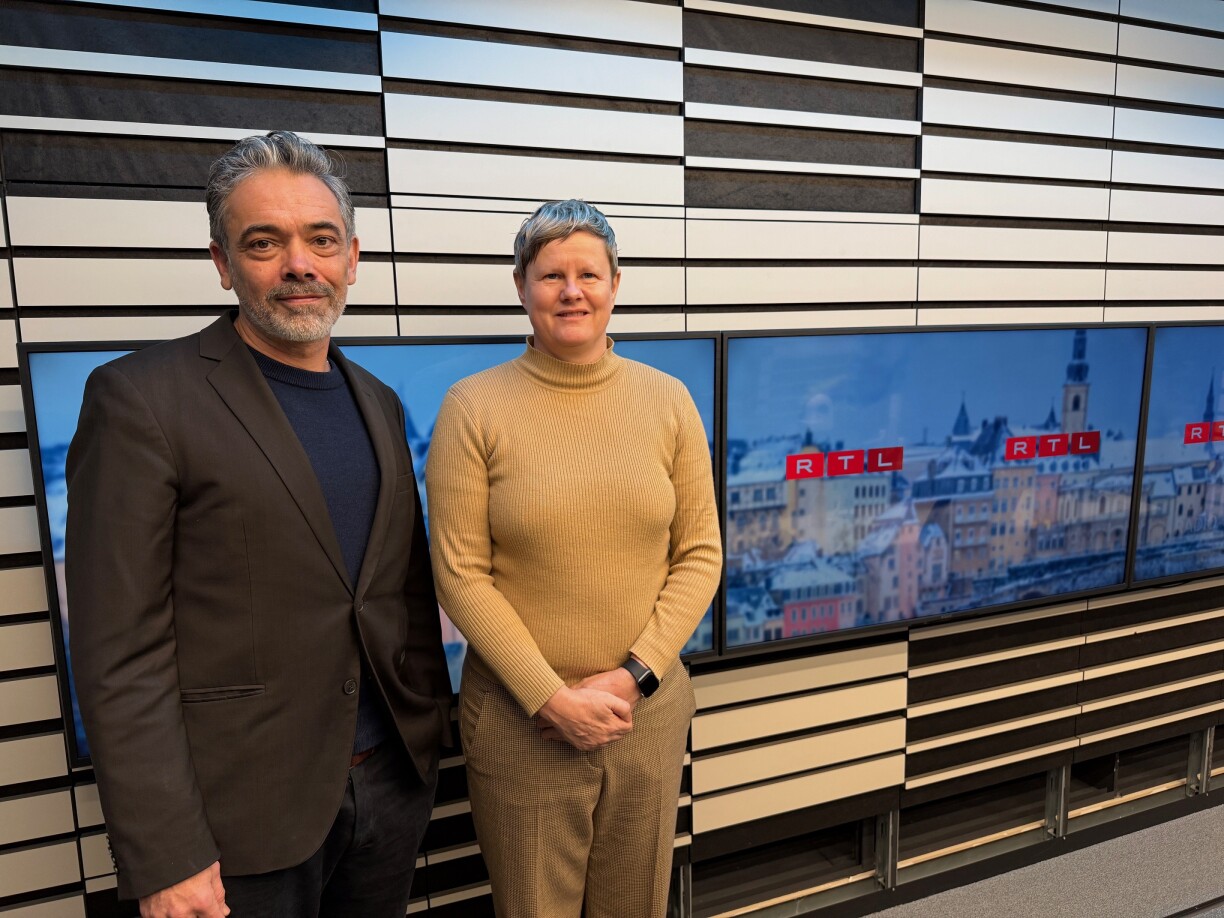
On Tuesday morning, our colleagues from RTL Radio launched their new discussion programme, "Invité vun der Redaktioun SPEZIAL," which replaces the bi-weekly "Presseclub" format.
The inaugural episode featured the editors-in-chief of Luxemburger Wort and Tageblatt, Ines Kurschat and Armand Back. They debated the government's upcoming policy agenda, international affairs, and the "right to be forgotten" in light of a recent legal ruling related to the N. Affair. As a reminder, a November 2025 Court of Cassation decision prohibits RTL from naming the former president of the postal workers' union, FSFL.
The discussion challenged Prime Minister Luc Frieden's recent suggestion that the government could look forward to three years of simpler governance. Ines Kurschat dismissed this as "wishful thinking," citing unresolved "explosive" tensions in the healthcare sector – including the lack of an agreement with doctors – and complex negotiations over pension reform implementation. "So not all that glitters is gold," she stated, though she acknowledged the government's punctuality in enacting reforms.
Armand Back noted that while the Prime Minister strikes an increasingly optimistic tone, significant challenges remain. He argued that rebuilding broken trust, navigating the technical complexities of working-time reform, and urgently refocusing on the housing crisis are all critical issues awaiting the coalition.
The editors offered contrasting diagnoses for Luxembourg's housing crisis. Kurschat argued that a cultural shift is necessary, suggesting residents must "take a good look in the mirror" regarding the high value placed on homeownership, which often leads them to buy abroad. She contended the government must actively promote rental housing as a dignified and viable alternative – a move she feels lacks political will. Citing visible vacancies in Luxembourg City, she criticised the local council for refusing to create a public vacancy register.
Back disagreed, stating it is misguided to place responsibility on public mentality. He argued that housing is fundamentally a matter of political decision-making, noting that many residents' aspirations have already lowered to securing a "half-decent" flat.
The discussion also turned to the stalled social dialogue. Kurschat was critical of the trade unions' approach, describing some of their public rhetoric as "irritating" and unnecessarily escalatory. "I don't think that a union, despite all its discontent with political leadership, should adopt tools that we find in the political extremist sphere," she said.
Back defended the unions, attributing their assertive stance to feeling "fiercely attacked" and citing significant communication errors by the former labour minister. He pointed to the subsequent large-scale public demonstration in the summer of 2025 as evidence of substantial popular support for the unions' position.
The conversation turned to the "right to be forgotten," highlighted by a recent Court of Cassation ruling from 27 November that prohibits RTL from naming or showing an image of the former FSFL union president, referred to as "Mr N." Back confirmed that Tageblatt has also received a "friendly letter" on the matter by Mr N.'s lawyer but will continue to use the name and defend its editorial position.
Kurschat acknowledged the growing challenge for newsrooms, noting an increase in requests from individuals seeking to have mentions of their names or photographs removed from articles. She stressed the need to balance this right with the public interest, particularly concerning contemporary historical figures. "One should be free to report on such individuals, using their full name," she argued. However, Wort has chosen to comply voluntarily with the court's ruling, despite not being legally bound by it.
Back was critical of this approach, asserting that as a definitive public figure who helped shape Luxembourg's recent history, Mr N's name "cannot simply be erased." In response to the legal ambiguity, a task force is being established within the Press Council to develop clearer guidelines on such cases.





