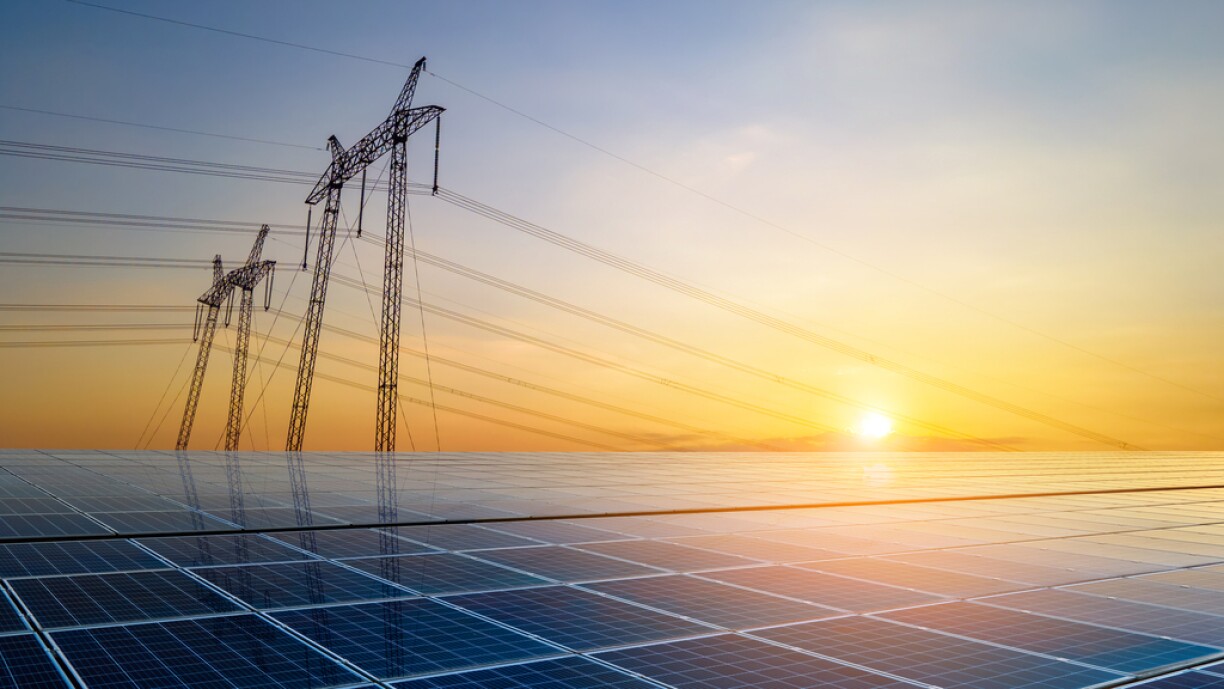
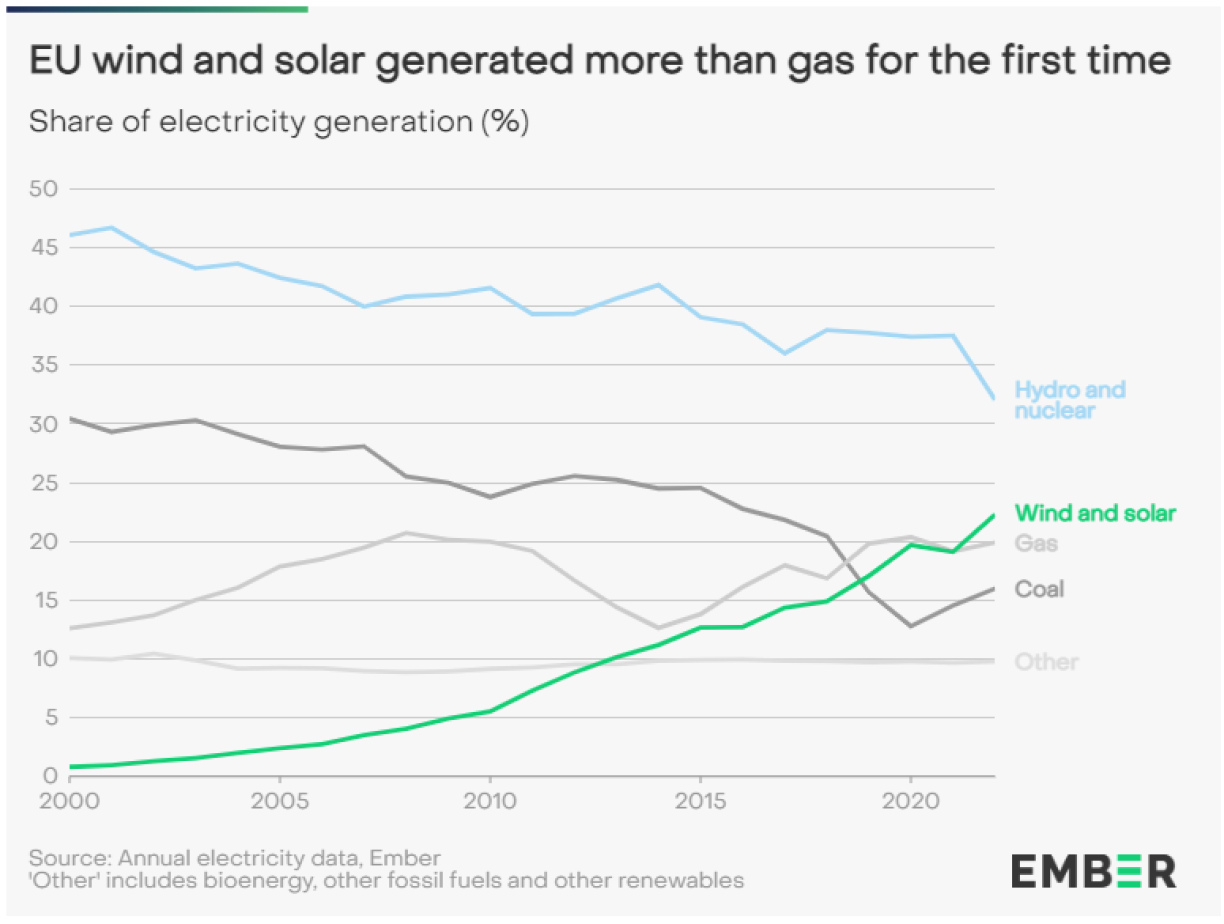
2022 was the first year that more energy was produced from renewable sources than gas. Ember, an independent energy think tank, unpacked various questions:
In 2022, wind and solar generated a record fifth of EU electricity (22%), for the first time overtaking fossil gas (20%), and remaining above coal power (16%), writes Dave Jones, Head of Data Insights at Ember.
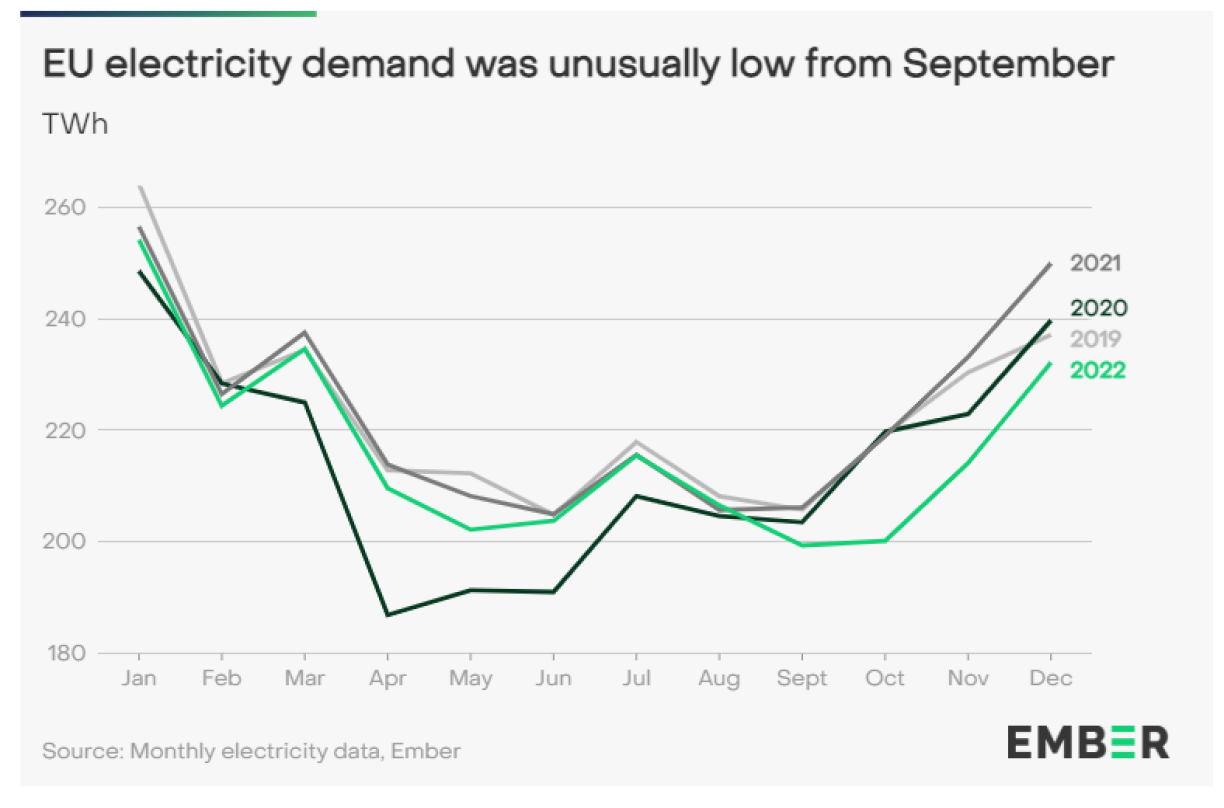
Jones points out that EU electricity demand dropped by nearly 8% in the winter months of 2022, close in scale to the 9.6% witnessed at the start of lockdown in 2020. Even if all three winter months of 2022 were warmer than in 2021, weather alone would not explain such large falls, explains Jones.
Solar power shielded Europe from an energy crisis, writes the expert: The sun helped save billions of euros of imported gas.
Without the record solar generation of 203 TWh, the EU would have required an additional 35 billion cubic metres (bcm) of gas imports to produce that electricity with gas. That is the equivalent of around 25% of the EU’s Russian gas imports in 2021, costing around €49 billion.
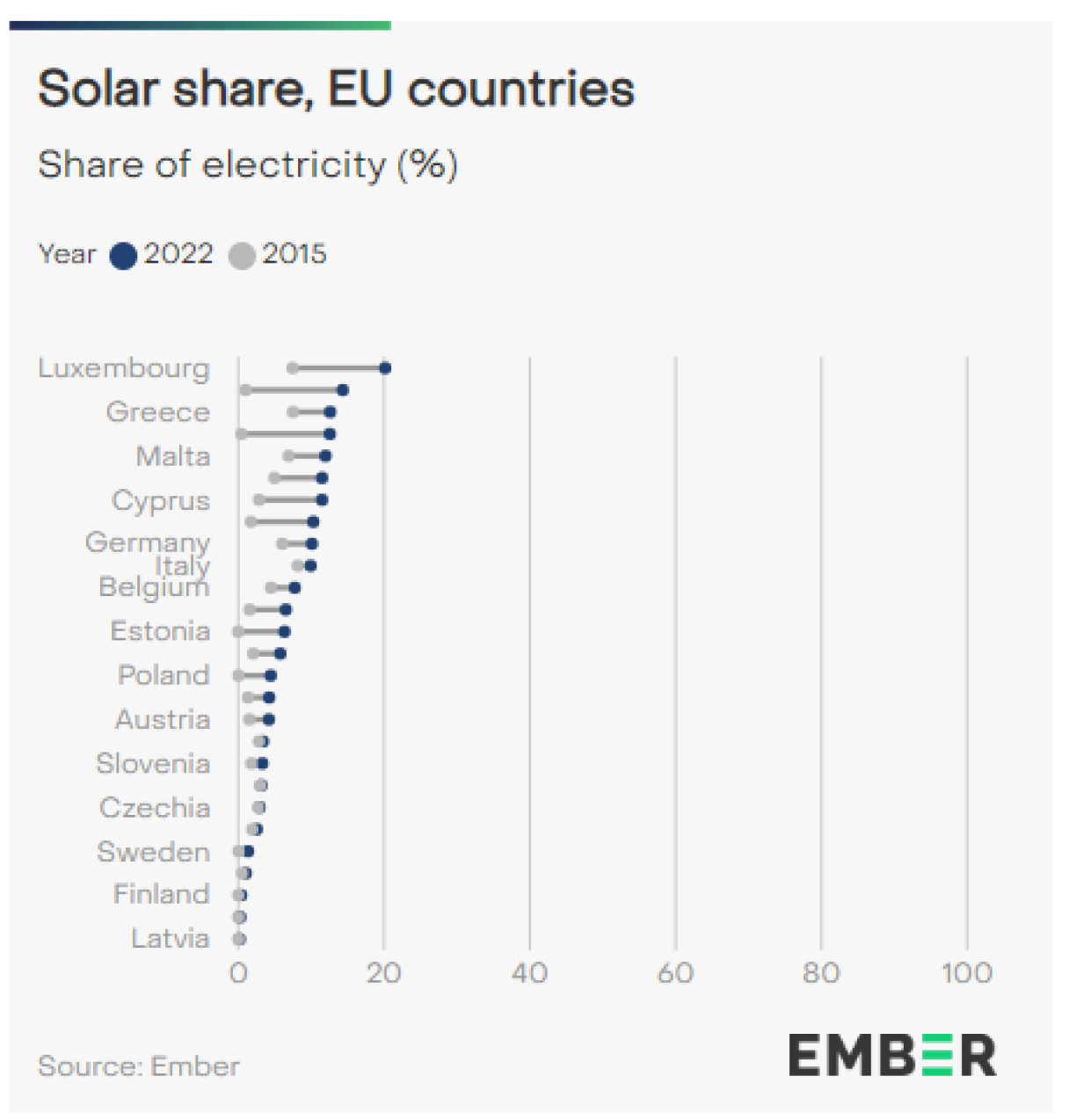
Furthermore, 20 EU countries set solar records in 2022: The Netherlands was the leader, generating 14% of its electricity from the sun and surpassing previous leader Spain, typically a much sunnier country, by two percentage points.
For 2022 solar capacity additions, the top five countries were Germany (7.9 GW), Spain (7.5 GW), Poland (4.9 GW), the Netherlands (4 GW) and France (2.7 GW).
Speaking to RTL, Jones highlights Luxembourg's efforts in transitioning to solar energy. When it comes to the share of solar power from its electricity usage, the Grand Duchy is a frontrunner - even though we import a large share of our electricity from abroad.
The think tank expects the trend towards wind and solar energy to accelerate in the coming years.
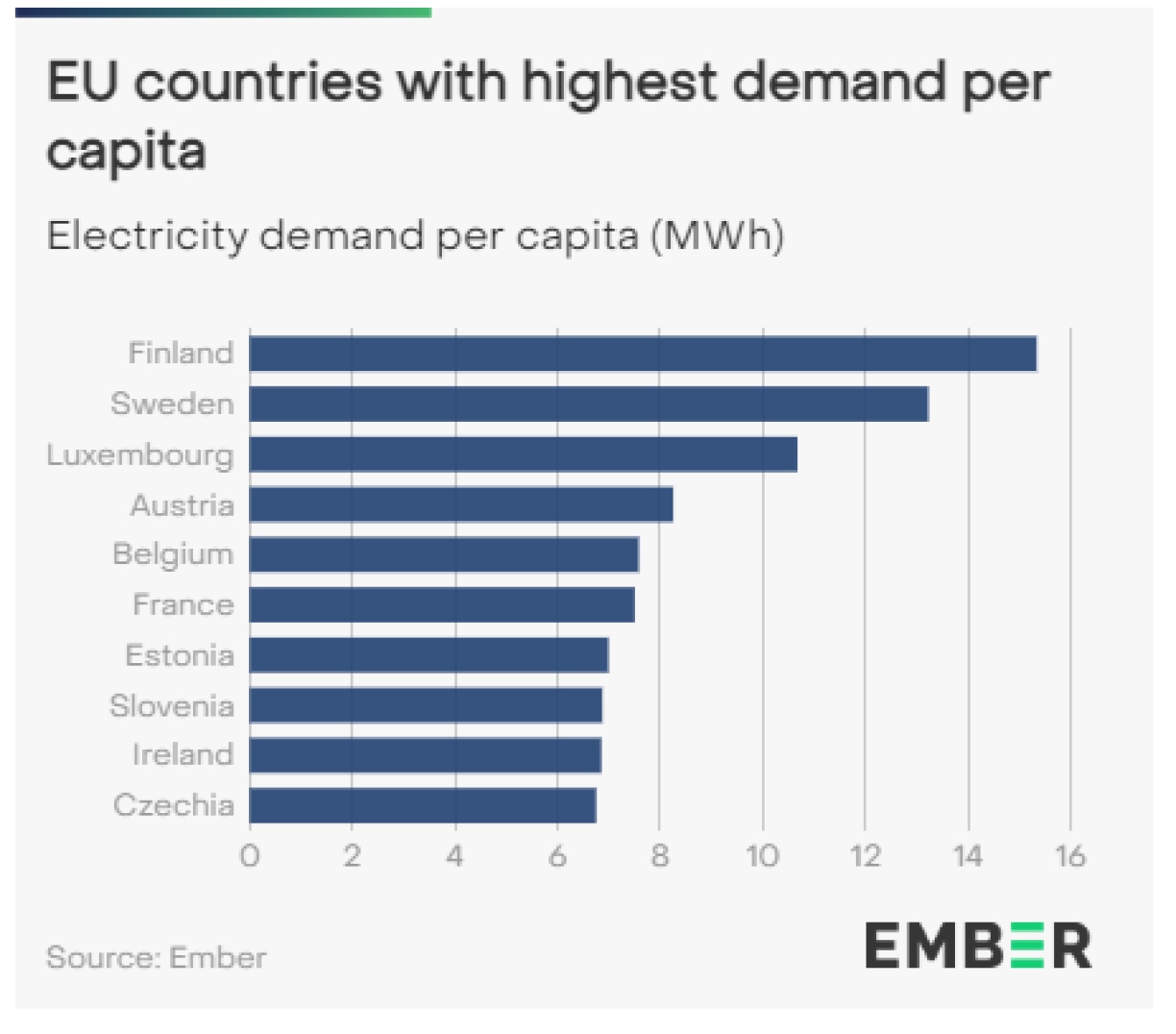
Luxembourg is Europe's third-largest energy consumer per head, just behind Finland and Sweden. However most electricity-intensive users are factories and businesses.
Ember is an independent energy think tank that uses data-driven insights to focus on the world's energy transition. For data on Luxembourg, the organisation referred to Eurostat.
Read the entire European Electricity Review.





