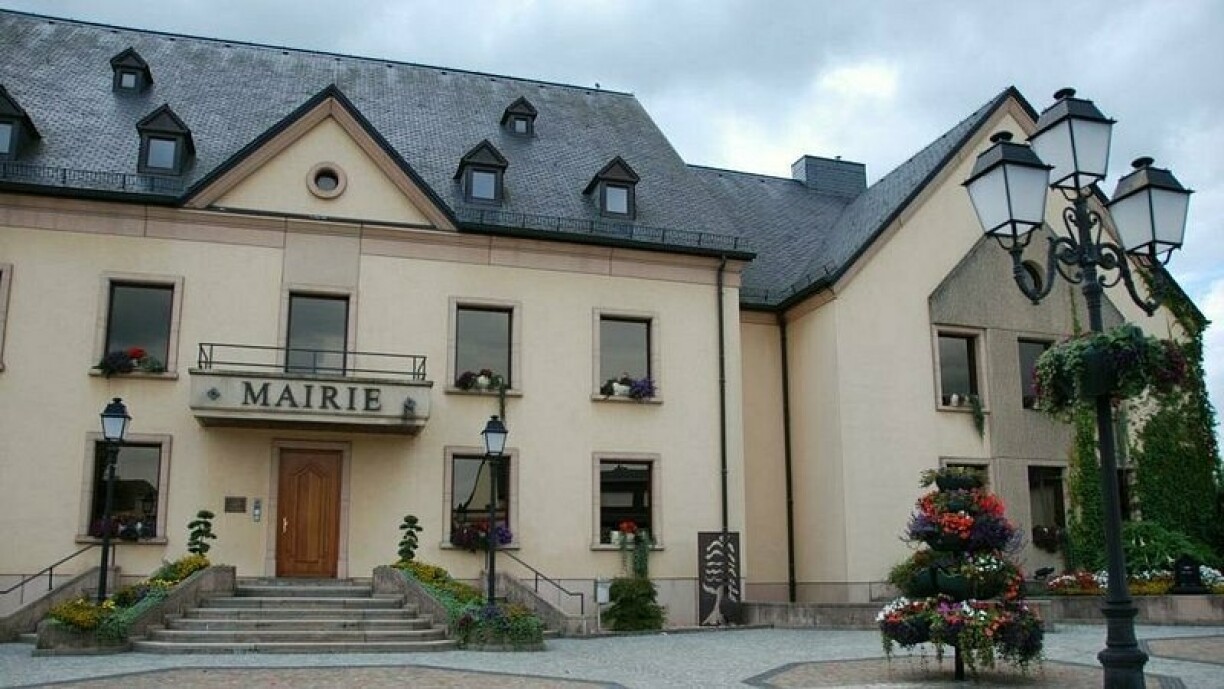
There are absolute majorities in 10 of Luxembourg's municipalities: Bertrange (DP), Diekirch (LSAP), Dudelange (LSAP), Habscht (CSV), Hesperange (CSV), Lorentzweiler (Är Leit), Mertert (LSAP), Mondorf (DP), Rambrouch (CSV) and Troisvierges (Citizens' List)
Dudelange - For the last 75 years, the LSAP has led an absolute majority in Dudelange, achieving 10 out of 19 seats in the last election. Dan Biancalana has been the town's mayor since 2014.
An absolute majority should not necessarily be perceived as negative, as it is still the result of a democratic process, says the mayor. Whether the LSAP will win again is "up to the voters to decide", says Biancalana, but should his party continue as a coalition, one thing is clear for him: The ADR party will not be part of it.
Troisvierges - After the population surpassed 3,000, seats were distributed according to proportional representation. In 2017, the Troisvierges Citizens' List beat the CSV with 58.77% to 41.23%.
Edy Mertens, who has been mayor of Troisvierges since 2011, says the absolute majority did not play a major role in his municipality, as most of the decisions were taken unanimously and affected common everyday issues.
He is not surprised the CSV could not get enough candidates together for the 2023 elections - two councillors joined the Oppe Lest Troisvierges party instead, and then there is the ADR list with 7 candidates. The municipality simply does not have enough residents for a party to get 11 people together.
Mertens, too, excludes a coalition with the ADR.
Bertrange - Just like 6 years ago, the CSV, The Greens and the LSAP are runnings alongside the DP. In 2017, the DP secured 49.88% of the vote, and thus 7 out of 13 seats. Mayor Monique Smit-Thijs is up for reelection. Diekirch - Mayor Claude Thill is hoping for the same. Since 2011, the LSAP has had an absolute majority in the town, but it remains to be seen whether they can achieve the same results again; the two best-elected socialists of 2017, Claude Haagen, now Minister of Agriculture and Social Affairs, and René Kanivé, who retired from politics, are missing from the list.
Lorentzweiler - The Citizens' List around Marguy Kirsch-Hirtt secured 48.67% of the votes, and thus 6 out of 11 seats - significantly more than the CSV, DP and the Greens.
Rambrouch - The CSV has 51.09% of the votes, which corresponds to 6 out of 11 seats. There will be a revival of the three-way-battle this year, as the DP and LSAP are also back in the race. Current CSV mayor Antoine (Toni) Rodesch will not participate in 2023.
Habscht - The CSV has a comfortable majority since 2017. Six years ago, the merger municipality was still elected in two sections, namely Habscht and Simmer.
With 64.87 percent, CSV was able to secure 8 out of 11 seats, beating the DP and LSAP. The 4 candidates who were elected in Simmer joined mayor Serge Hoffmann.
Hesperange - The CSV around Marc Lies have an absolute majority - 8 out of 15 seats. The municipal council is completed by the DP, the Greens and the LSAP.
Mondorf - The DP was able to hang on to its absolute majority in 2017 with then mayor and current Minister for Small and Medium-Sized Enterprises and Tourism, Lex Delles. Since then, the CSV, The Greens and LSAP have joined the list.
Mertert - The LSAP was swept to the top in 2017. This year, mayor Jérôme Laurent will defend the fort from CSV and DP challengers.
Bissen - Due to several resignations during the course of the legislature, the CSV's absolute majority fell apart. Today, two independents sit in the municipal council.
This year, the number of proportional municipalities will increase from 46 to 56, and 46 municipalities will be elected according to the majority system.





