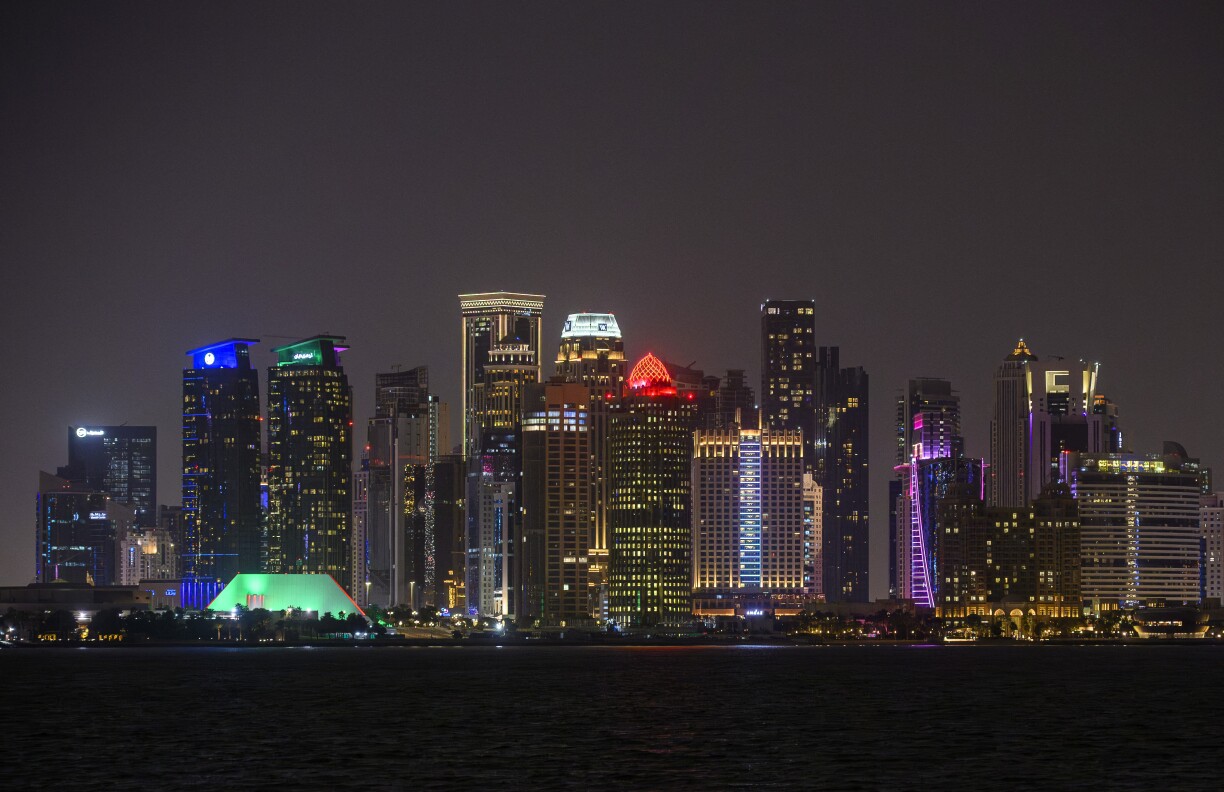
A Luxembourg national stranded in Doha due to the ongoing war in the Middle East has reported that he feels safe in the Qatari capital, despite being unable to secure a flight home.
As the war enters its fourth day and begins to impact much of the region, the first passenger flights have resumed service to Europe. On Tuesday morning, an Emirates aircraft departed Dubai for Frankfurt, raising questions about whether this signals hope for the approximately 480 Luxembourg nationals still in the region, according to the Ministry of Foreign Affairs.
However, a clear timeline for their return remains uncertain. Our colleagues from RTL.lu spoke with Maurice Schaack, a 30-year-old Luxembourg national currently in Qatar.
Schaack, who was backpacking in Thailand before his connecting flight to Amsterdam was cancelled after Israel and the US attacked Iran, is currently being housed in a Doha hotel by the Qatari airline. He describes his situation as stable.
Speaking to our colleagues, Schaack confirmed he is in contact with both Luxembourgish and Dutch authorities, who have assured him they are monitoring the situation. He noted, however, that there has been no discussion of an evacuation – a process he acknowledged would be complicated due to closed airspace.
Despite the circumstances, Schaack emphasised that Doha remains "relatively calm and safe." He noted that Qatar's air defence systems have successfully intercepted all missiles so far, although he regularly hears explosions and receives alerts on his phone. He believes European governments may not view evacuations as urgent given the relative safety in Qatar.
Schaack said he is not afraid. He described local news coverage by Al Jazeera as "not catastrophic" and observed that Qataris around him remain composed. "The local population is relatively optimistic and in good spirits," he said, adding that this is not the first time they have faced such a situation. "They are well equipped and the Qataris are not worried – the mood is quite ok."
Nevertheless, the 30-year-old traveller finds himself reflecting on the situation. Having earned a master's degree in Middle Eastern Studies from the University of Groningen, he is witnessing a region once again consumed by conflict – a subject he studied extensively.
In Schaack's assessment, the goals of the United States are clear but ultimately unattainable. He described the aim of provoking regime change in Iran as "illusory", noting that recent history has shown outside interventions to be ineffective and counterproductive. He cited Iran, Afghanistan, and Libya as examples. "There are enough examples that show that you cannot change a regime from the outside," Schaack emphasised.
Additionally, he argued that if the US truly sought to prevent Iran from developing nuclear weapons, President Donald Trump should not have unilaterally withdrawn from the Iran nuclear deal. Schaack pointed out that at the time of the withdrawal, Iran was in compliance with the agreement. That deal, he suggested, could have served as a foundation for negotiations – rather than the current escalation into war.
The reality of the conflict is palpable for Schaack in Doha, even if he does not believe he is in immediate danger. He noted that friends in the city were able to visit a museum that morning, illustrating that daily life continues despite the backdrop of missile attacks. He described the situation as "relatively safe," adding that he has been placed in a "nice hotel" and that conditions are "definitely bearable."
As for when he might return to Europe, Schaack said he has no clear answer. The situation, he explained, remains "too unclear."





