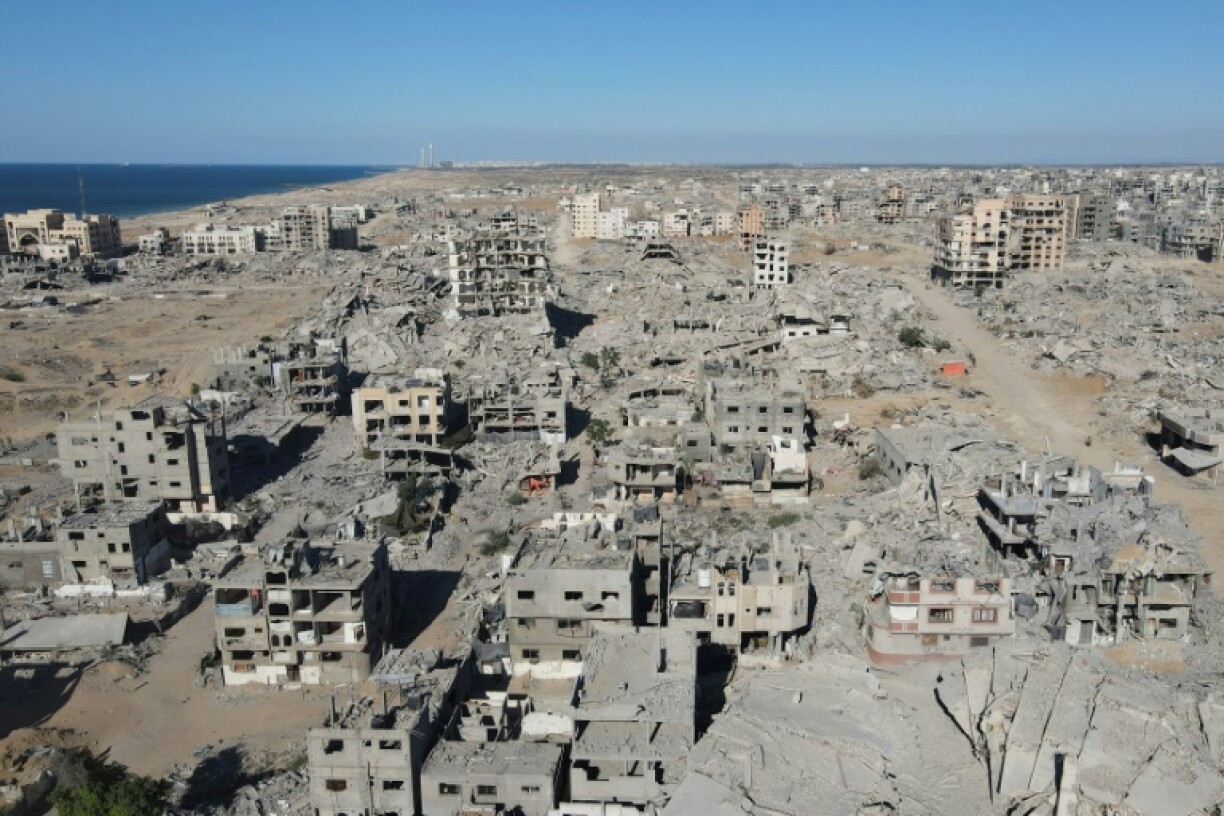
Achcar delivered a stark assessment of the situation in Gaza, he said he saw virtually no hope for a short-term easing and no likelihood of meaningful political change.
He explained that, in his view, people in Gaza were currently living in appalling conditions, while Palestinians in the West Bank were enduring relentless attacks from settlers supported by the Israeli army. He added that the fact the United States was now more directly involved in the conflict did not inspire confidence.
Achcar characterised former US President Donald Trump’s peace proposal as one of the most superficial plans ever presented. He argued that the model proposed for Gaza amounted to a neo-colonial structure, effectively shaped according to Trump’s own priorities and reinforced by a controversial UN resolution that, in his view, left Israel with far too much authority as the occupying force.
He also said the current reality on the ground showed no sign of a ceasefire, that no actor had succeeded in stripping Hamas of its military capabilities, and that no credible Palestinian leadership figure had emerged who could steer the population toward stability.
According to Ashcar, most Palestinians reject both the Palestinian Authority in the West Bank and Hamas, yet this majority lacks any organised political force that could represent it. He argued that none of the existing peace initiatives offered Palestinians true self-determination.
For that reason, he dismissed the two-state solution as an illusion. He argued that any Palestinian state created under the Trump framework would inevitably be run by leaders acceptable to Israel, since even the current Palestinian Authority leadership was expected to meet Israel’s requirements before being considered legitimate.
He also criticised Europe, claiming that EU governments had simply attached themselves to Washington’s position, something he considered deeply regrettable, especially given the Middle East’s geographical closeness to Europe. He argued that the EU had once again agreed to finance a settlement framework dominated by Israeli and American interests.
Despite his sombre outlook, Achcar identified one possible source of future change, but not inside Israel. He pointed instead to shifting attitudes among young American Jews, saying that recent surveys showed a growing shared feeling more sympathetic to Palestinians than to Israel. He described this trend as new, significant, and potentially decisive for the long term, especially considering the tight political relationship between the United States and Israel.





