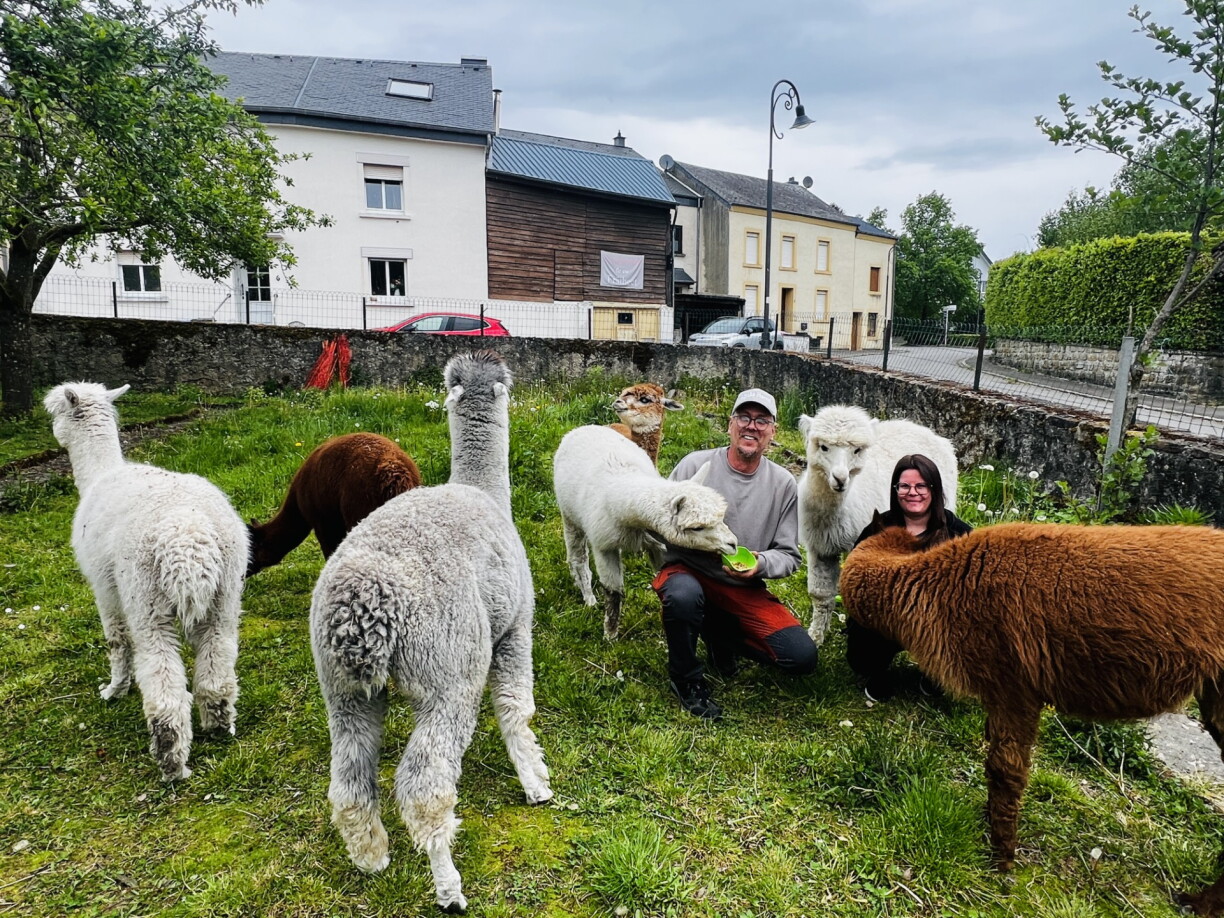
Farm owner Jean Freylinger brought his first two alpacas to the family farm nearly 17 years ago after inheriting the land from his grandfather. What began as curiosity about the animals gradually grew into a herd of 12 alpacas, alongside the farm's long-running Scottish cattle breeding activities.
Like many smaller farms in Luxembourg, it has gradually diversified beyond traditional agriculture. Rising costs and pressure on smaller agricultural businesses have pushed some Luxembourg farms to expand into educational visits, local tourism, and animal-based activities alongside traditional farming.
With many children in Luxembourg spending long hours in structured childcare settings and more time indoors, educational farm visits have become increasingly popular among parents and youth groups seeking more nature-based experiences.
All of the alpacas on site are male, which Freylinger says makes managing the herd dynamics easier. Male and female alpacas are usually separated unless breeding is planned, as females require calmer conditions during pregnancy and while raising young.
Organising the visits requires more than simply managing the herd. Helping organise activities is Tessy Reuland, who works part-time on the farm, combining her passion for animals with experience working with children.
Activities range from feeding the animals on site and helping clean the stable to guided trekking walks through the countryside. Larger group visits and trekking tours are organised on request and need to be booked in advance.
The experience typically lasts around two hours and includes a short stop where visitors can take photos with the alpacas. Activities are weather dependent, with visitors usually informed a day in advance if conditions are unsuitable.
The routes used for the walks are accessible for families with strollers and visitors with reduced mobility to take part more easily.
Payments for activities are made on site, either by cash or Payconiq.
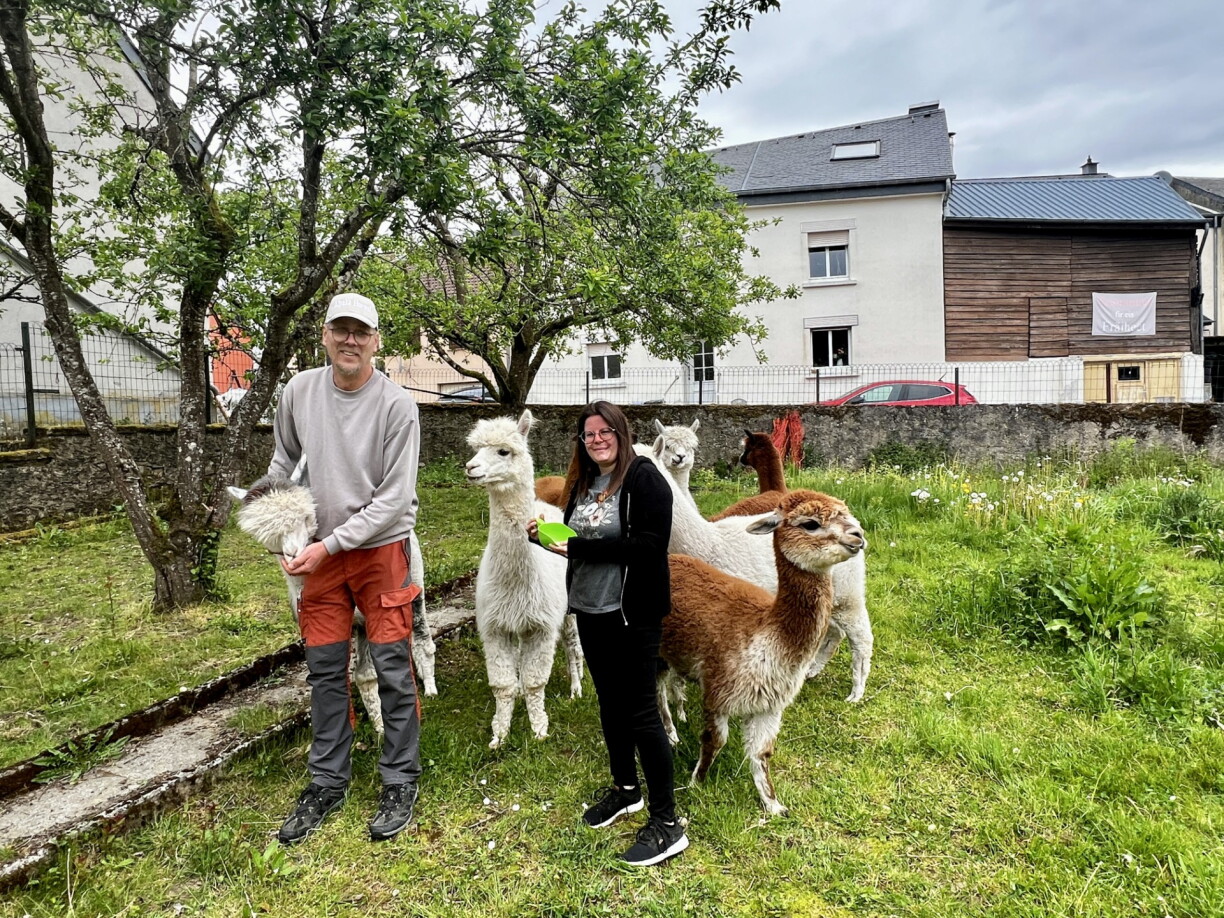
Some alpacas quickly approach visitors eagerly looking for food, while others remain cautious and observe people from a distance before slowly joining the walk.
Originally native to the Andes in South America, alpacas were bred for centuries for their soft wool, which remains highly valued today. Unlike llamas, alpacas are smaller and known for their calm and social behaviour.
Despite their gentle appearance, the creatures are surprisingly expressive. They communicate through soft humming sounds, use body posture to signal discomfort or curiosity and are known for recognising familiar people over time. They are also considered relatively clean animals, often sharing communal toilet areas within their enclosure.
Their thick fleece helps protect them from cold temperatures, but alpacas are also known for their sensitive and cautious personalities. Visitors are often surprised by how curious the animals can be once they feel comfortable around humans.
Beyond being a novelty for visitors, alpacas are increasingly recognised for their calming presence. Their calm nature has also led to their inclusion in animal-assisted therapy for people with stress, developmental disorders or mental health challenges.
The farm has also built links with an association where autistic children create handmade gifts for young visitors attending activities there.
Freylinger says the collaboration was intended to make the farm activities feel more inclusive while giving children involved in the association a visible role in the visitor experience.
For Freylinger, the idea is less about creating a tourist attraction and more about opening up farm life in a way that allows children to interact closely with animals, something he says has become rare and exotic today.
"We're not trying to build a tourist attraction", Freylinger says. "We're trying to create a place where children can breathe, be outdoors and reconnect with nature."
If you would like more information, then you can visit their website here.





